Vietnam must raise value-added, autonomy to sustain trade growth: expert says
Vietnam’s record-breaking trade performance in 2025 underscores its rising global standing. Yet sustaining double-digit growth will depend on boosting value addition, autonomy and sustainability.
THE HANOI TIMES — Vietnam’s strong export-import performance in 2025 has reinforced the country’s position on the global trade map.
In an interview with The Hanoi Times, Le Quoc Phuong, former Deputy Director of the Industry and Trade Information Center under the Ministry of Industry and Trade, shares his assessment and outlines priorities for sustaining double-digit growth in the years ahead.
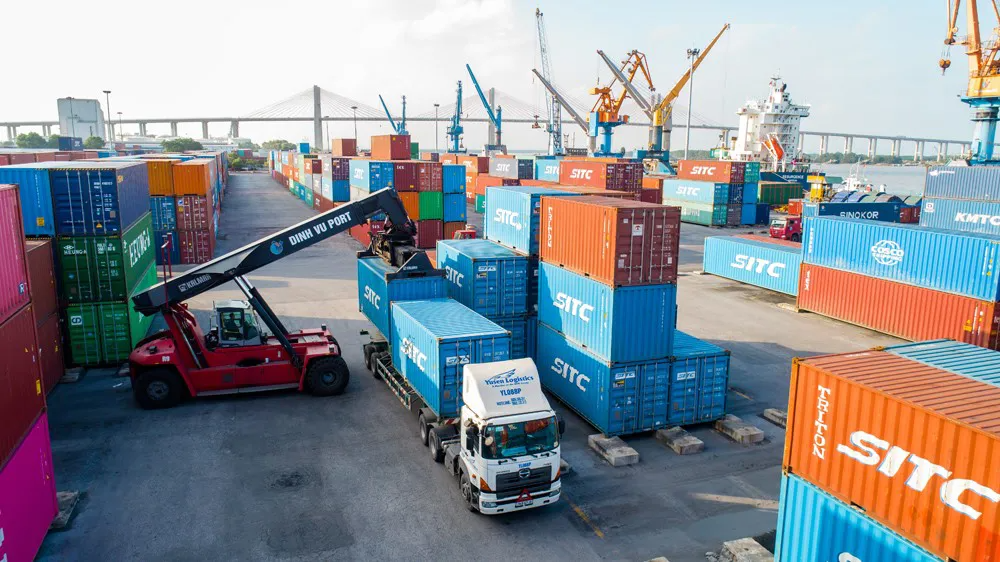
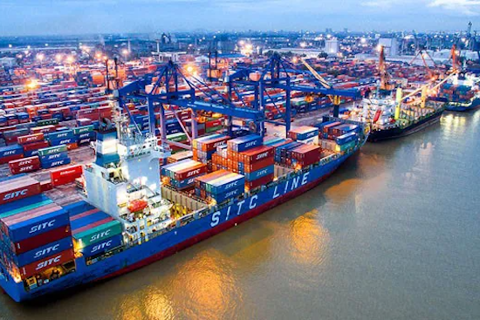
Vietnam’s total import-export turnover in 2025 is estimated at $920 billion. Photo: Dinh Vu Port
Vietnam’s total import-export turnover in 2025 is estimated at US$920 billion, the highest ever recorded. How do you assess this year’s trade performance?
The $920 billion figure reflects exceptionally strong growth and sends a clear positive signal for macroeconomic stability, foreign exchange reserves and economic resilience. It confirms the powerful momentum of Vietnam’s foreign trade in 2025.
Exports stand out, reaching an estimated $470 billion. This result highlights the effectiveness of Vietnam’s free trade agreements, which have helped expand high-quality markets and maintain steady export growth. Notably, 2025 marks the 10th consecutive year Vietnam has recorded a trade surplus, estimated at around $22 billion.
Imports are estimated at $448 billion, nearly half of total trade turnover. This level reflects the recovery and expansion of domestic production. The high share of machinery, equipment and production inputs shows that trade growth closely aligns with investment, manufacturing and export-oriented supply chains rather than short-term commercial activity.
What do you see as the key strengths and remaining shortcomings of Vietnam’s import-export activities?
Vietnam’s trade continues to grow rapidly and is approaching the $1 trillion threshold. Key growth sectors include textiles and garments, wood products and consumer goods such as plastics, ceramics, glassware and paper products.
This momentum partly stems from shifts in global supply chains. Some product segments once dominated by China have opened up and ASEAN countries now compete to capture these opportunities, with Vietnam emerging as a leading contender.
China’s restrictions on rare earth exports have also created supply pressures for electronics producers in the US and Europe. This situation opens space for foreign-invested enterprises in Vietnam to expand exports of electronic products to Western markets.
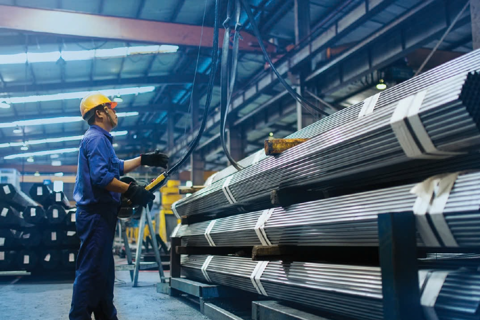
Despite strong growth, Vietnam still faces a major limitation: low value-added. Industrial products account for about 86%-88% of export value, yet much of this remains processing and assembly. Domestic value creation stays limited and depends heavily on labor costs and land leasing.
Vietnam also relies heavily on imported inputs, while domestic enterprises have yet to move decisively into higher value-added stages of global production and distribution chains.
The US is Vietnam’s largest export market, while China is its largest import source. How can Vietnam reduce dependence on these two major partners?

Le Quoc Phuong, former Deputy Director of the Industry and Trade Information Center under the Ministry of Industry and Trade
Vietnam needs to continue pursuing market and supply diversification, a strategy it has followed in recent years. Effective use of major trade agreements such as the Comprehensive and Progressive Agreement for Trans-Pacific Partnership (CPTPP), EU-Vietnam Free Trade Agreement (EVFTA) and Regional Comprehensive Economic Partnership (RCEP) remains essential.
These agreements help spread trade flows and reduce reliance on a small number of partners. Vietnamese enterprises must meet rules-of-origin requirements to fully access preferential tariffs, gradually lowering dependence on Chinese inputs while expanding sourcing from other markets.
At the same time, businesses should increase imports of technology- and knowledge-intensive products from the US to strengthen competitiveness, meet stricter global standards and support greener, more sustainable production.
What is your outlook for Vietnam’s trade performance in 2026?
Export prospects in 2026 remain positive, supported by economic recovery in major markets such as the US, the EU and Japan, along with looser global monetary conditions that stimulate demand. However, Vietnam’s key challenge has shifted from maintaining growth rates to improving value-added and economic autonomy.
The focus must move from volume to value. This shift requires higher domestic content in exports, a stronger role for local enterprises in supply chains and faster growth in service exports to narrow the long-standing services trade deficit, estimated at $9-$14 billion annually.
Vietnam can maintain double-digit export growth in 2026 if it concentrates on four priorities: diversifying markets and maximizing free trade agreements, increasing domestic value-added while reducing import dependence, promoting innovation within enterprises and expanding service exports to build a more balanced trade structure.
What needs to be done to achieve more balanced and sustainable trade growth in 2026-2030?
In the short term, the Ministry of Industry and Trade must act decisively to mobilize resources, diversify markets, boost exports and reduce heavy reliance on the foreign-invested sector.
Authorities need to closely monitor US tariff policies, address emerging risks early, strengthen trade promotion, improve supply-demand connections, enhance product branding and tighten origin management to prevent trade fraud.
For enterprises, direct competition may no longer be the best strategy. Firms should seek niche positioning and indirect advantages, especially as global tariffs and trade barriers remain volatile.
At the same time, businesses must optimize costs, simplify administrative procedures, reduce informal expenses and improve logistics efficiency to strengthen competitiveness and narrow the services trade deficit.
In the long run, flexible coordination between Vietnam’s internal strengths, such as labor quality, resources and adaptability, and external strengths from foreign-invested enterprises, including global networks and management expertise, will allow Vietnam to expand trade scale, raise value-added and secure a stronger position in global trade.
Thank you for your time!