Vietnam’s growth outlook rises as reforms, exports boost investor confidence: RMIT professor
Vietnam’s ambitious 2025 growth target faces scrutiny as international institutions remain cautious, testing the credibility of reforms, infrastructure delivery and resilience in uncertain global markets.
THE HANOI TIMES — Vietnam’s economy is gaining renewed optimism in 2025 as more international institutions upgrade their GDP growth forecasts, reflecting strong exports, accelerated reforms, and rising infrastructure investment.
Associate Professor Burkhard Schrage, Interim Head of the Management Department at RMIT University Vietnam's Business School, shared his insights with The Hanoi Times on the country’s growth prospects, resilience strategies, and the crucial role of education in sustaining long-term development.
What do you think of Vietnam’s GDP growth forecasts for 2025?
When I review the GDP growth forecasts for Vietnam in 2025, one fact stands out: more international organizations have revised their forecasts upward than downward. This is unusual in the current global environment. Analysts at UOB, AMRO, CitiGroup, Maybank, and BIDV Research Group have all upgraded their projections by a maximum of full percentage point while only ADB, Standard Chartered, and the World Bank have made downward adjustments.

Associate Professor Burkhard Schrage, Interim Head of the Management Department, the Business School at RMIT University Vietnam.
UOB’s increase from 6.0% to 6.9% is particularly noteworthy, supported by strong second-quarter GDP growth of nearly 8% year-on-year and a surge in exports during a period of reduced US tariffs.
AMRO’s revision to 7.0% reinforces the view that Vietnam is currently leading growth in the ASEAN+3 region. Collectively, these upward adjustments reflect growing confidence in Vietnam’s economic trajectory.
Part of this confidence probably stems from administrative reforms already in progress. These reforms aim to make government processes more efficient, reduce delays, and accelerate approvals in the second half of the year.
For many businesses, even a few weeks saved in licensing or permitting can significantly advance investment and production plans. One business leader told me that earlier approvals could bring forward expansion timelines by months, directly contributing to higher output.
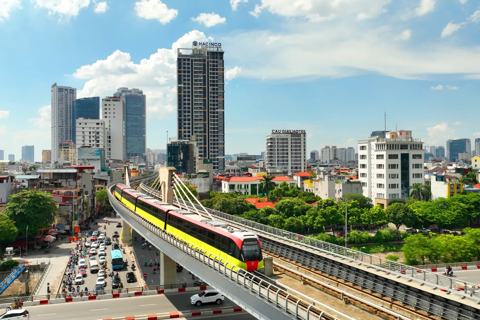
Another driver is the significant acceleration in public infrastructure spending. Major projects such as highways, bridges, airports and logistics hubs are transitioning from planning to construction at a rapid pace.
These investments are expected to lift growth in the short term while also enhancing Vietnam’s long-term competitiveness by lowering transport costs, improving connectivity, and expanding trade and tourism gateways.
On the external side, the trade outlook has improved compared to three months ago.
Earlier this year, concerns about tariffs imposed by Vietnam’s largest export market, the US, loomed large.
But the government has eased some concerns that a “worst case scenario” will not materialize thanks to its trade negotiations with the US.
While risks remain, the increased visibility of trade conditions gives exporters the confidence to plan production and commit to new orders.
The government is also sending clear signals of support for the private sector through planned deregulation and reduced administrative burdens.
If implemented effectively, these measures could unlock productivity gains without requiring additional capital investment.
That said, there remains a notable gap between the government’s official target of 8.3%-8.5% and the projections of most international observers, which cluster in the 6%-7% range.
This difference reflects varying assumptions about how quickly reforms will take effect, the pace of infrastructure delivery, and the resilience of global demand.
In my view, while the government’s target is ambitious, it serves as a useful rallying point, pushing policy implementation forward and signaling confidence in Vietnam’s economic potential.
Based on current conditions, I consider a 6%-7% growth range realistic, with the potential for upside if reforms, infrastructure expansion, and private-sector empowerment all progress as planned.
Under those circumstances, 2025 could be a year in which Vietnam narrows the gap between aspiration and outcome, perhaps even surprising both domestic and international audiences.
In light of global economic uncertainties, what strategies can strengthen Vietnam’s economic resilience?
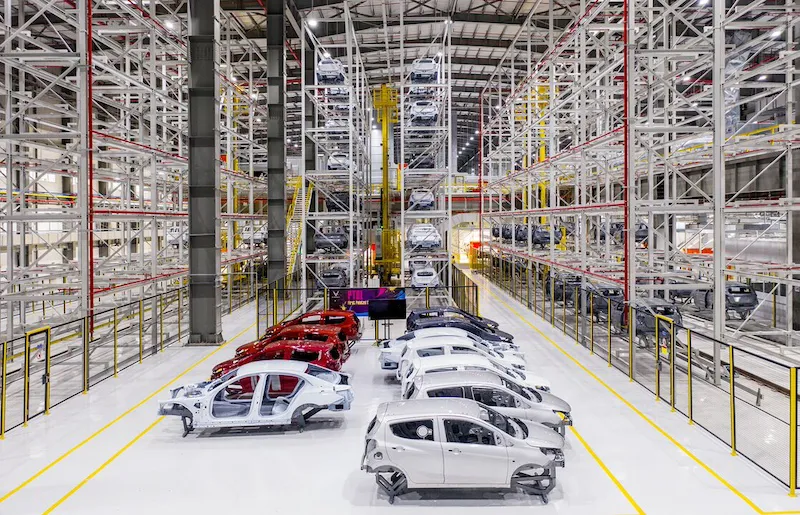
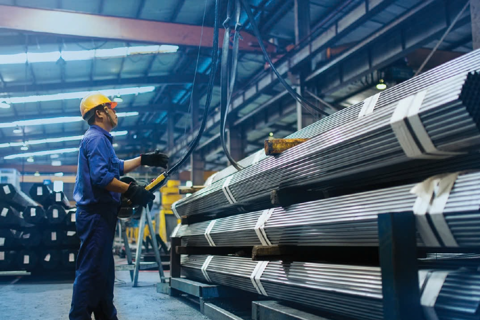
Inside the VinFast manufacturing facility. Photo: VinFast
In my view, Vietnam’s economic resilience in the face of global uncertainty depends on two priorities: diversifying the economy and strengthening the domestic market.
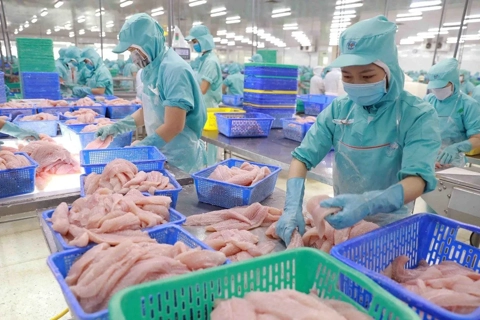
Relying too heavily on a narrow set of exports like electronics and garments leaves the country exposed to external shocks.
I believe developing higher-value sectors, such as renewable energy, agricultural technology, and advanced manufacturing, will create a broader, more stable base.
Expanding trade beyond traditional partners to emerging markets in Asia, Africa, and Latin America can further spread the risks.
I also see enabling the private sector to compete more fiercely in global markets as essential. This means improving infrastructure, ensuring transparent and predictable regulations, and fostering an environment where innovation can flourish.
At the same time, a stronger domestic market-driven by a growing middle class can serve as a critical buffer when global demand weakens.
Supporting small and medium-sized enterprises, expanding access to finance, and investing in workforce skills will help local businesses succeed both at home and abroad.
Ultimately, I believe Vietnam’s long-term resilience will come from building a more diversified, competitive, and innovation-driven economy that draws strength from both domestic vitality and global engagement.
What role should education and workforce upskilling play in sustaining Vietnam’s growth?
Education and workforce upskilling are absolutely essential for Vietnam’s sustained growth. We can build all the highways, airports, and factories we want but without skilled people to manage and innovate around them, that infrastructure alone won’t carry us forward.
Vietnam is already moving ahead. In early 2025, Phase 1 of the fundamental reform for general education (Grades 1-12) was completed, and a new Education and Training Development Strategy to 2030 with a vision for 2045 has been put in motion.
But it’s not just about future generations, current workers urgently need upskilling. Reports show that only 30% of the workforce has formal vocational training.
And for digital skills, the gap is even bigger as just about one in 10 workers has the digital capabilities needed for the Industry 4.0.
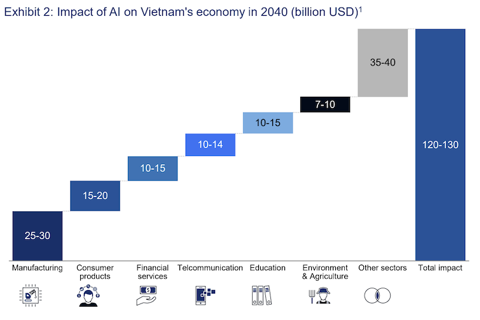
This isn’t just a tech issue. Jobs in apparel, agriculture and logistics are all shifting toward digital tools, sustainability and AI.
The government’s National Digital Transformation Roadmap is a step in the right direction, but it will only succeed if training is rolled out quickly and matched to real industry needs.
Otherwise, we risk creating paper qualifications instead of real capabilities.
To me, education and upskilling are the bridge between where we are and where we want to go.
Without them, we risk building an economy that people aren’t ready to lead. With them, we can transition to innovation-driven growth, higher value, greater resilience and a future-ready economy.
Thank you for your time.