Vietnam on course to switch to biofuel nationwide from June 1
The nationwide shift to biofuel gasoline marks a major step toward a cleaner and more sustainable fuel market.
THE HANOI TIMES — Vietnam will officially switch to biofuel gasoline E5 and E10 from June 1, 2026, under a long-prepared roadmap led by the government and relevant ministries.

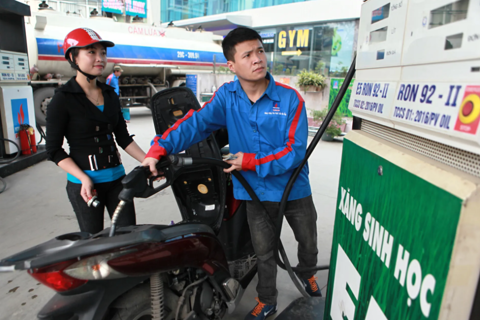
A PVOIL E10 biofuel gasoline station in Hanoi. Photo by Le Thuy/The Hanoi Times
“The rollout is fully ready in terms of the legal framework, technical infrastructure and consensus from the business community, in line with the goals of sustainable development and environmental protection,” Le Ngoc Hung, a representative of the Ministry of Science and Technology, said at a conference on fuel price management and supply on January 16.
Hung said the government has completed the key conditions required to bring E10 gasoline into operation on schedule. The ministry has coordinated with major distributors and fuel producers to license companies that meet eligibility requirements for nationwide implementation.
Meanwhile, major fuel suppliers have already prepared for the transition. Petrolimex has completed most preparatory work, while PVOIL is close to finalizing the remaining requirements.
Officials said this readiness will help ensure supply stability and fuel quality once biofuel gasoline is applied nationwide.
However, gaps remain in technical standards and regulations, particularly those governing storage facilities and infrastructure. As the government drafts a revised Law on Product Quality, ministries and local authorities are working to complete the regulatory framework to ensure the fuel market operates in a stable, transparent and safe manner.
Inspection and supervision will continue to play a central role. The Ministry of Finance has coordinated closely with the Ministry of Industry and Trade on fuel price management, while local authorities are required to maintain regular monitoring of fuel trading activities.
Providing the legal basis for the transition, Dao Duy Anh, Deputy Director of the Department of Innovation, Green Transition and Industrial Promotion at the Ministry of Industry and Trade, said Circular 50/2025/TT-BCT issued on November 7, 2025 sets out the national biofuel blending roadmap. Under the regulation, from June 1, 2026, the market will offer only two gasoline products: E5 RON 92 and E10 RON 95.
The shift is expected to deliver significant environmental benefits. Burning one kilogram of gasoline emits an estimated 3.2 to 3.5 kilograms of CO2. Reducing gasoline consumption by more than 1 million tons could cut emissions by over 2.5 million tons.
“Biofuel development will also support domestic manufacturing, create jobs and contribute to broader socioeconomic growth,” Anh noted.
To prepare for implementation, the Ministry of Industry and Trade held multiple working sessions with major fuel companies in late 2025 to assess readiness and address operational concerns. Most enterprises expressed support for the policy.
Some technical issues, including oxygen content in gasoline, have been consolidated and submitted to the Ministry of Science and Technology for review. The two ministries will continue coordinating to resolve these issues while ensuring regulatory oversight.
Although some companies said they need at least three months to prepare blending infrastructure, authorities have provided a longer preparation period of about seven months.
“No enterprise can cite a lack of time to delay implementation,” Anh said, adding that businesses must honor their commitments.
In the coming months, briefing conferences will be held across all three regions to provide detailed guidance on the roadmap and address remaining business concerns.
Pham Thanh Trung, Deputy Director of the Legal Affairs Department at the Ministry of Industry and Trade, said a new decree on fuel trading is also being finalized and is expected to have a significant impact on the market, with enterprises urged to prepare facilities, personnel and systems to comply once it takes effect.
Fuel management, due to its link with energy security, will remain under unified central regulation, with limited decentralization to local authorities.
“The nationwide shift to biofuel gasoline marks a major step toward a cleaner and more sustainable fuel market,” Tung said.
At the conference, authorities also introduced the national fuel management system, designed to standardize data and improve monitoring of supply and distribution nationwide.
The use of VietQR payments in fuel retailing was also promoted to support cashless transactions and enhance transparency and regulatory efficiency.