Vietnam to collect excise tax on sugary drinks starting 2027
The inclusion of sugary drinks in the excise tax is considered necessary and consistent with international practices, aiming to influence production and consumption habits while expanding the tax base.
THE HANOI TIMES — Under the amended Law on Special Consumption Tax passed by the National Assembly today (June 14), sugary drinks will be subject to a special consumption tax of 8% starting in early 2027.
The rate will increase to 10% in 2028.
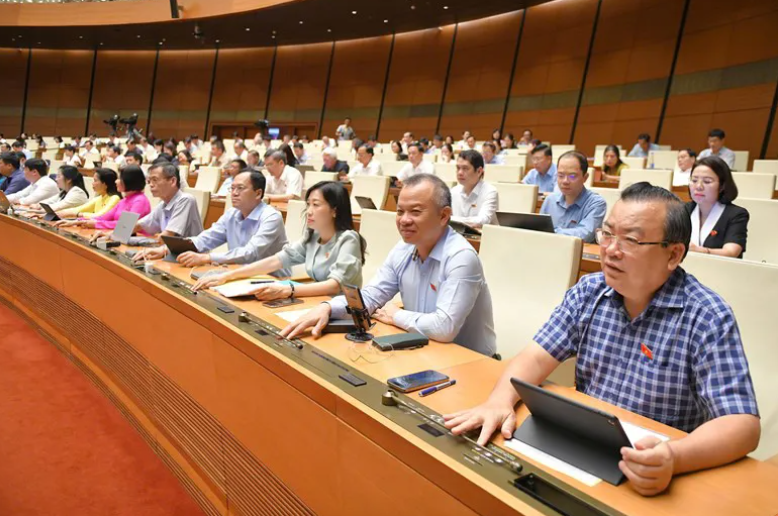
Deputies during the session. Photo: quochoi.vn
The newly passed law will subject beverages containing five grams of sugar per 100 ml and air conditioners with a capacity between 24,000 and 90,000 BTU to special consumption tax for the first time.
Sugary products exempt from this tax include milk and dairy products, natural and bottled mineral water, pure fruit and vegetable juices and nectars, and cocoa-based beverages.
Fruit juice, coconut water, and liquid foods intended for nutritional purposes are also excluded.
Imposing excise tax on sugary drinks is necessary and aligns with international practices, said Chairman of the National Assembly’s Economic and Financial Committee Phan Van Mai.
"The goal is to guide production and consumption while broadening the tax base," he said.
Regarding the suggestions of imposing an excise tax on beverages containing artificial sweeteners, the National Assembly Standing Committee said that there is not yet sufficient basis or impact assessment to impose this tax on other sweetened products.
The committee recommended further research and cautious evaluation, considering the need to support business recovery, and reporting to the National Assembly at an appropriate time.
In the beverage category, the excise tax rate on alcohol products with content of 20% or more will be 65% starting January 1, 2026.
The rate will increase by 5% per annum from 2027 to 2030, and reach 90% in early 2031.
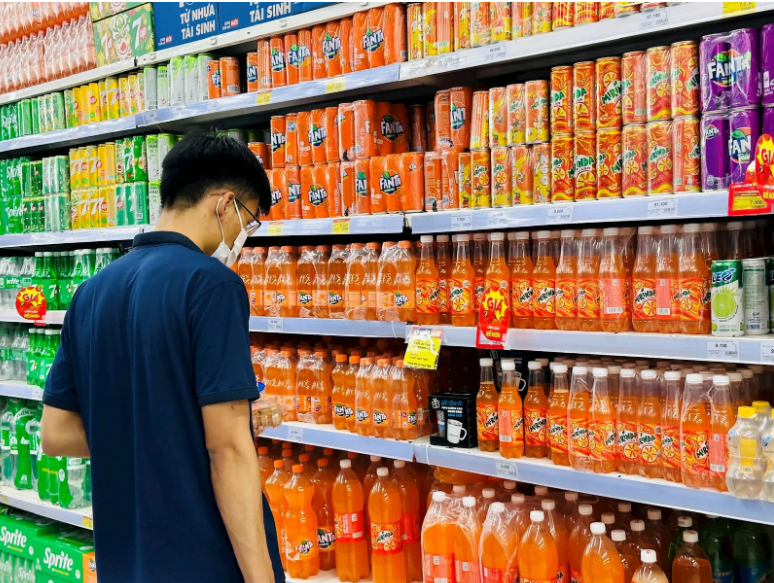
Customer at a supermarket in Hanoi. Photo: Hoai Nam/The Hanoi Times
Beverages with less than 20% alcohol proportion by volume will be subject to a 35% excise tax beginning in 2026.
This tax rate will rise by 5% each year for the next four years, reaching 60% by early 2031.
Similarly, the excise tax rate for beer will be 65% starting January 1, 2026, gradually increasing to 90% by early 2031.
The National Assembly also approved the first 10% excise tax on air conditioners with a capacity between 24,000 and 90,000 BTU, effective January 1, 2026.
Air conditioners with a capacity below 24,000 BTU or above 90,000 BTU are not be subject to the special consumption tax.
Fossil fuel-based gasoline will continue to be taxed at 10%. E5 and E10 biofuels will get preferential rates of 8% and 7%, respectively.
Many legislators had proposed exempting gasoline from the excise tax and increasing the environmental protection tax instead.
Regarding this, Chairman of the National Assembly’s Economic and Financial Committee Phan Van Mai said that a comprehensive revision of both the special consumption tax and the environmental protection tax is necessary in the long term.
For now, maintaining the excise tax on fossil fuel-based gasoline is essential because removing it will not incentivize the use of biofuels or promote energy conservation, he added.
The amended Law on Special Consumption Tax includes 11 revised provisions and will take effect on January 1, 2026.