Vietnam to launch pilot carbon trading exchange by late 2026
The government is urged to accelerate the carbon exchange’s launch, which is postponed one year than initial plan and provide technical and financial support for businesses, especially small- and medium-sized enterprises, to help advance the green economy and achieve the 2050 net-zero goal.
THE HANOI TIMES — Vietnam plans to establish its first carbon market and begin pilot trading by the end of 2026, National Assembly Secretary General Le Quang Manh said on October 28 in the supervision report on the implementation of the 2020 Environmental Protection Law.
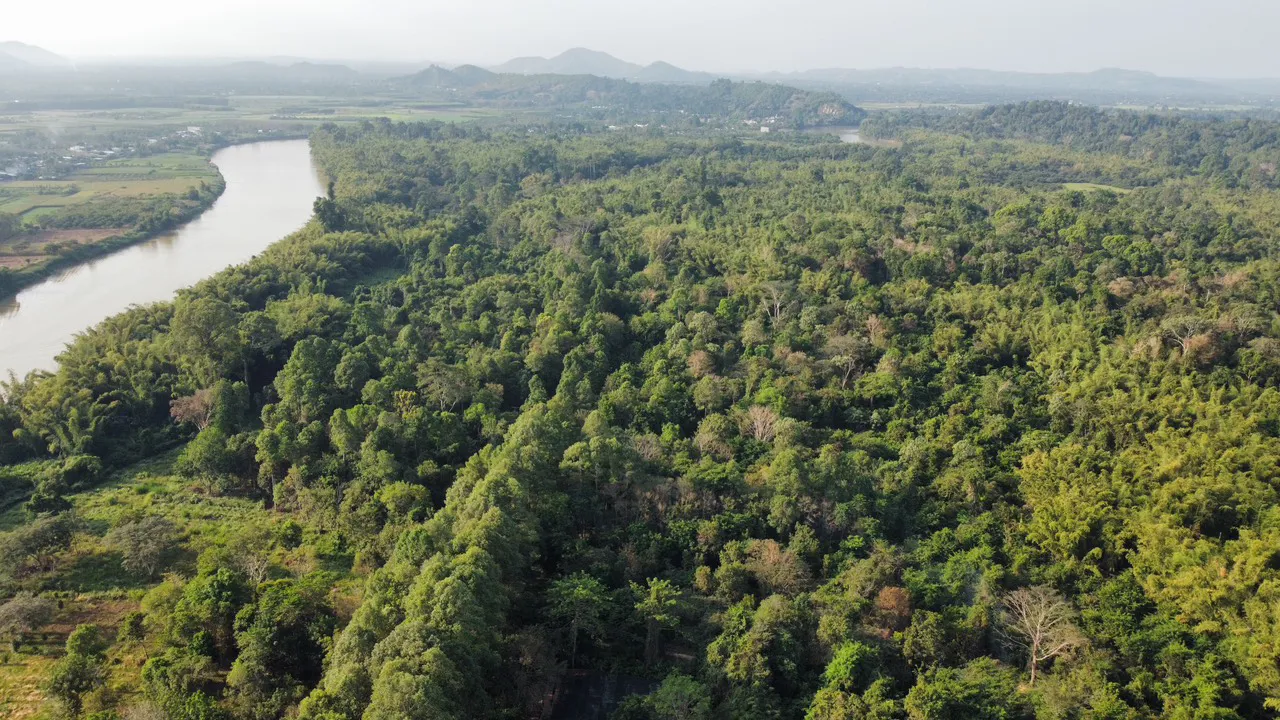
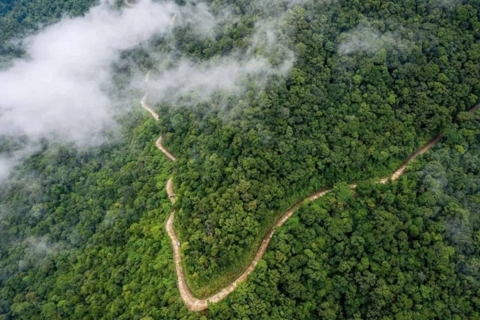
Vietnam holds an estimated 40 million-70 million forest carbon credits that can be sold on the global carbon market. Photo: VGP
This is among six key tasks Vietnam plans to complete by late 2026 to strengthen environmental protection policies.
According to Manh, the country will operate a pilot carbon credit trading exchange, marking an initial step toward building and developing a domestic carbon market by the end of next year. The platform will take place about one year later than the original plan.
A carbon market allows the trading of greenhouse gas emission rights through the purchase and sale of carbon credits or emission allowances.
Companies and organizations buy credits to offset their emissions and meet voluntary or mandatory reduction targets while sellers are those with surplus allowances or the capacity to generate credits through verified carbon reduction projects.
Under the draft decree on domestic carbon exchanges, the platform will trade two main products: emission allowances and carbon credits.
The Ministry of Agriculture and Environment is also drafting a decree on international exchanges of greenhouse gas reduction outcomes and carbon credits for submission to the Government later this year.
During the discussion session, Nguyen Thi Lan Anh, Deputy Director of the Lao Cai Department of Science and Technology, urged the government to put the carbon exchange into official operation soon to advance the green economy and achieve the net zero goal by 2050.
She highlighted the need for technical and financial support to help businesses, especially small and medium-sized enterprises, participate in the market.
“Provinces with large forest coverage should receive special attention so they can join early,” said Anh.
She added that the state should prioritize developing special-use forests to prevent natural disasters and build key carbon ecosystems.
Deputy Ha Hong Hanh from Khanh Hoa Province pointed out challenges faced by enterprises. Currently only two or three domestic centers meet international standards for greenhouse gas inventory and emission data in several sectors remain incomplete, complicating the determination of emission quotas and monitoring results.
Businesses wishing to sell credits must work with international intermediaries, which cost them higher and reduce benefits.
Hanh recommended completing the legal framework, particularly decrees on the operation of carbon exchanges and the rules for allocating and trading emission quotas.
She also called for the establishment of a unified national database on greenhouse gas emissions from central to enterprise levels as well as financial support for auditing and credit registration costs for small and medium enterprises. Additionally, pioneers in emission reduction should receive tax and green credit incentives.
In addition to carbon market development, Secretary General Manh said Vietnam will issue and implement a National Action Plan on Pollution Remediation and Air Quality Management for 2025–2030 with a vision to 2045.
Immediate measures will be taken to control and reduce air pollution in Hanoi and Ho Chi Minh City.
The government will also develop an online greenhouse gas inventory information system to enable timely analysis and reporting. By the end of 2026, a national environmental database will be operational, integrated with the national data system and capable of real-time information sharing, he noted.
According to Manh, the supervisory delegation of the National Assembly assessed that environmental protection efforts in Vietnam have made progress.
Three out of five environmental targets for 2025 have already exceeded expectations including the urban solid waste collection and treatment rate, the proportion of industrial parks with centralized wastewater treatment systems and forest coverage.
Major pollution sources are now being closely monitored to prevent large-scale environmental incidents.
However challenges remain, including solid waste, wastewater treatment and pollution, especially fine dust in major cities. At times, Hanoi and Ho Chi Minh City have ranked among the most polluted urban areas globally.
Only about 18% of total urban wastewater is collected and treated while just 31.5% of industrial clusters and 16.6% of craft villages have proper wastewater treatment systems.