Vietnamese embroidery: So far sew good
The extraordinary traditional craftsmanship of embroidery in Quat Dong village, Thuong Tin district, Hanoi has been passing through generations to generations.
According to Vietnamese ancient proverb, “man’s work is to read books and recite poetry; woman’s is to weave and embroider”. In the old day, every woman was proud of her own sewing skills. Some places, though, has a historical reputation for producing the very best works.
| An extraordinary embroidery in Quat Dong village |
.jpg)
Quat Dong village in Thuong Tin district, Ha Tay province, some 15-kilometer from Hanoi’s downtown, is case in point. Its embroidery has been famed nationwide as a benchmark of excellence for generations.
The craft has been known in Vietnam ever since the third century, but for a long-time artisan embroidered simple decoration motifs for royal fans or banners.
By the Ly dynasty in the 11th century, Vuong Phi Y Lan (Queen of Ly Thanh Tong King) taught the craft of embroidery to the royal concubines. Perhaps only very few people in forbidden palace leant the craft, their technique was not very sophisticated and their embroidery pieces were made only for use in the royal court and so the craft could not thrive.
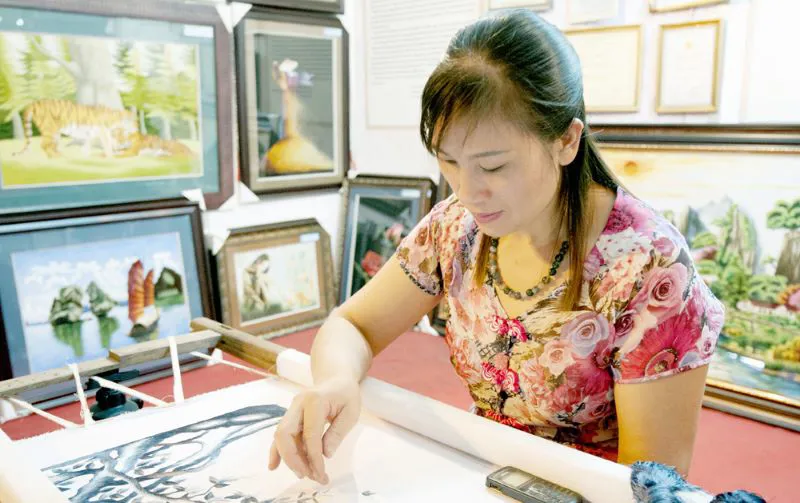
| Craftwoman in Quat Dong embroidery village/ Photo: Kinh te & Do thi |
The big change came in the 17th century when a high official, Le Cong Hanh, traveled to China as King Le Chan Tong's envoy and learned embroidery. Upon his return, he taught the craft to people in Quat Dong Village, Thuong Tin district.
For many years, locals have created new models with a lot of themes, featuring Vietnamese life styles. The embroidery has reached a sophisticated and refined level.
In Hanoi the craft is practiced by the people in Yen Thai lane in the old quarter, where to this day there is a temple called Tu Dinh Thi devoted to the memory of Le Cong Hanh.
This has never been an easy job. For one thing, thread was available basically in five colours- yellow, red, violet, blue and green. The embroiderers had to adapt their skills to these limitations.
Even so, Western experts were highly impressed. One French scholar wrote: “People transmitted, through the generations, extraordinary art of drawing with thread. They made lotus flowers blossoming on silk or butterflies kissing blue water. Vietnamese embroiderers are more skillful than the Chinese in the fine lines they sew and the way they mix colours.”
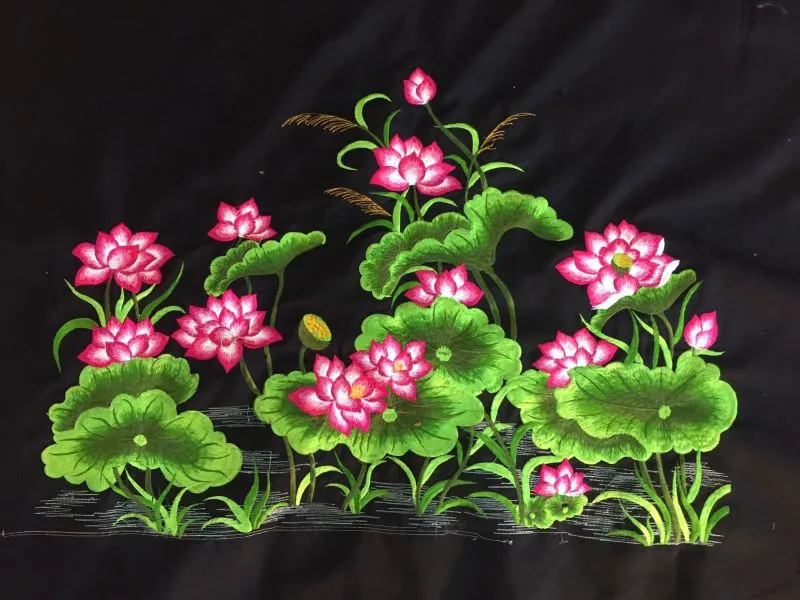
| An embroidery picture made by skillful embroiderers from Quat Dong Village, Hanoi |
Embroideries depicting a dragon in the clouds, or an emperor and a phoenix, were favourite at the imperial court in Hue.
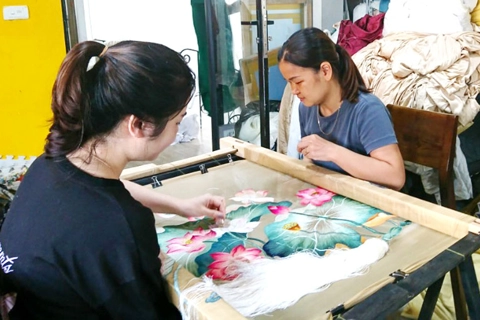
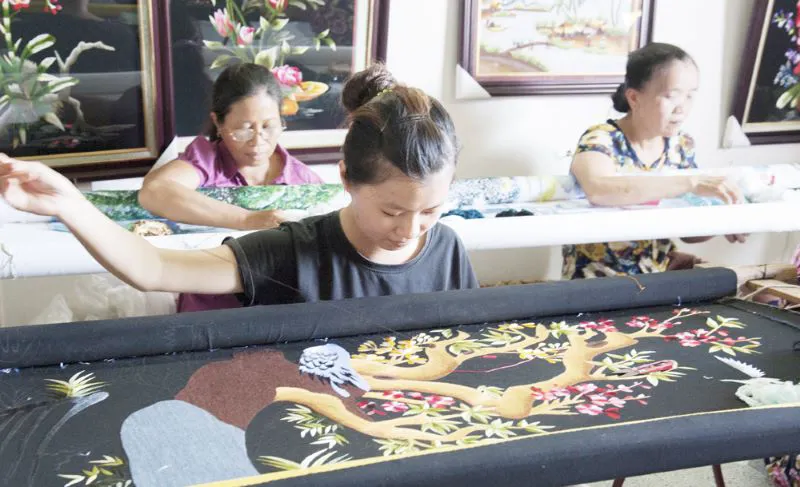
Quat Dong embroidery profession today has undergone miraculous changes. Some large embroidery workshops in the village now employ up to 200 craftspeople at a time. Their delicate and colorful embroidery paintings are often ordered by traders from abroad, or sold at large showrooms in big cities like Hanoi, Ho Chi Minh and other tourism cities such as Nha Trang, Da Nang, among other cities.
| Another embroidery picture made by skillful embroiderers from Quat Dong Village |
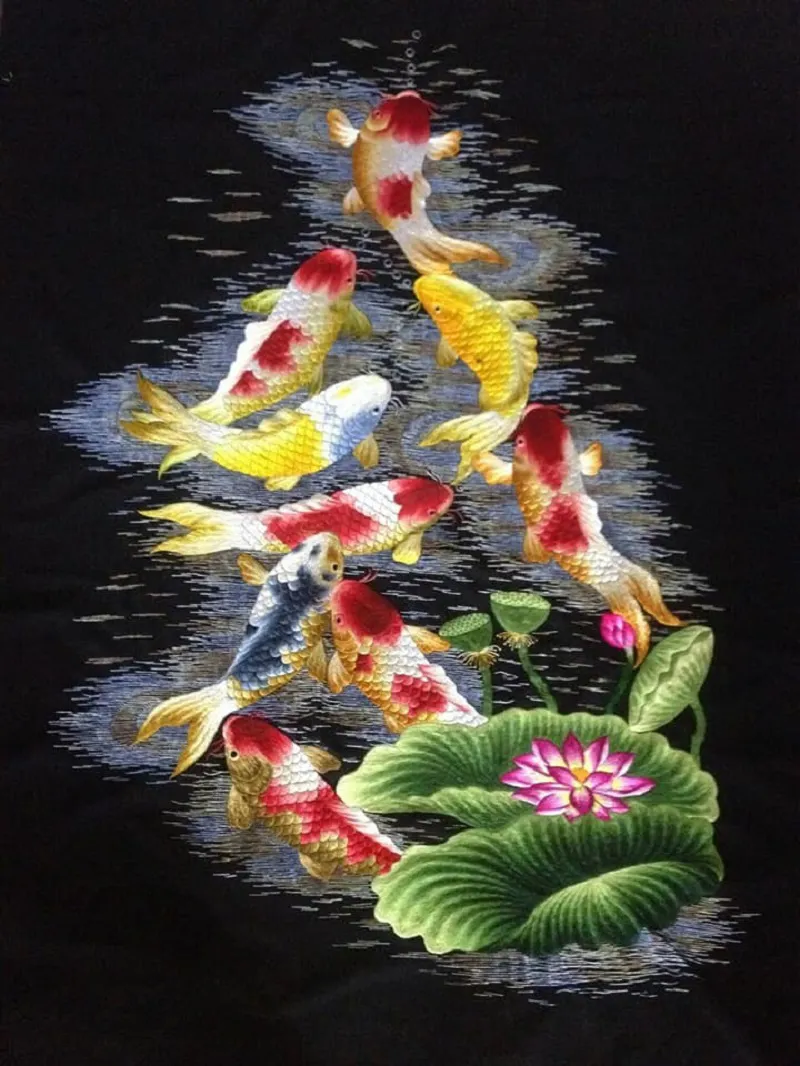
The embroidery technique of Quat Dong has also been significantly improved. From sewing simple patterns on the cotton fabric, today, talented craftspeople have embroidered pictures on thin silk. The exquisite embroidery motifs have reached perfection.
“Quat Dong embroidery painting is embroidered with two sides on thin chiffon material and used silk thread. Looking at the embroidery picture, the viewer cannot realize where the first stitch begins, and where the last stitch ends.”
"Therefore, when looking at these vivid pieces, people will feel as if they are seeing the real landscape or scene of Vietnamese daily life right in front of their eyes. Some embroideries even look exactly like a photo," an experienced embroiderer at Quat Dong village said.
| Craftwoman in Quat Dong embroidery village/ Photo: Kinh te & Do thi |