Vietnamese fruit and vegetable exports see sharp upturn
In April, exports of fruit and vegetables from Vietnam were worth an estimated $520 million.
Vietnam’s fruit and vegetable exports reached US$1.8 billion in the first four months of the year, up over 32% from the same period last year, according to the Ministry of Agriculture and Rural Development.
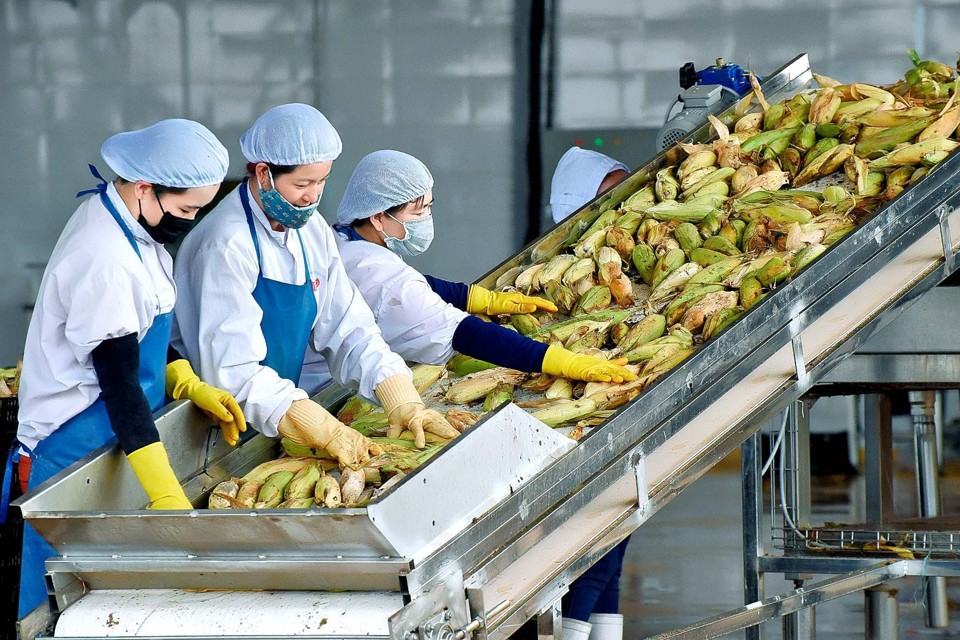
| Processing farm produce for export at Dong Giao Food Export Company. Photo: Duc Thuy/ The Hanoi Times |
The exportation of fruits and vegetables continues to grow strongly, showing favourable changes in market dynamics and processing capacities. The F&V industry is expected to set new records in exporting this year, the ministry said.
Hoang Trung, Deputy Minister of Agriculture and Rural Development, said: "Vietnamese enterprises are signing new contracts and the industry is showing very promising signs of recovering. The concern is to organize production to ensure that contracts are fulfilled and to avoid disruptions".
For the first time, Vietnam's fruit and vegetable exports exceeded $1 billion in the first few months of the year. This important momentum will help the sector set new export records, the ministry said.
With China and many other countries tightening import quality control for agricultural products, local businesses believe there is still considerable potential in the market. However, Vietnam's fruit and vegetable products must continue to improve in quality in order to compete on a sustainable export basis.
Dang Phuc Nguyen, Secretary General of the Vietnam Fruit and Vegetable Association, said the fact that more than 80% of exported fruit is fresh is a disadvantage for Vietnamese companies. To improve quality and add value, the sector needs to take a bold step by investing in deep processing and diversifying products instead of just selling raw produce.
Last year, fruit and vegetable exports reached a record $5.6 billion. This year, the negative impact of El Niño has led to a declining global supply of fruits and vegetables. This presents an opportunity for Vietnam if it can provide quality products and capture demanding markets, Nguyen stressed.
Local insiders said that in order to create sustainable export standard material zones and control harvesting, it is crucial to establish and effectively manage growing areas. Timely updates on technical requirements from importers will help Vietnamese agricultural products penetrate key markets and steadily achieve the target of $6-6.5 billion in fruit and vegetable exports this year.
Ngo Xuan Nam, Deputy Director of the SPS office in Vietnam, emphasized the need to comply with food safety and phytosanitary regulations.
If Vietnamese companies do not understand these regulations or are in breach of them, immediate market warnings will be issued, he said.
Deputy Director of the Department of Agro-processing and Market Development under the Ministry of Agriculture and Rural Development, Le Thanh Hoa, said Vietnamese enterprises and cooperatives should provide guidance and share information with farmers, establish protocols to ensure compliance with strict quality standards, and continuously improve their products to meet evolving market demands.
"On this basis, the sector can build a brand for Vietnamese agricultural products," he stressed.