Vietnamese literature gains global spotlight as authors win major awards
Vietnamese authors gain regional acclaim with global award wins, marking a milestone in Vietnam’s push to globalize its literature.
THE HANOI TIMES — Months after Vietnamese authors Nguyen Binh Phuong and Nguyen Mot stood on stage in Bangkok to receive the prestigious SEA Write Award, their names continue to ripple through literary circles across Southeast Asia, a testament to Vietnam’s growing voice on the international stage.
Their recognition is not only a personal triumph but also part of a broader cultural momentum. Vietnam’s Ministry of Culture, Sports and Tourism has crafted a bold strategy to internationalize Vietnamese culture and to promote global appreciation for its literature.

A large number of readers visited the Hanoi Book Fair 2024. File Photos
Central to this plan is the idea that stories can serve as a soft power tool: educating, engaging, and deepening foreign readers’ understanding of Vietnam’s people, history, and identity.
Over the past 15 years, since the Politburo's Resolution No. 23-NQ/TW was issued in 2008, Vietnamese literature has made major strides. From poetry and short stories to novels and children's books, contemporary authors have gained critical recognition across borders, picking up awards, translations, and readership in multiple languages.
In 2017, poet Mai Van Phan was awarded Sweden’s prestigious Cikada Prize. The following year, Bao Ninh received a major Asian literature prize in South Korea for his war novel "The Sorrow of War," while Nguyen Ngoc Tu was recognized in Frankfurt by the Asia-Africa-Latin America Literature Promotion Association for her collection "The Endless Field," translated into German.
These milestones signaled a shift: Vietnamese narratives were no longer confined to domestic readership but gaining attention at major international literary forums.
Since then, a steady stream of authors has earned the Southeast Asian Writers (SEA Write) Award, including Tran Quang Dao in 2019 with "Flying in Dreams" and Vinh Quyen in 2021 with "Inside Infinity".
The recognition of Nguyen Phan Que Mai’s debut English-language novel, "The Mountains Sing," which won the 2021 Dayton Literary Peace Prize, further demonstrated Vietnamese literature’s growing reach and resonance.
In 2024, Vietnamese writers Nguyen Binh Phuong and Nguyen Mot were honored at the SEA Write Awards for their respective works "A Mediocre Example" and "From the Sixth to the Ninth Hour." Their presence at the regional ceremony underscored a broader trend: Vietnam is actively exporting its literary identity.
Speaking to a Vietnam News Agency correspondent in Bangkok, Mot said that the greatest significance of the literary award lies in its ability to bring people closer together through literature, fostering mutual understanding and cultural harmony.
He expressed hope that Vietnam would one day establish a similar award for writers in the region, creating more opportunities for cultural and especially literary exchange.
Vietnamese literary classics also continue to gain new life in translation. President Ho Chi Minh’s "Prison Diary" has been translated into more than ten languages, with eight English versions alone. Meanwhile, epic poem "The Tale of Kieu" of Nguyen Du, one of the most famous poems by great 18th-century Vietnamese poet, has appeared in 75 translations across 20 languages, including French, Chinese, Japanese, and Russian.
One of the strongest examples of Vietnam’s literary export success is children’s author Nguyen Nhat Anh.
His novel "I See Yellow Flowers on the Green Grass" was published in the US by Hannacroix Creek Books just two years after its Vietnamese release. The book is now available on Amazon and has drawn favorable international reviews.
Anh’s other titles, including "Give me a ticket to childhood" and “Blue-Eyed” have been translated into Japanese, Korean, Thai, and English, with steady popularity among Asian markets.
Despite progress, the Ministry of Culture, Sports and Tourism admits challenges remain.
One of the most persistent is what some critics call a "literary import deficit." While bestsellers from around the world are widely available in Vietnam, the reverse is less true: Vietnamese titles have limited presence abroad. The imbalance, officials argue, doesn't reflect the depth or value of the nation's literature.
Poor coordination between publishing houses, cultural agencies, and authors has hampered consistent promotion strategies. Translation quality is also a sticking point. Many Vietnamese books still lack world-class English editions, making it harder to break into the global mainstream.
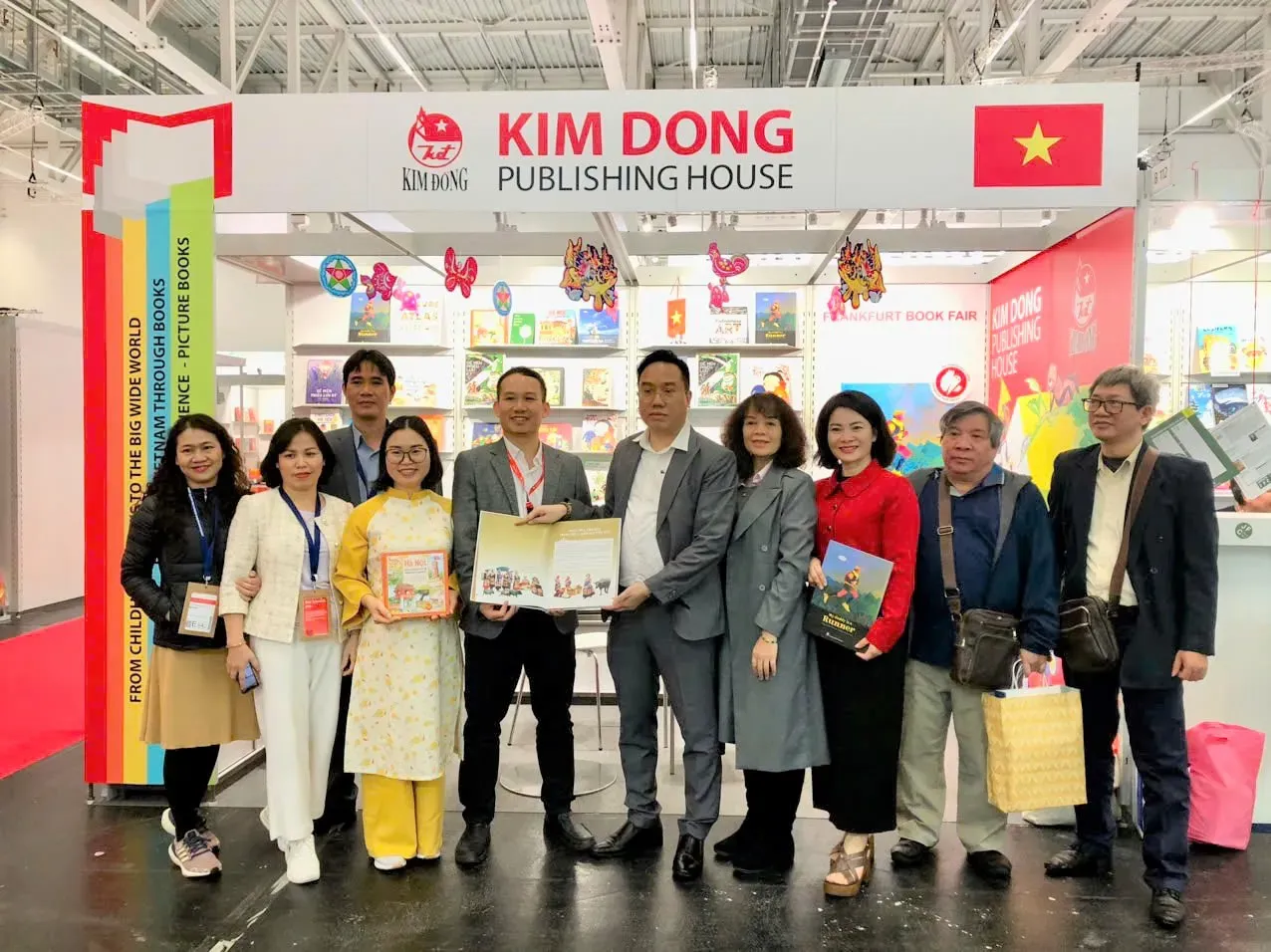
To address this, the government is rolling out a comprehensive initiative as part of its proposed Cultural Globalization Strategy. It calls for targeted translation and publication of high-value literary, cultural, and historical works. Vietnamese book showcases will feature at major international fairs in Frankfurt, Guadalajara, London, Madrid, Beijing, and Sharjah.
Digital tools are also central to the strategy. Officials see online reading platforms and social media as cost-effective ways to bring Vietnamese writing to global audiences, especially younger readers. The ministry urges writers and publishers to experiment with creative distribution models and digital storytelling formats.
Nguyen Xuan Bac, head of the Department of Performing Arts, believes that literature must adapt to the digital age while staying true to its mission such as shaping identity, inspiring empathy, and capturing the complexity of national life.
"We must invest more in high-quality writing that reflects our journey of innovation and development," said Bac. "It is essential to engage young writers and expand their platforms."
Deputy Minister Ta Quang Dong adds that literature plays a strategic role in Vietnam's broader integration goals. In a time of global interconnection and digital transformation, storytelling is not only a form of reflection, but also a forward-looking tool.
"As we step into the Fourth Industrial Revolution, literature can be both traditional and transformative," he said. "It is time we give it the legal, financial, and creative frameworks it deserves."
If successful, this national push could usher in a new chapter for Vietnamese literature, one in which its stories speak to and for the world.