Vietnam's largest waste-to-energy plant to be put into operation in Hanoi in 2020
The project of waste-to-energy plant will make an important contribution to the city’s garbage treatment.
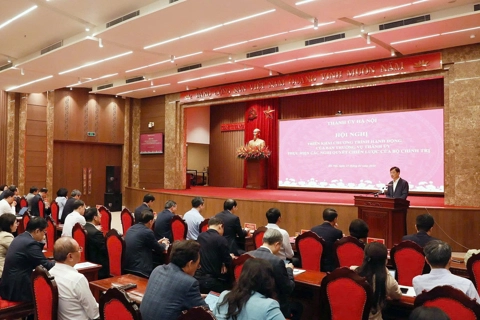
Chairman of the Hanoi People's Committee Nguyen Duc Chung has requested the investor to complete the waste-to-energy plant project in Soc Son district, the largest one in Vietnam, in August 2020 and put it into operation in October in the same year.
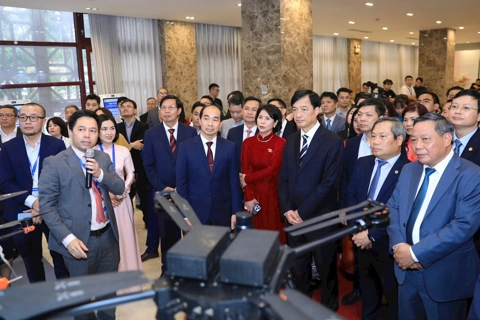
Chung made the request while inspecting the construction progress of the project at the Nam Son and Soc Son waste treatment complexes on December 22.
Stressing the importance of waste treatment in a large city like Hanoi, the Hanoi mayor said the municipal government has invested a lot of resources to modernize waste collection and treatment in recent years.
The project will make an important contribution to the city’s garbage treatment, Chung added.
| Nam Son solid waste treatment plant (Soc Son district) uses modern technology. Photo: Hai Hiep |
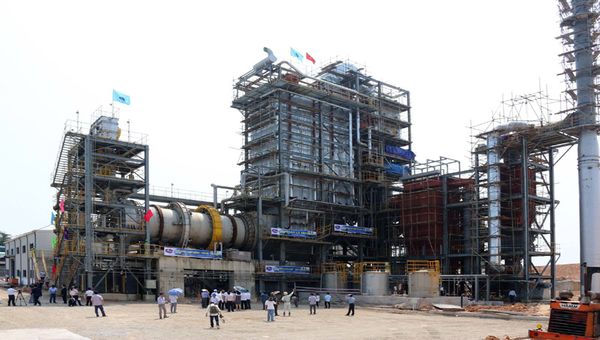
He required Thien Y Environment Energy Joint Stock Company, the investor of the project, to pay special attention to the treatment of leachate and gas.
“The investor needs to install sensors to regularly monitoring the relevant data, supply them to the database of the municipal Department of Construction as well as make them public so as for the people in the surrounding areas to supervise waste treatment process of the plant,” Chung said.
According to a representative of Thien Y Company, the project costs about VND7,000 billion (US$301 million), which was approved by the Hanoi People's Committee at the end of 2017 and implemented by a Chinese contractor.
The plant will have a processing capacity of 4,000 tons per day to help treat litter in many urban districts. It is said to use advanced European waste-to-energy technology with an estimated amount of electricity obtained from the plant of approximately 75 MW per hour.
So far, US$155 million has been invested to execute 35% of the project. To ensure its progress, the contractor said workers will work around the clock, even during national holidays.
Hanoi currently discharges an average of 6,000 tons of waste per day. When the project is put into operation, it is expected to reduce pollution that affects the lives of local residents and be cost-effective.
Waste-to-energy technology is a feasible solution for the solid waste problem in Vietnam's major cities, especially Hanoi and Ho Chi Minh City, Luu Duc Cuong, director general of the Vietnam Institute for Urban and Rural Planning told local media.
The application of the technology can reduce the volume of waste buried in landfills, Cuong said, adding that landfills have become unsustainable as they lead to leakage of hazardous elements and wastewater into the environment.
Besides, incineration should not be contemplated as a waste solution as it requires substantial use of energy such as fuel and coal, and emits significant pollutants when unsorted mass waste are burned.
Mass incineration limits the possibilities of beneficially reusing and recycling waste. Over the long-term, it is not a sustainable solution as well as environmentally and economically impractical, the experts explained.