What makes Phu Quoc’s real estate attractive to investors?
Population in Phu Quoc likely triples in 2030, resulting high demand for hospitality industry.
The administration upgrading has made Phu Quoc the first island city in Vietnam, opening up an era for the locality equal in size to Singapore.
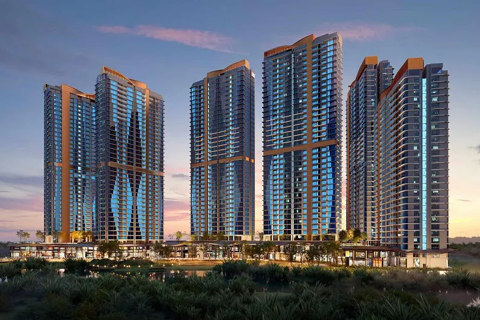
| The tourism-based island city is destination for upcoming real estate investment. Photo: Kiengiangtravel |

The move is considered a momentum for the island that is well-known for tourism, creating favorable conditions for the mushrooming of real estate projects, local experts have predicted.
It triggers a question on how Phu Quoc’s real estate attractive to investors. The expertise might offer a broader view of the potential there.
Dang Phuong Hang, managing director, CBRE Vietnam, said that real estate ecosystem models like hospitality will match the tourism-based island.
The development of tourism will support the growth of three-pillar model namely hospitality real estate, entertainment, and high-end housing segment, she added.
Phu Quoc’s real estate sector has significant room to grow thanks to youngling market, plenty of investment opportunities, and reasonable prices. In addition, well-equipped resort projects are expected to drive up the service prices.
Enormous potential for real estate market is obviously seen in newly-established wards like Duong Dong and An Thoi, Hang said.
"The city status will enable Phu Quoc to make master growth planning, including strategies for tourism industry. The city’s population is forecast to triple by 2030, forming elite groups that demand high-end services," Hang said.
Nguyen Van Dinh, deputy general secretary of the Vietnam Real Estate Association (VNREA), said the three-pillar ecosystem [hospitality real estate/resort – entertainment – high-end housing segment] is the most suitable model for the island tourism city of Phu Quoc.
Notably, the well-invested infrastructure and more convenient transport have fueled the increasing flows of tourists to the island. So far, visitors go to Phu Quoc by high-speed craft with 150-300 passengers on board each and by airplane with 15-20 flights from various part of the country per day.
According to Dr Nguyen Tri Hieu, meanwhile, the upgrading to city has enabled Phu Quoc to have more budget for infrastructure and more open policies.
The local People’s Council has approved a public investment plan worth VND17 trillion (US$739 million) for 2021-25, including infrastructure, key projects, and resettlement models.
In 2020, as many as 20 out of 23 investment projects in Kien Giang Province were committed to going to Phu Quoc. The island welcomed nearly three million visitors in the same year despite Covid-19, up 60% on-year.
Relaxed policies and nature-favored living conditions help support investors’ expansion plans. The city is likely to attract additional 18,000 people by 2030, including high-skilled workers, foreign experts, and overseas Vietnamese.
The figure might be higher thanks to visa exemption scheme (up to 30 days) from July 2020 to foreigners and a stay of up to 10 years for foreign investors having at least VND100 billion (US$4.4 million).
Outlook
Nguyen Manh Ha, deputy head of VNREA, believed that real estate prices in Phu Quoc will set up a new level in a short time, unlike Nha Trang and Danang before. It will take several years to record VND500-600 million (US$21,739-US$26,000) per square meter in some places in Phu Quoc like the rate in Nha Trang currently.
However, it requires a well-prepared planning for the island city, Ha noted.
The island’s southern region is of high expectations with more investment flows in the next five years, local experts predicted.
Islands in southern Phu Quoc, if given well-designed planning, are expected to be destination of wealth-off people in the coming years, according to Dr Le Xuan Nghia, former deputy chairman of the National Financial Supervision Committee.
There remains much to say about procedures and investors need to pay more attention to legality of projects and segments they are investing in, local experts have warned, adding that Phu Quoc’s real estate must be viewed in long-term strategies with possible focus on cleared land and resort projects.