Vietnam to escape middle-income trap with sustained high growth through 2045: PM
An average growth rate of just 7% per year would not be enough to achieve the country's ambitious targets.
Vietnam must sustain high and steady growth until 2045 to escape the middle-income trap and reach the heights of Japan, South Korea, or China, Prime Minister Pham Minh Chinh said during a Government meeting with provinces/cities held today [February 21].
| Prime Minister Pham Minh Chinh at the event. Photos: Nhat Bac/VGP |

This was the first meeting between the government and local authorities following the National Assembly’s extraordinary ninth session, which focused on government restructuring. During that session, the National Assembly approved an economic growth target of 8% or higher for this year, with a projected GDP exceeding $500 billion.
The Prime Minister emphasized that achieving this growth target is crucial to determining the size of Vietnam’s economy, average per capita income, and the country's global economic ranking.
"There is no other option except to maintain high, steady, and sustainable growth from now until 2045," Chinh said. He reiterated that this would enable Vietnam to break out of the middle-income trap and achieve strategic goals for the new era. "The Party has given the direction, the Government is unified, the National Assembly agrees, the people support, and the nation expects—so we must act, not retreat," Chinh reiterated.
A country is said to fall into the middle-income trap when its per capita income stagnates between $4,000 and $6,000 annually. This level is often achieved through initial advantages such as natural resources or a low-cost labor market but becomes difficult to surpass without innovation and productivity gains.
According to international experience and the latest statistics from the World Bank, 34 economies have escaped the middle-income trap to become high-income countries since 1990, while 108 nations have yet to do so. By the end of 2024, Vietnam’s economy is expected to have surpassed $470 billion, with a per capita income exceeding $4,700.
The Prime Minister stressed that an average growth rate of just 7% per year would not be enough to achieve the country's ambitious targets. He pointed to examples of economies that have achieved high-income status by maintaining annual growth rates of around 10% for three consecutive decades. Japan, for instance, grew at an average growth of 11.5% from 1951 to 1973, while South Korea maintained growth of 9.6% per year from 1963 to 1996.
| Overview of the meeting. |

Similarly, China experienced annual growth of around 10% between 1978 and 2011, Taiwan (China) achieved 8.9% growth from 1952 to 1989, and Singapore maintained an average growth rate of 8.5% from 1961 to 1997.
Vietnam’s average growth rate has been 6.4% for nearly 40 years since the Doi Moi reforms began in 1986. Therefore, the country will need to significantly accelerate its growth in the coming period to meet its 2045 strategic targets. Achieving this will require strong, coordinated efforts across all sectors.
To reach these goals, Chinh called on all ministries, local governments, businesses (both domestic and foreign), the cooperative economy, and the private sector to strive for growth rates above 8%.
In parallel, the government must ensure macroeconomic stability, control inflation, and guarantee social welfare. Chinh emphasized that Vietnam would not sacrifice social progress, equity, or environmental protection in the pursuit of pure economic growth.
The Prime Minister also stressed the need to improve investment efficiency and accelerate the disbursement of public investment funds. He instructed ministries and local authorities to mobilize resources—legal, financial, technological, and human capital—to unlock growth drivers and create leverage for economic expansion.
| Deputy Minister of Planning and Investment Tran Quoc Phuong. |
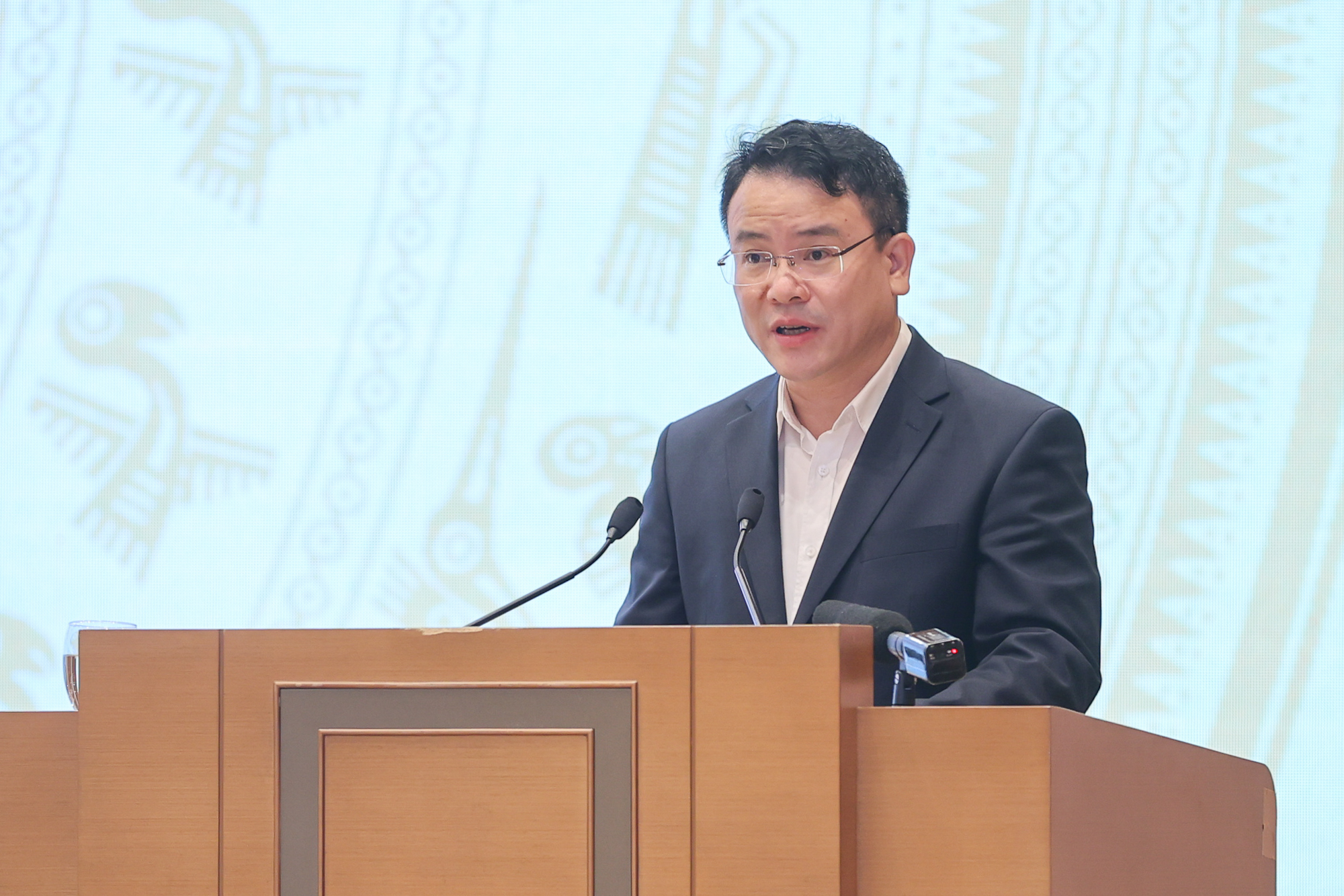
Deputy Minister of Planning and Investment Tran Quoc Phuong suggested that Vietnam should focus on administrative reforms, speeding up investment procedures, and removing obstacles for businesses and projects. He proposed introducing pilot policies, special mechanisms, and groundbreaking regulations to create "green lanes" for high-tech projects.
Phuong also recommended that ministries and localities review and update outdated, overlapping, or incomplete regulations. He emphasized that accelerating the disbursement of public investment capital must remain a top political priority.
Additionally, policymakers should design tax and credit mechanisms to boost purchasing power and stimulate domestic consumption and tourism. The goal is to achieve at least 12% annual growth in retail sales and service revenue by 2025, attract 22–23 million international tourists, and draw 120–130 million domestic travelers.
Vietnam must also maximize opportunities from the 17 free trade agreements (FTAs) it has signed, diversify export markets, and create favorable conditions for foreign experts and overseas Vietnamese professionals to work and contribute to the country's scientific development and innovation efforts.