Workshop seeks ways to improve air quality in Hanoi
Hanoi needs to tighten control over transportation activities to minimize the emissions of vehicles and ban the ones that do not meet emission standards.
Solutions to improve Hanoi’s air quality through innovative practices were the focus of the workshop "Air quality management in Hanoi - pollution sources and solutions" held in the capital city on June 30.
The workshop was jointly organized by the Center for Living and Learning for Environment (Live & Learn), the Hanoi Department of Natural Resources and Environment (DONRE) in collaboration with the World Bank in Vietnam.
It aimed to foster dialogue and cooperation among the public and private sectors, civil society, and development partners to promote joint actions on improving air quality management in Hanoi.
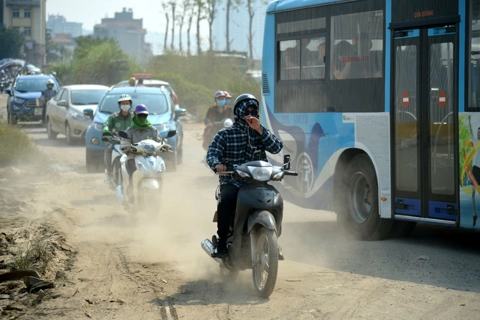
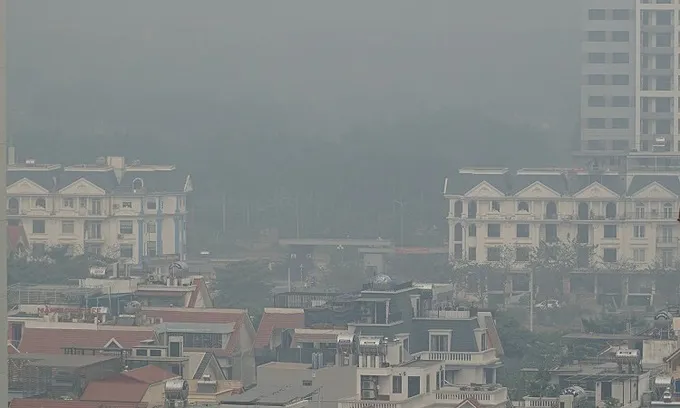
Air pollution in a corner of Hanoi is at a high level in the morning. Photo: Gia Nghia |
The workshop is expected to gather proposals on effective solutions and innovative practices to gradually improve Hanoi's environment and encourage international organizations' efforts to assist Hanoi in air quality management.
Dr. Hoang Anh Le, research team leader of the University of Natural Sciences under the Vietnam National University shared management ideas about protecting human health and the environment from the harmful effects of air pollution.
His figure showed that 40% of Hanoi’s population of nearly ten million people live in urban areas. A huge urban population coupled with 17 industrial zones, 1,350 craft villages, six million registered motorbikes, 600,000 cars, and massive constructions in execution are causing serious air pollution in the city.
The city consumes an estimated 40 million kilowatt-hours of electricity and millions of liters of gasoline every day, which are major sources of greenhouse gas emissions in Hanoi, Le added.
Concerning fine dust emissions from burning rice straw in the capital city, Le said that in winter-spring crop 2021, the amount of dry straw left in the fields was 1,936 tons and up to 43.2% of this amount was burned.
Consequently, pollutants from straw burning can spread through the air, affecting local people who don't even live near the burning site, Le noted.
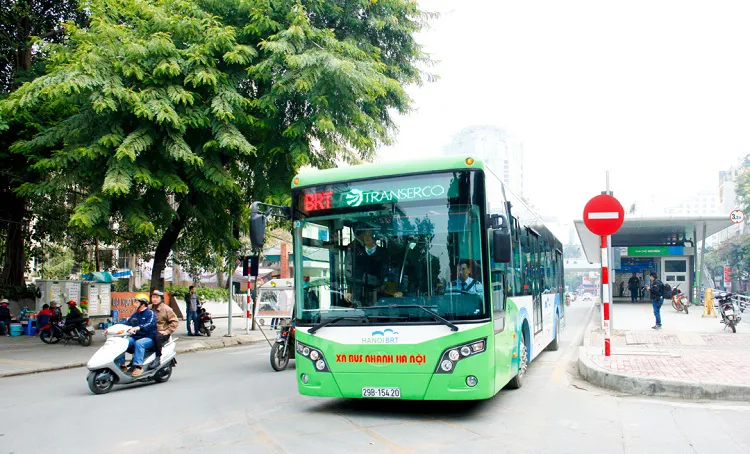
Buses contribute to environmental protection and tourism development in Hanoi. Photo: Pham Hung |
“In the coming time, the municipal authorities need to strengthen the inspection and supervision of waste sources and install an automatic emission monitoring system to help the DONRE supervise the pollution causes,” Le said.
He emphasized that Hanoi needs to promote solutions to apply information technology to environmental management, develop environmental management software for production and service facilities to strictly control air pollution.
Katelijn Van den Berg, a World Bank’s senior environmental expert, said that Hanoi’s authorities need to encourage businesses to apply clean production models, develop environmental management software for production and service establishments.
Moreover, Hanoi needs to control air pollution caused by industrial activities, strictly punish violations on environmental protection, speed up the progress of waste-to-energy plant construction for the city's garbage treatment and promote urban greening, she said.
She suggested that in the coming time, Hanoi should tighten control over transportation activities, checking the emissions of vehicles and banning the ones that do not meet emission standards.
Furthermore, Hanoi needs to quickly develop public transport network to curb private vehicles in the downtown and accelerate the relocation of universities and offices out of the inner city to reserve land for green space.