Vietnam
APEC Finance and Central Bank Deputies Meeting opens in Khanh Hoa province
The APEC Finance and Central Bank Deputies Meeting (FCBDM) concluded the first working day in Nha Trang city, in the central province of Khanh Hoa on February 23.
The two-day event is co-chaired by Vietnam’s Deputy Minister of Finance Tran Xuan Ha and Deputy Governor of the State Bank Nguyen Thi Hong.
The meeting opened the APEC Finance Ministers’ Process (FMP) this year. The agenda on the first working day included the global and regional economic-financial outlook; the implementation of the Cebu Action Plan; long-term infrastructure investment; base erosion and profit shifting; and disaster-risk financing and insurance.
Discussing the economic-financial outlook, delegates agreed that the global and regional economic growth is positive but still faced with difficulties and challenges, such as sluggish external demand, environmental issues, and inequality.
They said that there was high demand for cooperation and coordination on macro-policy responses in the region to promote growth and macro-economic rebalancing in member economies, in a bid to boost trade, regional connectivity, and the participation in global value chain.
Talking about the Cebu Action Plan (CAP) and proposed reform plan for the APEC FMP, the participants heard a report on the CAP implementation and endorsed a list of initiatives/deliverables implemented by member economies and technical support from international organisations.
The event also encouraged APEC members to continue registering their initiatives with the APEC Secretariat for further implementation and requested international organisation to reserve additional resources for technical assistance to support APEC member economies in their activities for the successful realisation of the CAP.
Regarding long-term infrastructure investment, the delegates shared their respective experiences on challenges to public-private-partnership (PPP) projects.
The deputies mentioned risk allocation issues between State and private investors, tools to mitigate and share risks, as well as the role of private investors in PPP projects.
They also discussed measures to strengthen cooperation on the issue among APEC members and to implement related activities in 2017.
In the field of base erosion and profit shifting (BEPS), the delegates discussed and shared experience on implementing BEPS packages, including BEPS minimum standards.
Member economies including Australia, Japan and Indonesia presented their respective cases on implementing BEPS packages and projects.
The meeting ended its first day with a session on disaster risk financing and insurance, where the deputies discussed national strategies on the matter as well as methodologies on building disaster risk databases.
Member economies such as Japan, Australia shared experiences on the formulation of their respective national strategies on the subject as well as the management of pubic assets against the consequences of natural calamities.
The second working day will discuss on financial inclusion and other business issues.-

At the meeting.
|
Discussing the economic-financial outlook, delegates agreed that the global and regional economic growth is positive but still faced with difficulties and challenges, such as sluggish external demand, environmental issues, and inequality.
They said that there was high demand for cooperation and coordination on macro-policy responses in the region to promote growth and macro-economic rebalancing in member economies, in a bid to boost trade, regional connectivity, and the participation in global value chain.
Talking about the Cebu Action Plan (CAP) and proposed reform plan for the APEC FMP, the participants heard a report on the CAP implementation and endorsed a list of initiatives/deliverables implemented by member economies and technical support from international organisations.
The event also encouraged APEC members to continue registering their initiatives with the APEC Secretariat for further implementation and requested international organisation to reserve additional resources for technical assistance to support APEC member economies in their activities for the successful realisation of the CAP.
Regarding long-term infrastructure investment, the delegates shared their respective experiences on challenges to public-private-partnership (PPP) projects.
The deputies mentioned risk allocation issues between State and private investors, tools to mitigate and share risks, as well as the role of private investors in PPP projects.
They also discussed measures to strengthen cooperation on the issue among APEC members and to implement related activities in 2017.

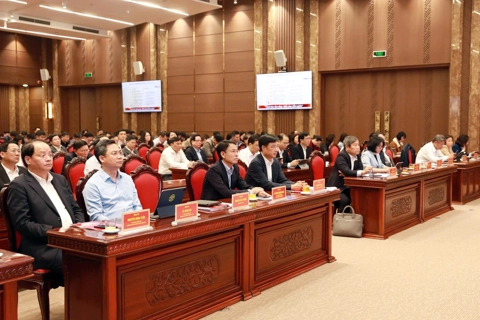
Delegates attend APEC Finance and Central Bank Deputies Meeting.
|
Member economies including Australia, Japan and Indonesia presented their respective cases on implementing BEPS packages and projects.
The meeting ended its first day with a session on disaster risk financing and insurance, where the deputies discussed national strategies on the matter as well as methodologies on building disaster risk databases.
Member economies such as Japan, Australia shared experiences on the formulation of their respective national strategies on the subject as well as the management of pubic assets against the consequences of natural calamities.
The second working day will discuss on financial inclusion and other business issues.-