Art exhibition celebrates Vietnam’s learning legacy at Temple of Literature
Blending light, space and symbolism, a new exhibition in Hanoi reimagines Vietnam’s reverence for learning through contemporary art rooted in history.
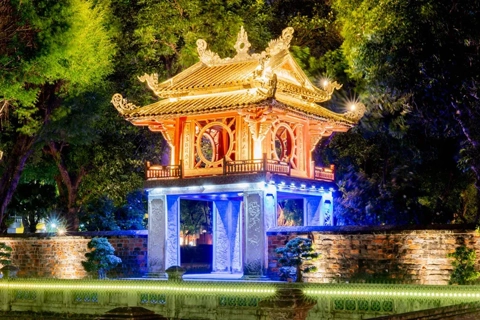
THE HANOI TIMES — The art exhibition titled “A thousand years of learning” opened on December 30 at the Van Mieu – Quoc Tu Giam (Temple of Literature) relic, paying tribute to Vietnam’s enduring tradition of scholarship, reverence for teachers and the timeless values of education that have shaped the nation’s cultural identity.
Curated by the “Ancient Traces of Culture” art group, the exhibition seeks to bridge classical heritage with contemporary creative expression, offering a dialogue between tradition and modern artistic thinking.
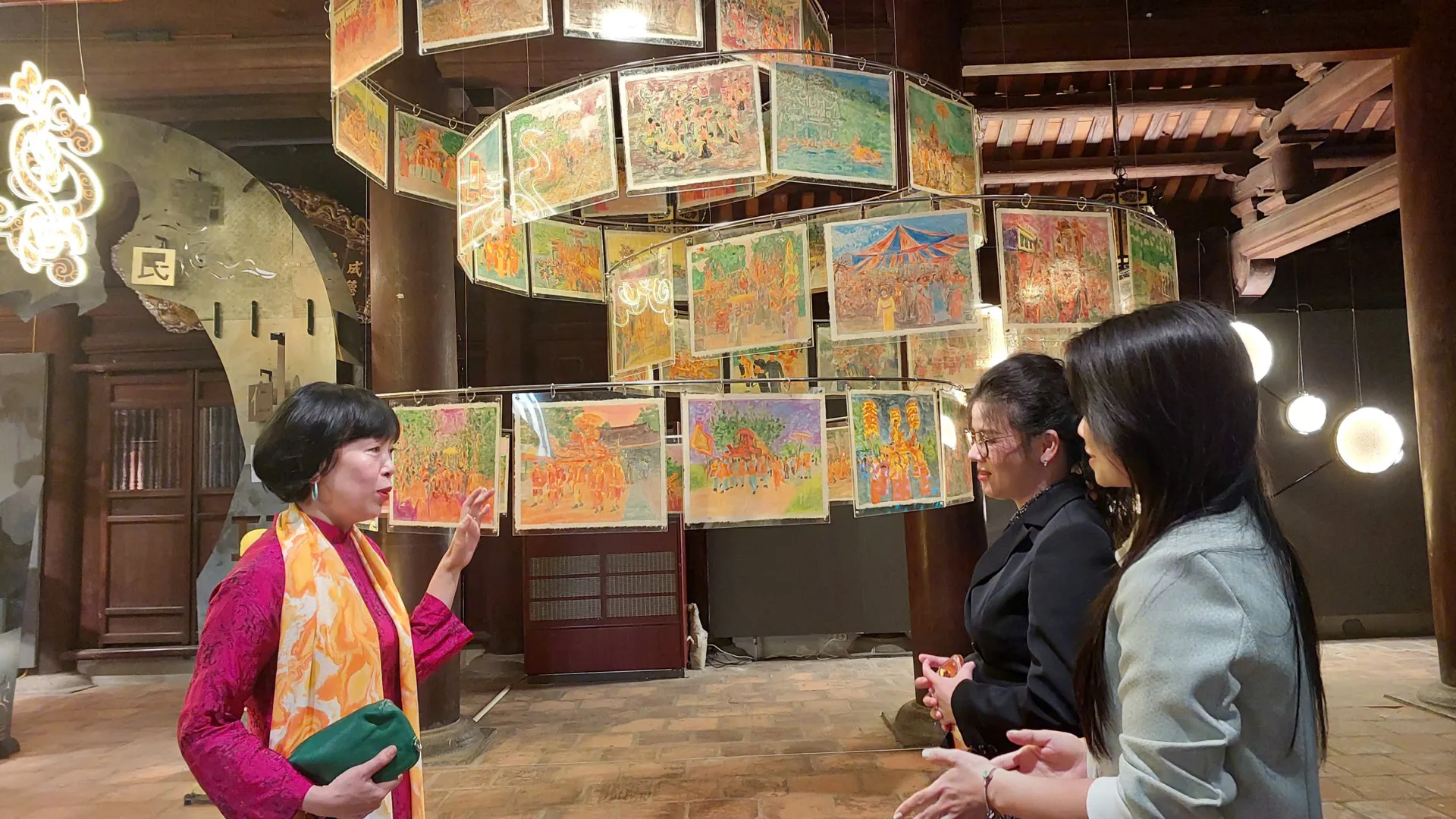
The exhibition is inspired by Thang Long-Hanoi's traditional culture and history. Photos: Ngo Minh/The Hanoi Times
The exhibition unfolds across three themes, including the tradition of learning, festivals, and the fusion of scholarship and celebration.
Artists employ diverse materials such as light, wood, silk, metal, poonah paper and ceramics, combined with contemporary installation and sculptural techniques.
Familiar cultural images, including Chu Van An, scholars, dragons, phoenixes and traditional festivals, trace the Vietnamese journey of learning, self-cultivation and service across history.
According to artist Vu Xuan Dong, a representative of the group, light functions as the core medium, bringing traditional and modern materials together to create immersive, interactive spaces.
Visitors are invited to move through and even within the artworks, engaging directly with their philosophical essence, while each participating artist contributes a distinct visual voice to a shared cultural narrative.
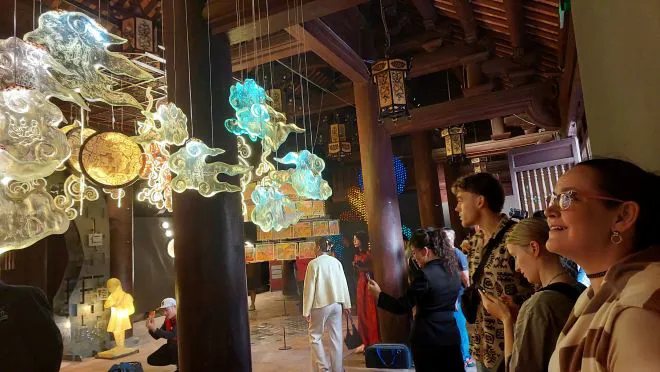
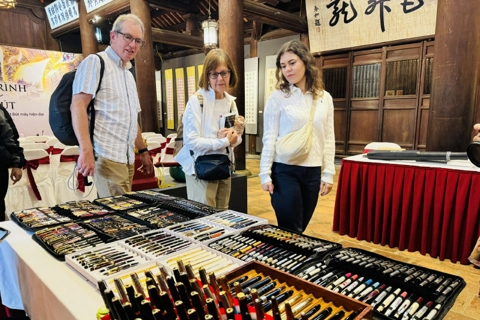
The exhibition draws interest of foreign visitors.
By Lamplight by painter Pham Hung Anh draws from the folk legend of the carp leaping over the Dragon Gate, later Confucianized as a symbol of scholarly success and official recognition.
Throughout history, this motif appeared in relief on the left side of the Tam Quan gate at the Temple of Literature, underscoring its deep roots in Vietnam’s educational tradition.
The artwork takes shape from the image of a lamp formed like a droplet, suggesting water, ink and the sweat of scholars past and students today.
Its delicate surfaces are adorned with classical motifs such as Ly Dynasty dragons, Le Dynasty clouds, the Bell Pavilion, the Drum Pavilion and the Khue Van Cac (Pavilion of Constellation), all enduring symbols of Hanoi’s cultural and scholarly heritage.
Through this composition, artist Hung Anh conveys a clear message: true achievement is born of sustained effort, perseverance and the courage to overcome hardship.
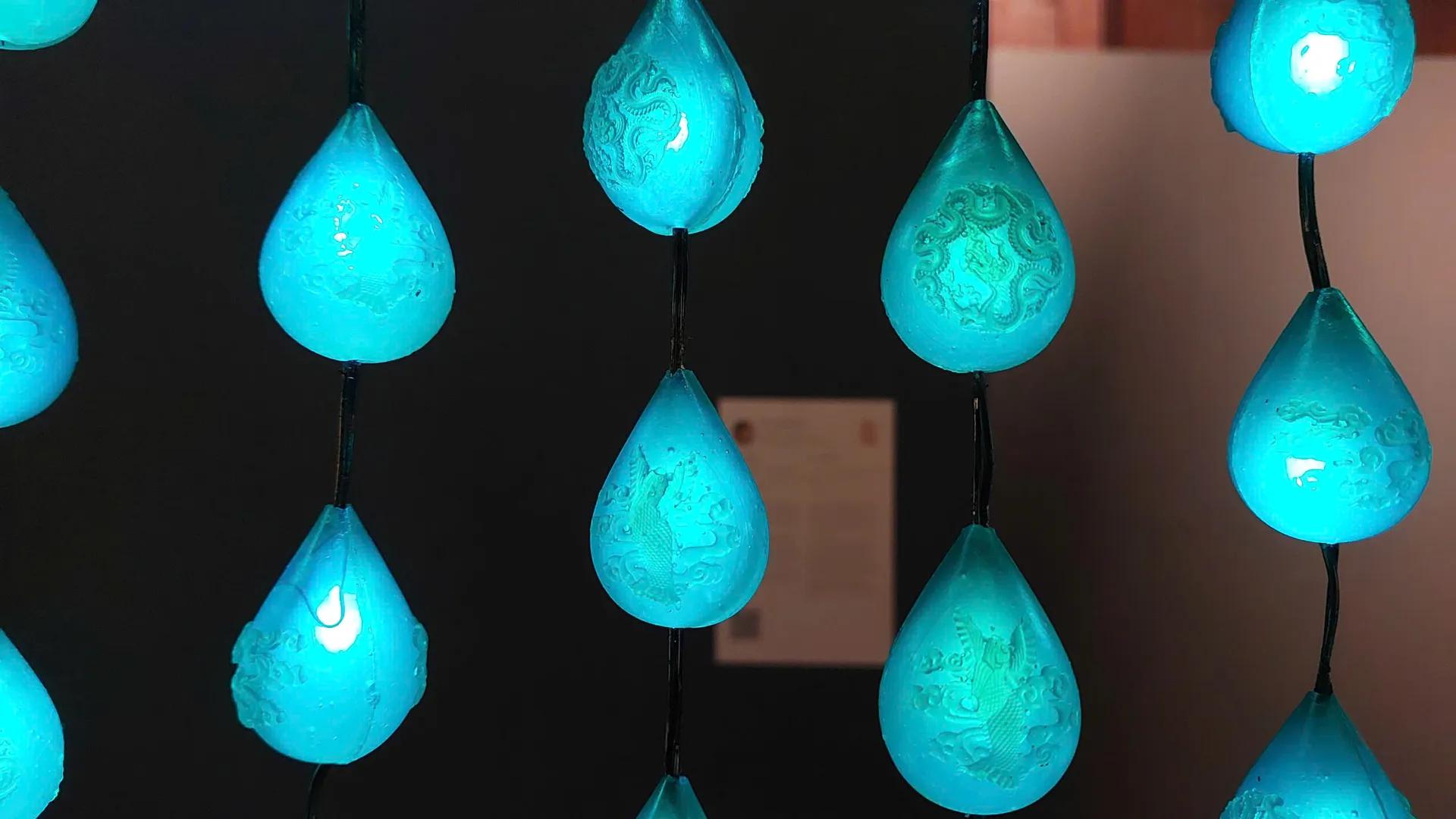
A closer look at the artwork by Pham Hung Anh.
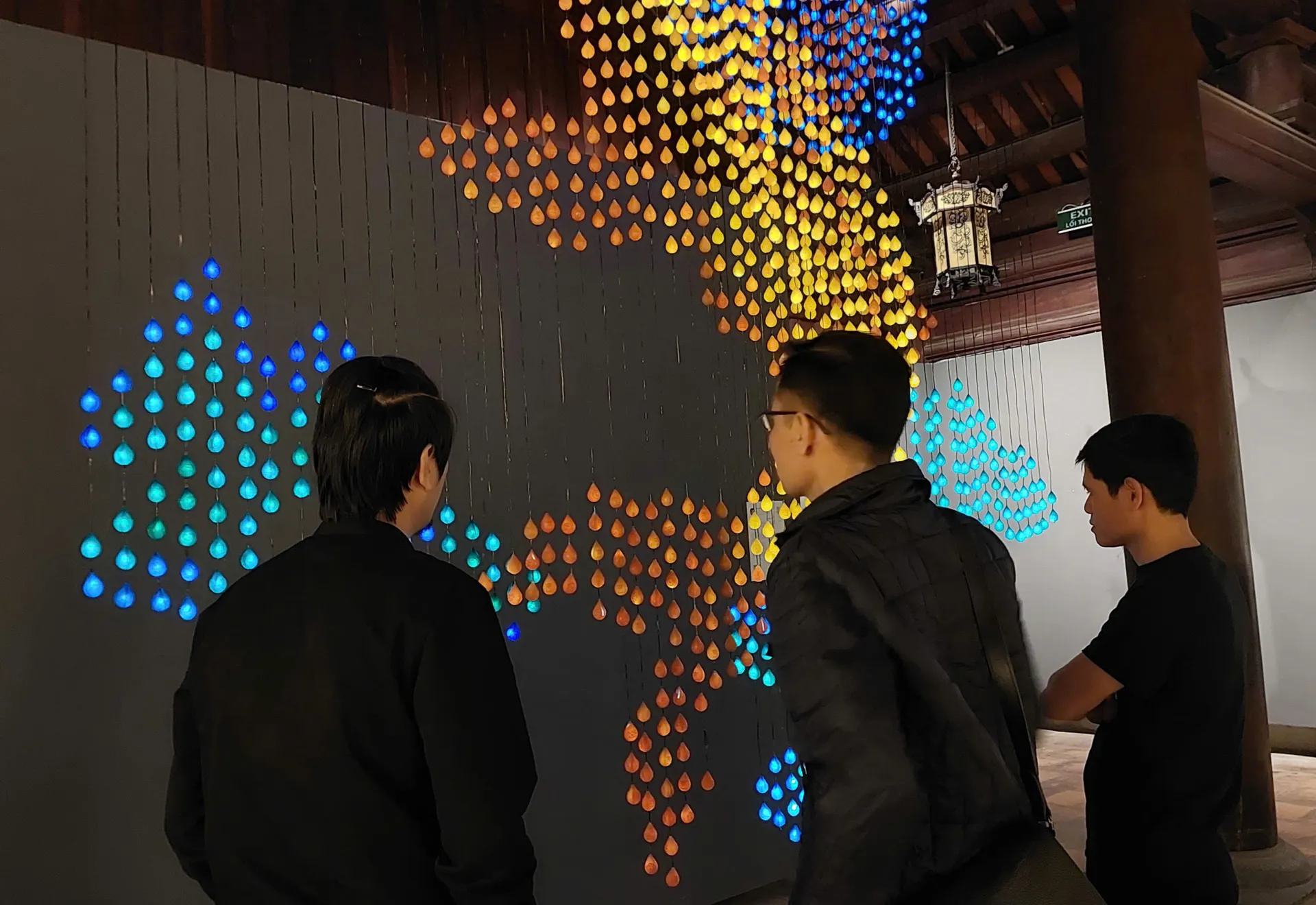
The work by Pham Hung Anh.
Dragon Gate by painter Phan Minh Bach, employs the imagery of the Five Pillars of Heaven to symbolize aspiration and the human drive toward elevation and self-transcendence.
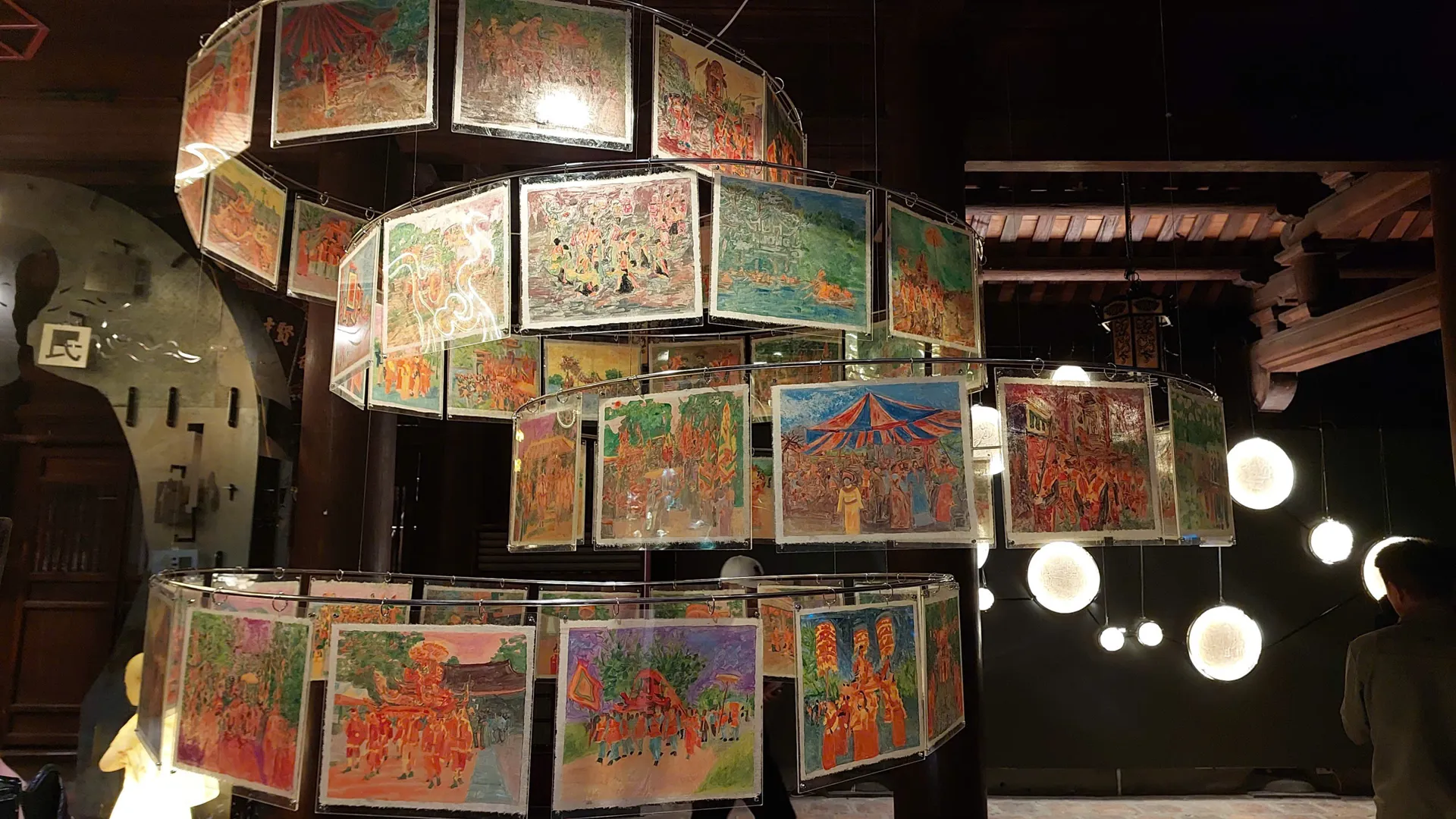
Imperial capital festival by artist Le Thi Thanh.
Under the festival theme, Imperial Capital Festival by artist Le Thi Thanh recreates the atmosphere of Hanoi’s celebrations through seven representative festivals.
Her work resembles a giant lantern glowing within the Temple of Literature, where memory and present reality merge in the rhythm of imperial life.
With The Essence of Learning the Way, painter Nguyen Tuan Dung portrays the Confucian scholarly journey, from self-cultivation and study to success and return in honor, woven into the festive pulse of tradition.
Images of carp transforming into dragons, flowing dragon forms and layered light create a sacred yet dynamic space, reflecting the continuity of Vietnamese learning in contemporary life.
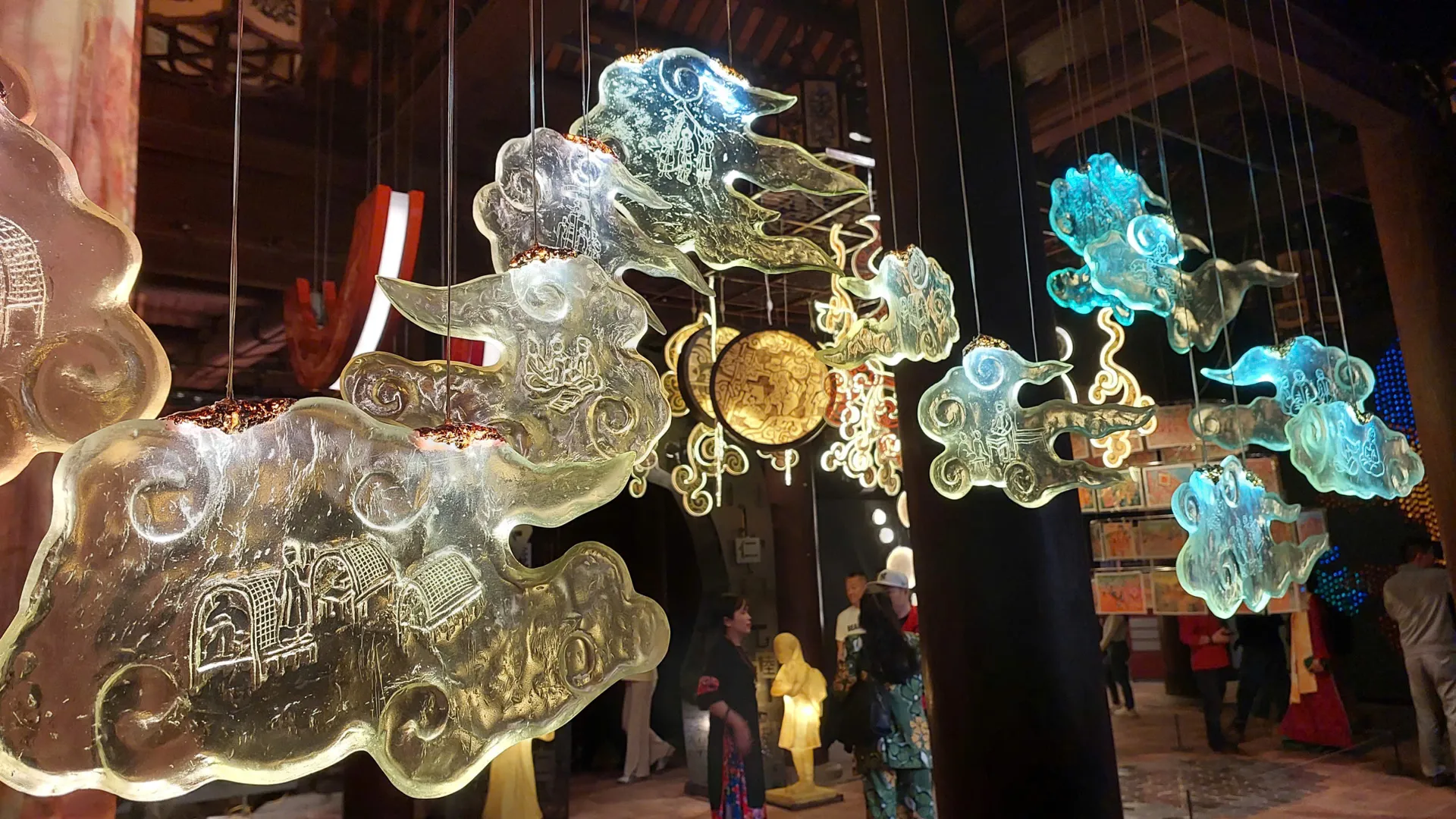
The essence of learning the way.
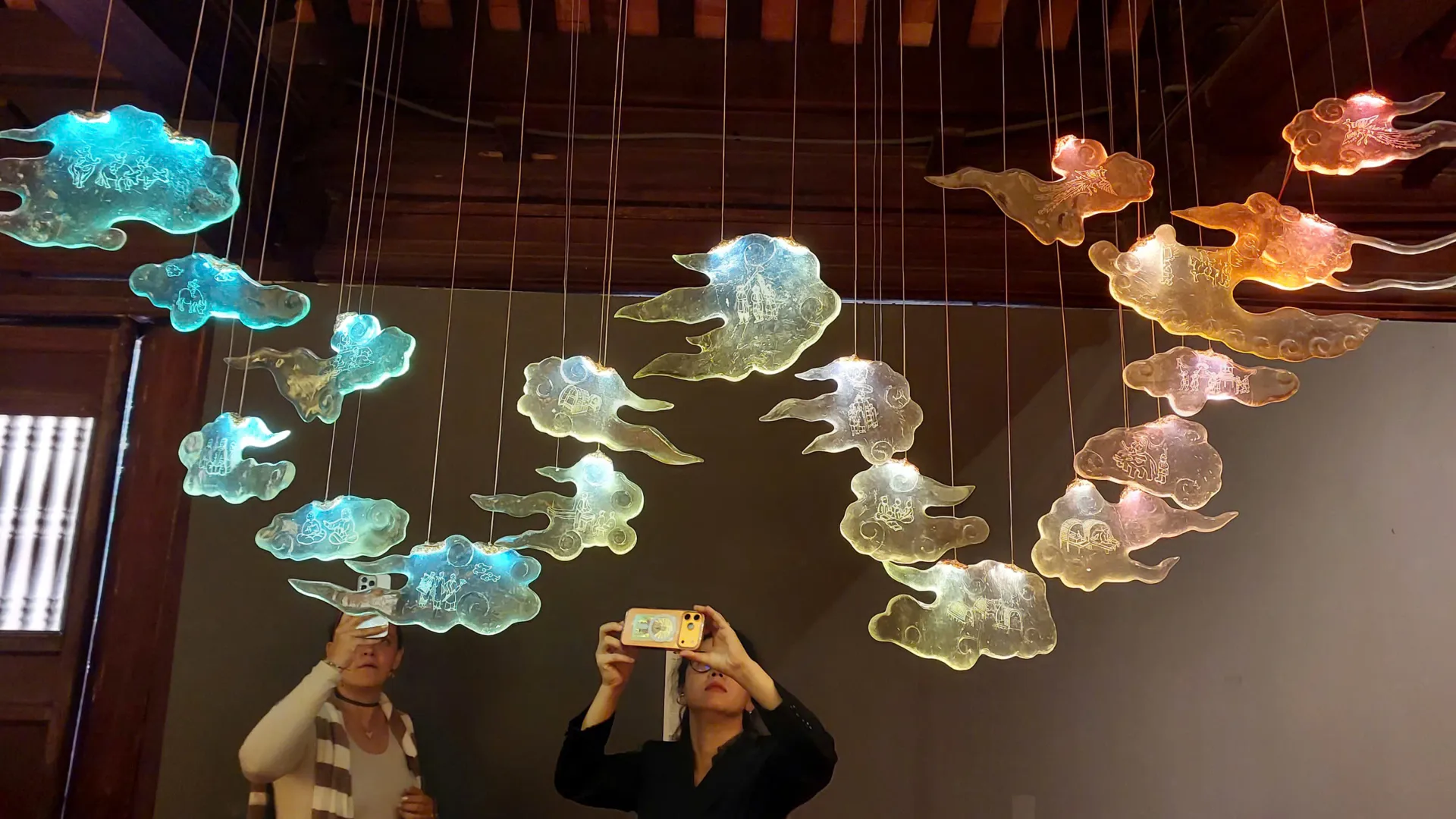
The essence of learning the way.
Flying Clouds, Blooming Flowers by artist Vu Xuan Dong draws inspiration from Ly Dynasty patterns. It blends imagery of examinations, historical figures and Thang Long festivals to form a shimmering “spring of knowledge” suspended above, celebrating learning and talent.
In Traces of Time, artist Nguyen Duc Hung creates a space for quiet reflection.
Ancient turquoise tones and traditional motifs evoke the deep historical layers of the Temple of Literature as the National University, affirming that cultural and moral values endure beyond time.
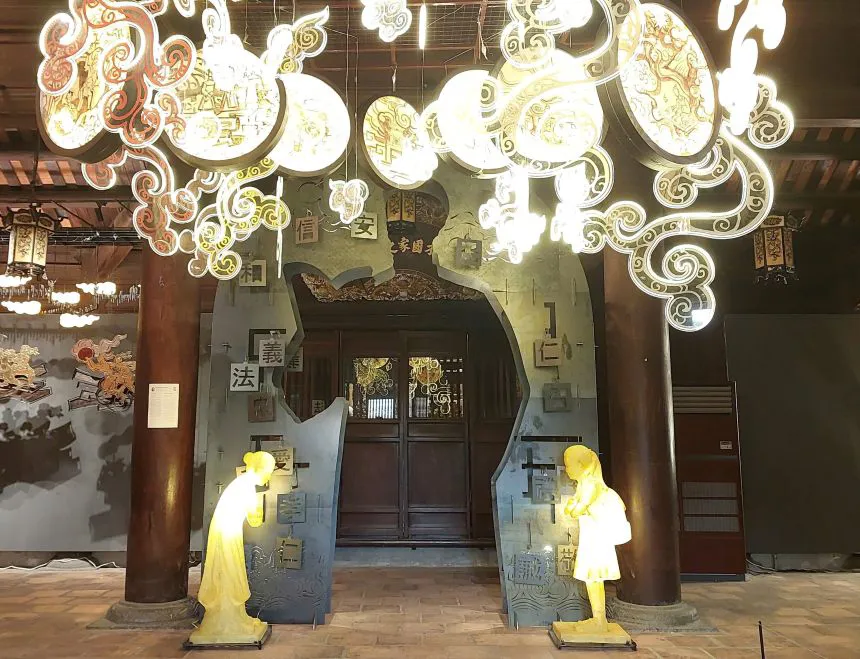
The sculpture Teacher and discipline by sculptor Nguyen Truong Giang.
The sculpture Teacher and Discipline by sculptor Nguyen Truong Giang takes inspiration from Chu Van An (1292-1370), the first professor of the Imperial Academy.
The work symbolizes the transmission of knowledge and moral cultivation in Vietnamese education. The teacher appears as an absence rather than a solid form, expressing selflessness and teaching beyond words.
From this void, light flows toward the students, embodying the inheritance and transformation of learning across generations.
The sculpture adopts a restrained, monument-like form that enters a quiet dialogue with the architectural and spiritual space of the Temple of Literature.
Illuminated ancient Chinese characters emerge on metallic surfaces, creating a visual field where traditional ethics meet contemporary artistic language.
The installation invites visitors to walk through the teacher’s absence as if entering a learning space, delivering its central message: “The teacher leaves no image behind, only light in the hearts of disciples.”
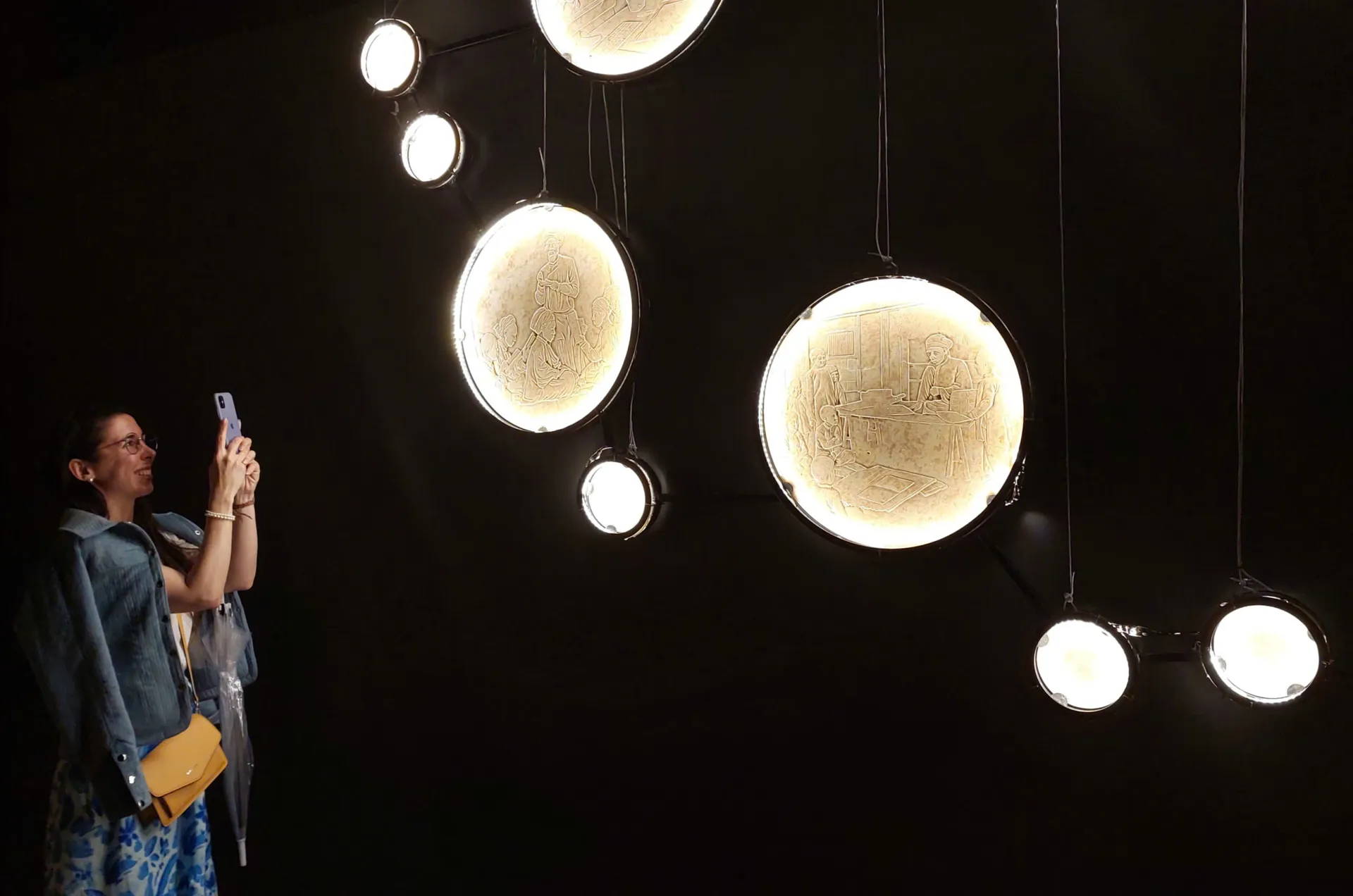
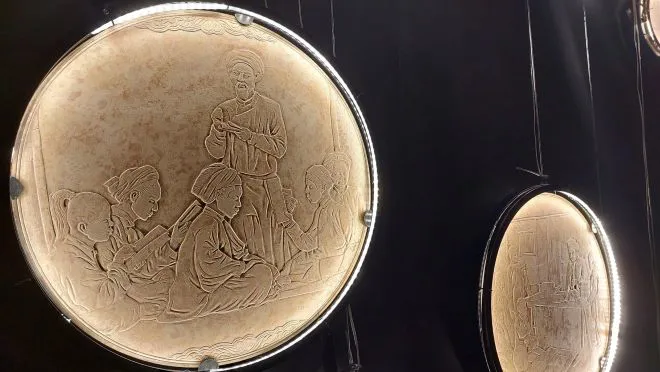
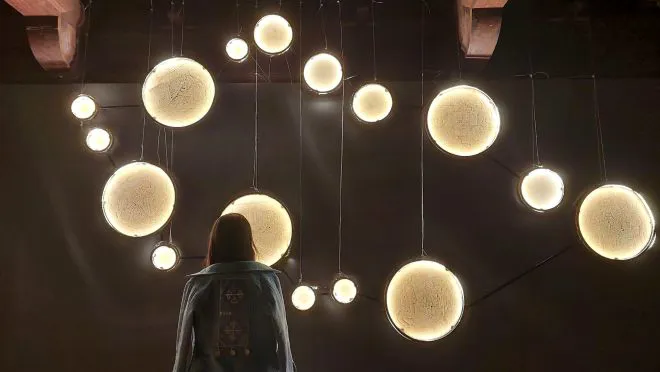
Artist Ho Sy Tien's Khue Van dance.
Young sculptor Ho Sy Tien’s Khue Van Dance extends the dialogue from the traditional Khue Van star into the age of artificial intelligence, affirming that the light of learning, character and responsibility, transcends eras and tools.
Meanwhile, Phoenix Dance by painter Ha Pham draws from the image of the phoenix palanquin in imperial festivals. Stylized into bold structural forms with folk-inspired motifs, the palanquin appears suspended and animated by light and rhythm.
Using mixed materials such as lacquered and gilded wood, the structure glows from within and radiates across the space. Visitors can step beneath and into the palanquin, looking upward to experience an intimate encounter with its luminous ceremonial presence.
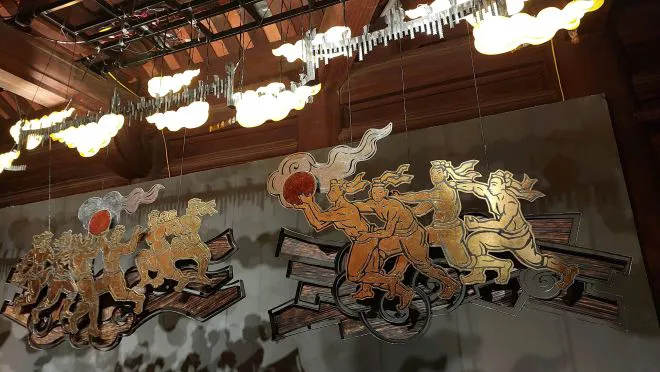
Ball Wrestling by painter Vu Le Tung.
Ball Wrestling by painter Vu Le Tung reinterprets the Thuy Linh ball-wrestling festival, a Ly Dynasty heritage, through contemporary visual language. The work revives the martial spirit, communal strength and cultural vitality of Thang Long-Hanoi.
The exhibition remains open to the public until March 22, 2026.