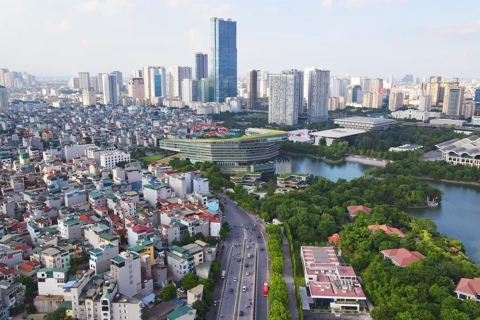
Balancing growth and sustainability: Hanoi’s double challenge in transport reform
As Hanoi moves toward a multi-centered, high-performance urban model, the city must tackle two urgent goals at once: easing chronic traffic congestion and creating a modern, green and intelligent transportation ecosystem.
THE HANOI TIMES — Hanoi faces the dual challenge of easing traffic congestion while developing a green, smart and sustainable transport system, a task crucial for building a multi-centered and high-performance capital.
Le Trung Hieu, Deputy Director of the Hanoi Department of Finance, speaks to Kinh te & Do thi (Economic & Urban) Newspaper about the solutions to achieve such dual target.
What kind of transport strategy does Hanoi need to meet development demands?
Hanoi is standing at a historic turning point in its urban development, facing the twin challenges of enhancing its transport connectivity both within and beyond the city to match its role as the country’s economic and social growth driver, while restructuring itself into a “multi-centered, high-performance” metropolis.

The Cat Linh - Ha Dong metro line and other metro projects are expected to complete Hanoi's mass transportation network. Photo: Kinh te & Do thi Newspaper
To achieve these goals, the city must adopt a comprehensive transportation development strategy and in fact, it already has one in motion. Never before has Hanoi entered such an intense phase of infrastructure development, with a series of mega-projects such as the high-speed railway, the urban railway system and the Red River landscape boulevard.
These projects reflect Hanoi’s long-term strategic vision and strong determination to build a modern, high-capacity transportation system as the foundation for sustainable growth.
What are the key factors determining the success of this strategy?
Hanoi’s transportation goals can be summarized in three main areas: inter-regional connectivity, internal connectivity and green transport transition. The most significant milestones include the North–South high-speed railway project that serves as a catalyst for comprehensive economic, social and scientific development across the country. Hanoi and Ho Chi Minh City will be the two biggest beneficiaries.
To support the project, Hanoi has planned the Ngoc Hoi station complex, integrating the high-speed railway, the urban railway and road transport. This will form a core hub for commerce, services, logistics and urban growth in the southern part of the capital. The city is also implementing key inter-regional road projects such as Belt Road No. 4 – Capital Region and the Gia Binh Airport–Hanoi road. These are strategically vital for strengthening Hanoi’s regional connectivity.
Within the city, Hanoi is executing the Comprehensive Urban Railway Development Plan and the Traffic Congestion Reduction Plan. Both are long-term solutions aimed at transforming the city’s transport system in both scale and quality. The urban railway system plays a crucial role in resolving congestion.
Can the urban railway system really help ease congestion and improve the capacity of Hanoi’s transport network?
Investing in the urban railway system is only one part of the overall strategy. Hanoi needs to implement synchronized measures involving traffic management, vehicle control, infrastructure connectivity and modern operating technologies to comprehensively reduce congestion and build a green, efficient and sustainable transport system.

Le Trung Hieu, Deputy Director of the Hanoi Department of Finance.
Public transport accounts for only 17%–18% of passenger traffic, mainly buses, while the city aims to raise this to 45%–50% by 2035 through urban railways. The Cat Linh–Ha Dong line shows weaknesses in connectivity with other modes. Despite high passenger density, the lack of bus lanes, limited bicycle and motorbike parking, and poor pedestrian access reduce its appeal to nearby residents. Solving this “last-mile” problem is key to maximizing urban railways’ potential.
Hanoi’s solution lies in a dense network of short, high-frequency feeder bus routes linking residential areas to railway stations. At the same time, the city must build safe and shaded walking paths and public bicycle infrastructure within 500 meters of each station. Integrating shared electric vehicles and mini electric cars at stations is also important to enhance convenience.
Beyond the urban railway and connectivity systems, what other solutions can optimize Hanoi’s transport network?
Hanoi needs to prioritize investment in and application of intelligent transport systems (ITS) and big data to redefine traffic management. Operating such a complex network requires a shift from static management to real-time, data-driven control. Technology integration will enable the city to monitor and manage both roads and railways efficiently.
Although Hanoi already has a traffic management center, data integration remains fragmented. Many major intersections still rely on outdated signal control systems or fixed-timing models, reducing overall traffic flow efficiency by 15%–20%.
The city must quickly build a smart urban traffic control center capable of integrating multi-source data for real-time monitoring and optimization using AI-based predictive algorithms. This will not only increase traffic efficiency by 15%–20% but also provide the foundation for transparent and fair implementation of electronic toll collection (ETC) in the downtown area, giving the city a complete operational overview.
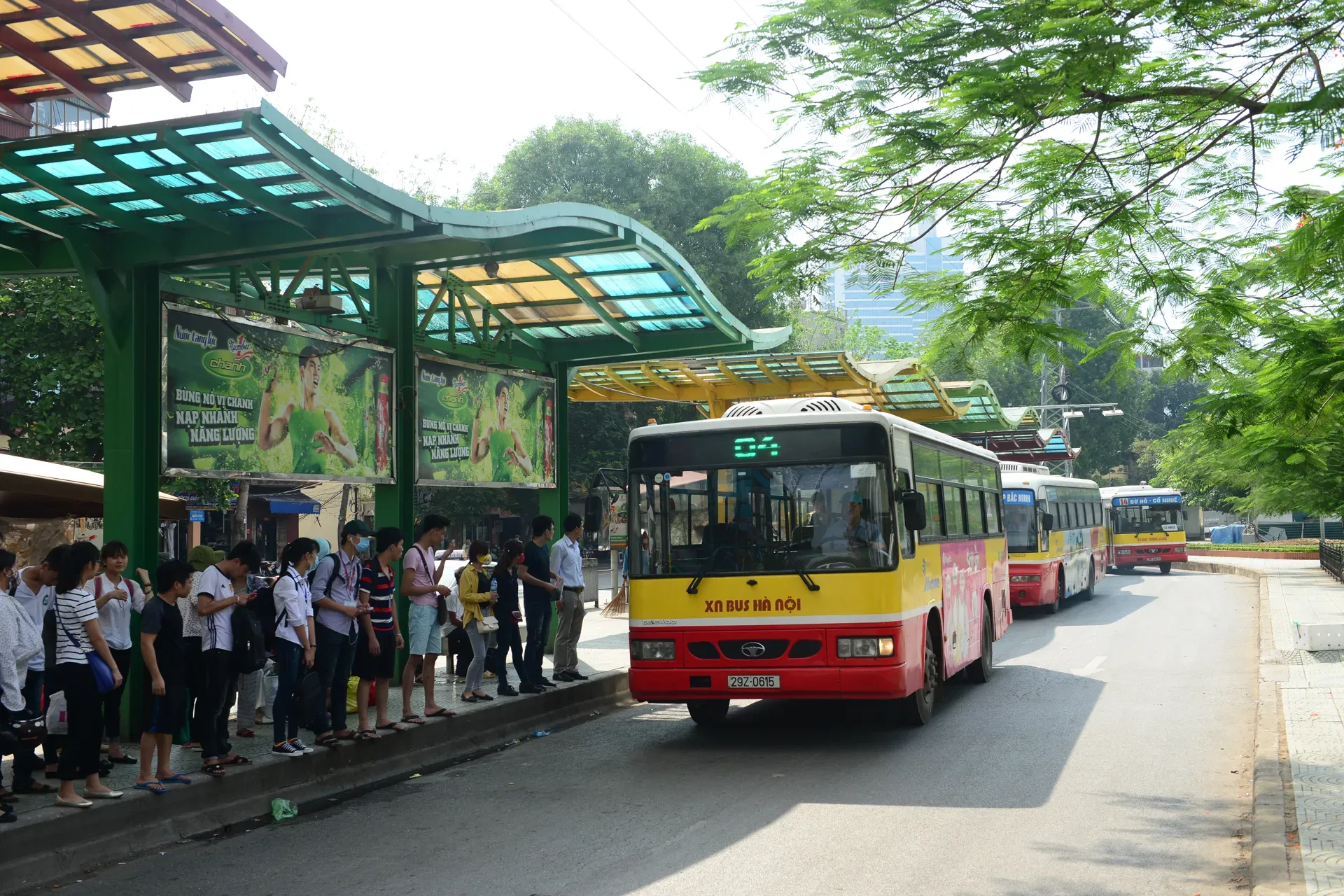
Hanoi plans to convert all diesel-fueled buses to electric fleets to better protect the environment. Photo: Pham Hung/The Hanoi Times
Moreover, controlling personal vehicles requires firm but transparent policy mechanisms and timelines. Technical and infrastructure measures are only temporary if not backed by effective policy tools to manage travel demand. Managing private vehicles is the only way to maintain effective mobility for all transport modes in the central area.
In the short term, completing Ring Road No. 4 – Capital Region and starting Ring Road No. 5 will play a crucial role in redistributing inter-regional traffic and reducing pressure on the inner-city network. In the long term, the city’s plan to restrict motorbikes in the downtown area after 2030 and apply tolls for vehicles entering the city center will only be feasible when the public transport share surpasses 30%–35%, supported by the first urban railway lines.
The success of the urban railway network will be the key to optimizing investment efficiency, solving congestion and shaping a sustainable urban future. A modern, high-capacity transport system will not only ease traffic but also reshape urban space, improve the environment and boost productivity, advancing Hanoi’s position as a leading capital in the region.
Thank you for your time!