Complete policies, infrastructures come first as Hanoi wants better waste sorting, management
Hanoi aims to improve waste classification and treatment through stronger policies, better infrastructure and incentives for environmental enterprises as the city moves toward a cleaner and greener future.
THE HANOI TIMES — A synchronized mechanism, upgraded infrastructure and incentives for environmental businesses are essential for Hanoi to enhance its waste treatment and management as the city transitions toward a cleaner and greener urban model.
Dang Thanh Vinh, Deputy Head of the Solid Waste Management Division under the Hanoi Department of Agriculture and Environment, said that waste sorting at the source is a right policy and an inevitable trend for sustainable urban development.
According to Vinh, Hanoi launched a pilot program for waste sorting at the source in June 2024 in five former central districts of Dong Da, Hoan Kiem, Ba Dinh, Hai Ba Trung and Nam Tu Liem.
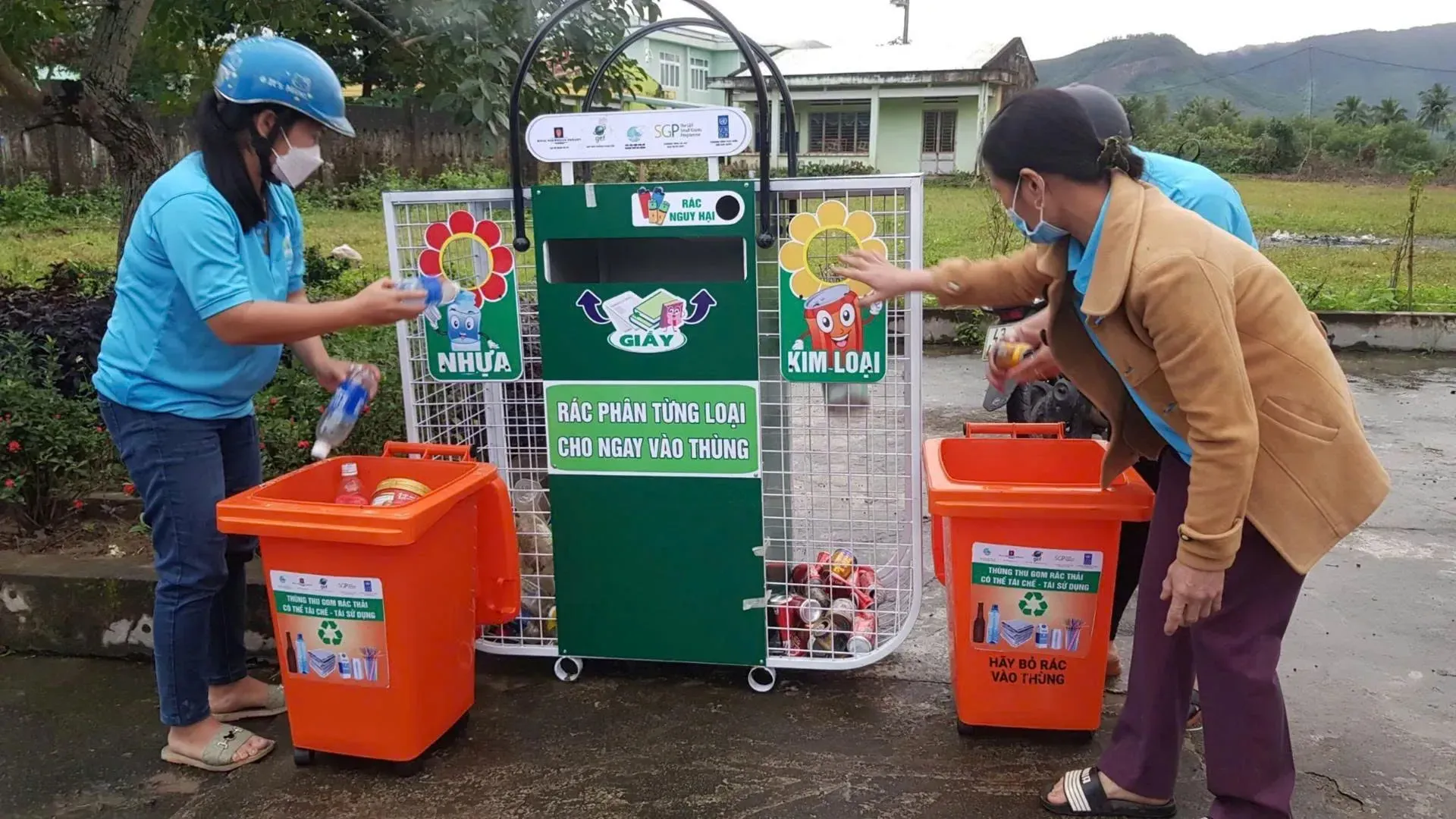
People in Hanoi sort plastic and metal wastes. Photo: Nguyen Quy/The Hanoi Times
After six months, the pilot program achieved positive results, dividing waste into four categories. The city collected about 280 tons of recyclable waste and more than 60 tons of bulky waste.
“These results lay the groundwork for Hanoi to implement waste sorting more effectively in the coming years,” Vinh said, emphasizing the need for a clear policy roadmap to address remaining challenges.
However, he stressed the need for a clear policy roadmap to address remaining obstacles and ensure smooth operations.
Ongoing challenges
According to the Ministry of Natural Resources and Environment, Vietnam produces about 60,000 tons of domestic waste daily, with urban areas accounting for 60%. Hanoi and Ho Chi Minh City alone generate 7,000–9,000 tons per day.
The waste collection and treatment rate has yet to reach full coverage, while solid waste volume is forecast to rise 10%–16% annually. Many localities still face difficulties in monitoring and enforcing proper sorting and disposal.
Hoang Duong Tung, Chairman of the Vietnam Clean Air Network, said that both residents and businesses lack motivation, making waste sorting at the source a short-term campaign rather than a sustainable habit.
For residents, Tung pointed out inconsistent awareness and community responsibility. Some areas perform well, while others are indifferent. Many people follow sorting rules carefully, yet others ignore them.
In terms of infrastructure, he said many apartment buildings lack proper facilities for sorted waste collection. Outdated construction standards require each building to have a single garbage chute, which hinders waste sorting.
“With one common chute, residents cannot separate waste properly,” he said, adding that garbage bags often break when dropped, mixing sorted waste together again.
“This discourages those who initially tried to sort their waste properly, gradually reducing their motivation,” Tung said at a seminar on waste sorting and management held by Kinh te & Do thi (Economic & Urban) Newspaper this week.
For environmental companies, Tung noted that low service fees and short-term contracts discourage long-term investment in infrastructure and labor.
“If contracts are renewed annually, no company dares to invest because they cannot be sure of contract extensions,” he said.
Hoang Xuan Co, Head of the Science Committee at the Vietnam Association of Environment Economics, said that inconsistent management is another major bottleneck.
“People are aware, but they lack clear guidance and trust because the collection system does not keep sorted waste separate, from bins and trucks to transfer points,” he said.
He added that the responsibilities among local governments, collection units and residential management boards remain unclear, especially in apartment complexes, with no monitoring or feedback mechanisms.
“As a result, despite many efforts, waste sorting remains a temporary movement, not a sustainable social habit,” he said.
Pham Xuan Diep, Head of the Management Board of New Skyline Apartment Complex in Van Quan Urban Area, said that the biggest disruption lies in the lack of coordination between stages.
“The current regulations and instructions are inconsistent, leading to different methods across districts and wards, from bin colors and waste categories to collection frequency,” he said.
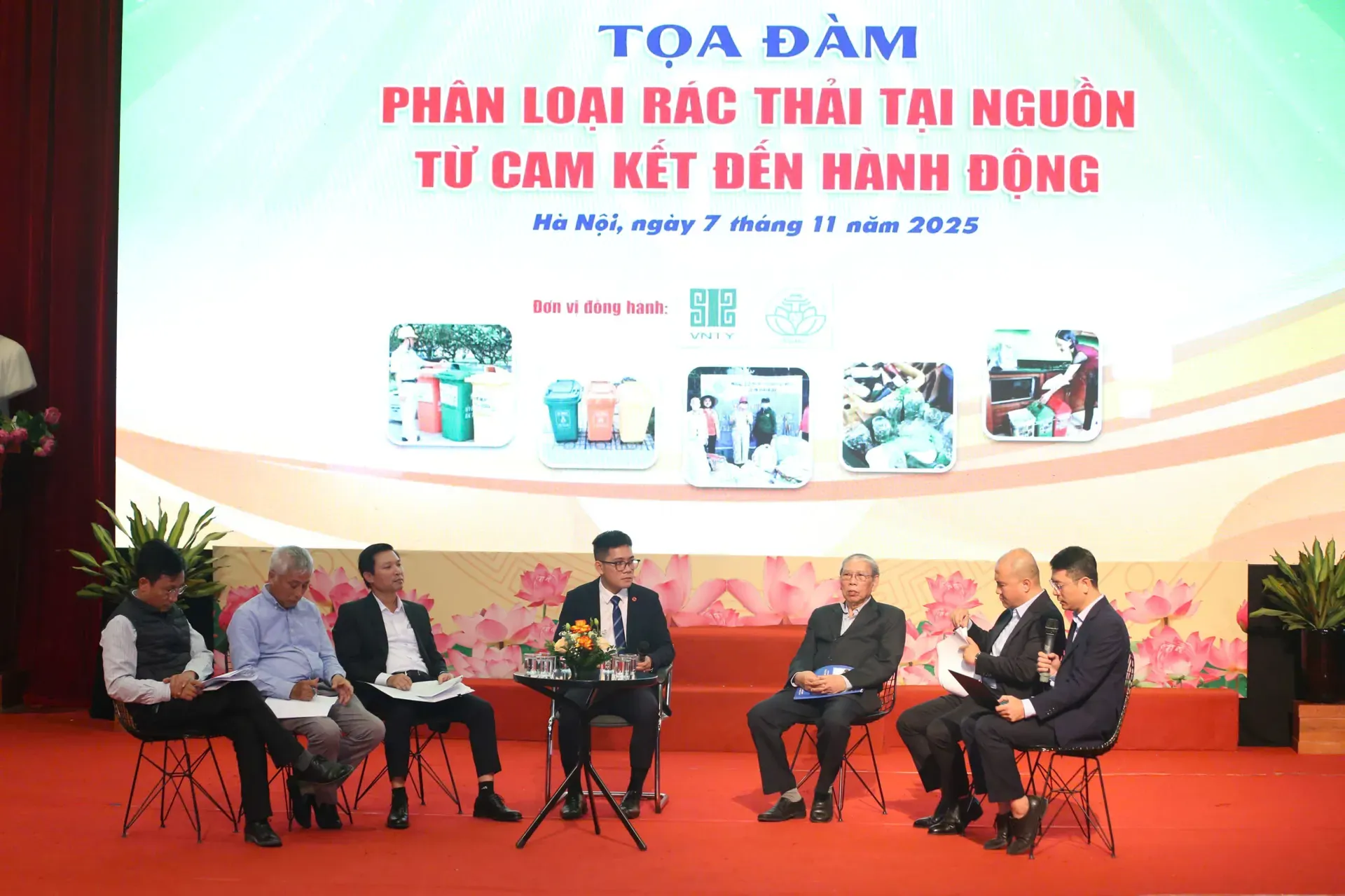
Speakers discuss solutions for better waste sorting at a seminar on November 7. Photo: Pham Hung/The Hanoi Times
“Collection systems are not synchronized and many residents see garbage trucks mix everything again because the facilities for sorted waste remain inadequate.”
That makes making people feel tired and see sorting as ineffective, he said.
Diep added that many bins are labeled only “organic” and “inorganic” without clear examples, confusing residents.
“Supervision and feedback after sorting are weak because no authority monitors or rewards compliance,” he said. “Coordination between local authorities, collection units and building managers is still fragmented.”
He also said communication and guidance remain ineffective and general, with slogans lacking practical instructions.
From the business perspective, Pham Huu Hung, General Director of An Phu Gia Operation and Commercial Services JSC, said waste sorting and treatment in apartment buildings face major obstacles.
“Each building has different designs and infrastructure. Some floors have one or two garbage rooms, so placing three or four separate bins is almost impossible,” Hung said.
He noted that many old apartments lack dedicated waste rooms or have only one shared chute. Residents may sort waste at home but find it difficult to separate it at collection points.
Therefore, Hung said businesses need financial and price support to collect, sort and treat waste in apartment buildings.
Fines are not an effective tool
Currently, individuals dumping waste in the wrong place face fines VND500,000 (US$19) to VND1 million ($38), while organizations face fines from VND1–2 million ($38-$76).
Compared with neighboring countries such as China and Singapore, these penalties are much lower. Yet experts said fines alone are not effective.
Instead, they stressed that enforcement should follow once infrastructure and policies are complete.
Diep, the New Skyline representative, said management boards have no authority to fine residents because they operate under a cooperative model.
“To make sorting effective, buildings must have proper infrastructure and financial support, possibly from recycling revenues,” he said. “Each complex has its own characteristics, so authorities must issue flexible, practical policies based on local conditions.”
Vinh from the Hanoi Department of Agriculture and Environment said waste sorting and collection systems, especially in old buildings, are still inconsistent.
He said the city must invest in bins, collection points, transfer stations and vehicles compatible with the three-category waste model for residential and public areas.
For apartment buildings, especially older ones, management boards and operation units must take responsibility for placing bins and organizing internal collection, Vinh said.
“They can set up sorting bins in suitable areas and organize teams to move sorted waste to common collection points,” he said. “The city encourages public-private partnerships, asking companies and residents to participate in improving facilities.”
He added that the city will continue investing in a synchronized system for collection, transport and treatment to ensure sorted waste is handled properly.
“The city still needs time to complete this system,” Vinh said, calling for cooperation from local governments, management boards and residents.
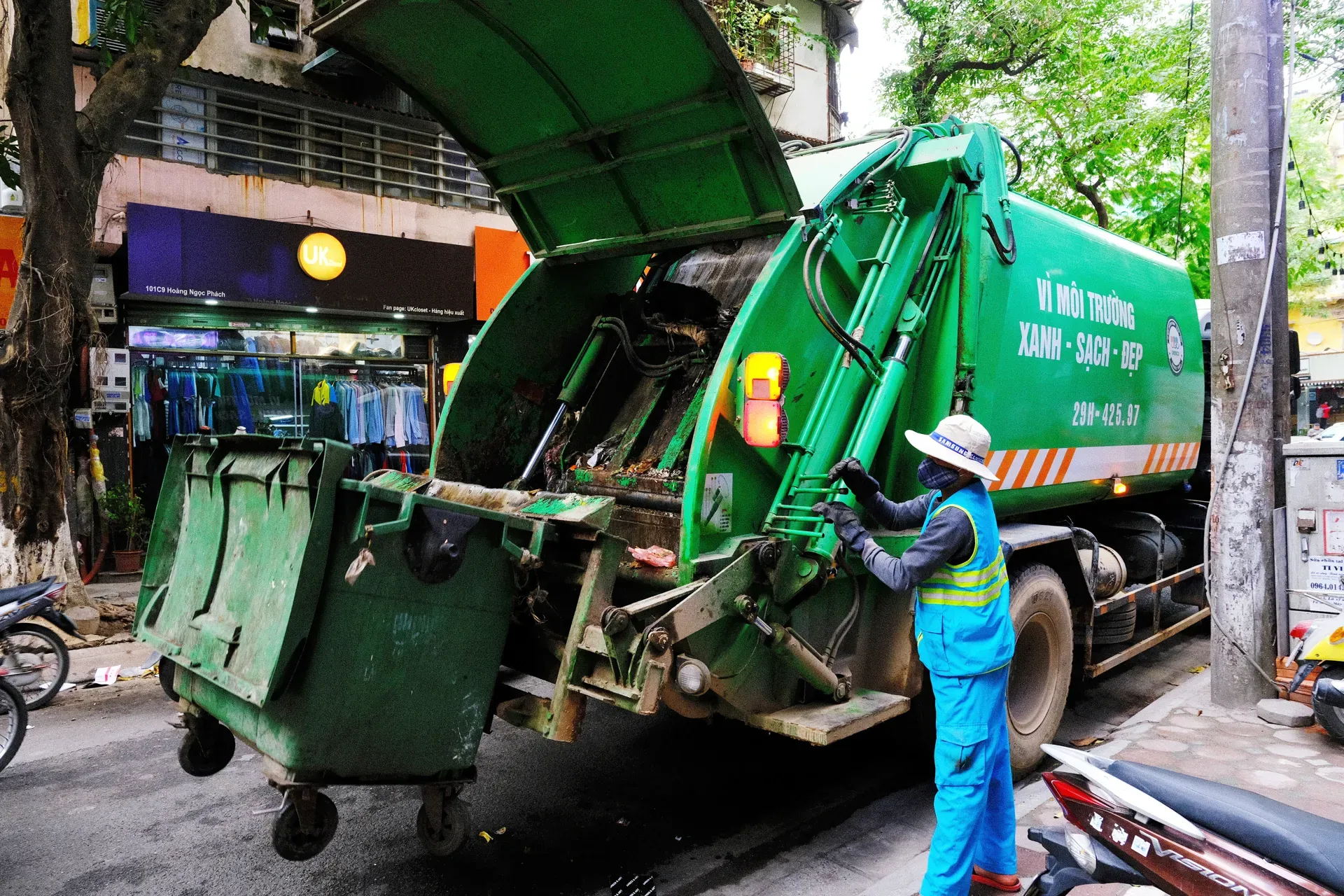
A garbage truck in Dong Da Ward. Photo: Cong Hung/The Hanoi Times
Hoang Duong Tung said motivating residents requires both spiritual and economic incentives, such as cleaner neighborhoods, community awards, or better living standards.
“Economic benefits and community recognition are the two most practical levers to turn sorting from a duty into a rewarding habit,” he said.
He suggested offering rewards for proper waste sorting, such as fee exemptions, point accumulation via apps, or programs like “exchange batteries for gifts.”
Tung also proposed recognizing residential groups that perform well in waste sorting and giving them priority in competitions, infrastructure support, or environmental funding.
Bui Ngoc Tu, Head of Technology at Hanoi Urban Environment Company (URENCO), said city authorities must act as coordinators, connecting regulations, infrastructure, communication and monitoring.
“To keep the system running smoothly, URENCO and other enterprises should handle technical standards, while communities maintain daily participation,” he said.
Tu also urged banning unlicensed small collectors, such as scrap pickers, who lack proper environmental treatment processes and cause pollution.
Nguyen Anh Tuan, Chairman of Hoang Liet Ward People’s Committee, proposed piloting waste collection, sorting and treatment models in apartment buildings to find long-term solutions.
“The system must ensure sorted waste remains separate,” he said. “If I had to choose one action, it would be reorganizing the collection system with separate bins, trucks and routes for each waste type.”
Tuan emphasized that once infrastructure and policies are ready, people will follow. “When residents see their efforts respected, with organic, recyclable and residual waste collected separately, trust and habits will naturally form.”
Regarding funding, Hoang Xuan Co from the Vietnam Association for Environmental Economics said the government must support waste sorting costs for enterprises.
He added that residents can contribute by paying slightly higher collection fees, but only if authorities and companies prove the money is used properly and transparently.