Hanoi offers new incentives for waste recycling projects
The move aims to help the city meet its targets on reducing, reusing, recycling and treating plastic waste.
THE HANOI TIMES — The Hanoi People’s Council has passed a document that sets out measures to support incentives for technology-applied waste recycling projects.
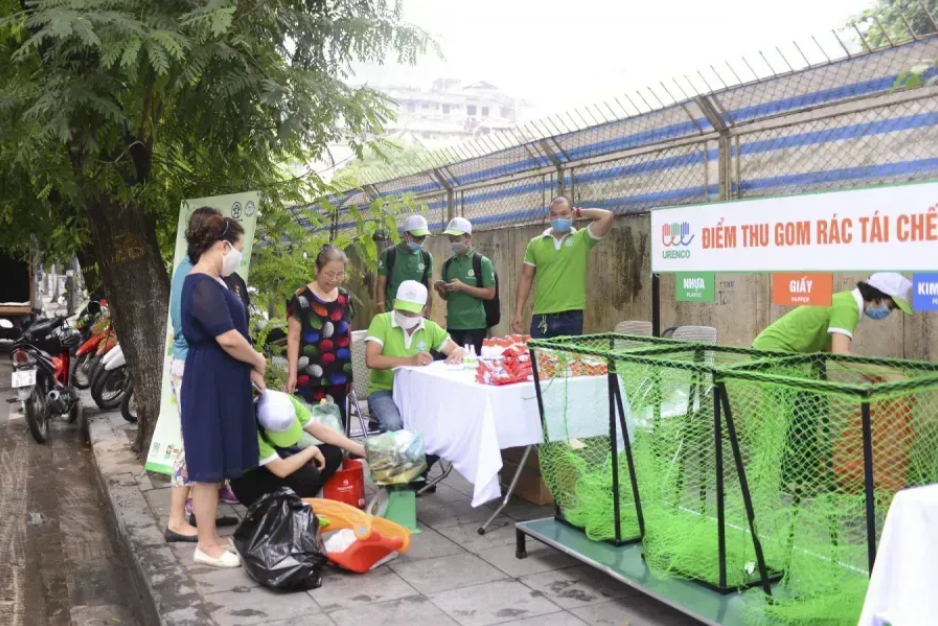
A recycling collection point in Hanoi. Photo: Moc Mien/The Hanoi Times
According to data from the “Clean Cities for a Green Vietnam” program in Hanoi and Ho Chi Minh City, Hanoi generates an estimated 7,500–8,000 tons of household waste every day. Recyclable materials such as plastic, paper, cardboard, glass, and metals make up about 35.4% of this total.
Currently, over 58% of Hanoi’s waste is treated through waste-to-energy incineration, while the rest is disposed of in sanitary landfills. Plastic waste alone accounts for around 1,427 tons per day, more than 60% of which comes from single-use plastics and plastic bags.
Nearly 20% of collected plastic is recycled, mostly by informal sectors such as small workshops, household businesses, and craft villages around Hanoi.
Recycling mainly focuses on common plastics like water bottles (PET) and detergent containers (HDPE), while softer plastics such as plastic bags and wrap (LDPE) are mostly discarded in landfills. This has contributed to environmental pollution and posed health risks to residents.
Nguyen Xuan Dai, Director of the Department of Agriculture and Environment, said the lack of formal recycling facilities and outdated technology in informal recycling are driving pollution and public health concerns.
To address this challenge, Hanoi is promoting both environmentally friendly alternatives to single-use and hard-to-decompose products and the adoption of advanced, modern recycling technologies.
However, waste reduction initiatives have yet to scale up, and access to incentives has been limited due to a lack of clear guidance on eligibility and conditions. “Modern technologies remain underused because of high investment costs,” Dai said.
Based on these realities, the Hanoi People’s Committee proposed and the Council adopted a resolution focusing on five recyclable waste categories, plastic, paper, metals, glass, and rubber, mandating their recycling and encouraging the use of best available techniques.
The resolution specifies that, in addition to general eligibility requirements under national law, beneficiaries must apply approved best techniques.
If no national list or guidelines exist, Hanoi is authorized to develop and issue its own, ensuring compliance with Article 105 of the 2020 Environmental Protection Law and Article 37 of the 2024 Capital Law.
Beneficiaries must also commit to producing environmentally friendly recycled products that meet legal standards and may qualify for Vietnam’s Eco-label certification.
Incentives include six years of free land and water surface rent, followed by reductions under national and city land policies.
Eligible organizations and individuals may also access loans from the city’s Development Investment Fund or its entrusted environmental protection capital, with preferential terms. Certain local fees will be waived entirely, while companies operating in industrial parks with synchronized infrastructure can receive up to 50% support on infrastructure fees (capped at VND100 million or US$4,000 per year).
The city will cover 100% of costs for participation in national and city-level trade and investment promotion events, up to 1.5 times the maximum level allowed under the People's Council's Resolution No. 22/2016/NQ-HDND.
Additional support includes training and capacity building for human resources, hiring technical experts, technology transfer, and promoting recycled products in media and public campaigns.
Enterprises will also receive up to 50% support for brand-building, logo and identity design, intellectual property certification, eco-labeling, and displaying and selling recycled products at supermarkets, shopping centers, and large retail systems in Hanoi.