Hanoi doubles fines in push for cleaner air
The capital is moving closer to its vision of a modern and sustainable city, with cleaner air in every breath
THE HANOI TIMES — As Hanoi doubles penalties for environmental violations starting this September, officials point to falling PM2.5 levels, down 9% in the first half of the year, as proof that tougher measures and cleaner transport policies are making a difference.
City authorities say the improvement is no coincidence as Hanoi’s air quality management plans, once seen as aspirational, are now materializing on the ground. Low-emission zones, a growing electric bus fleet, stricter pollution enforcement and new air quality sensors are gradually changing how residents move, build and breathe.
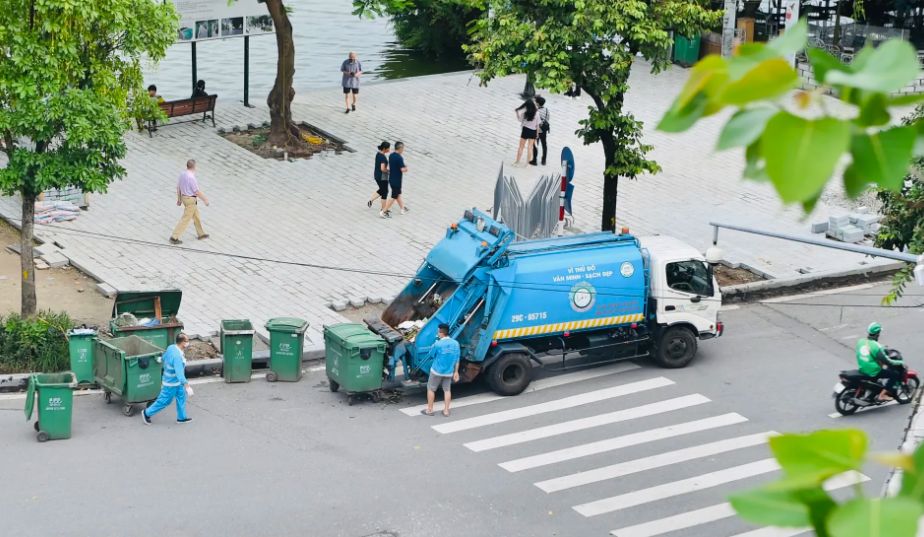
Hanoi steps up waste collection in the inner city with modern vehicles and equipment. Photo: Pham Hung/The Hanoi Times
“We are shifting from promises to decisive action,” said Nguyen Xuan Dai, Director of the Hanoi Department of Agriculture and Environment.
Thanks to the combined efforts of the political system and the public, Hanoi is becoming cleaner, greener and more livable.”
In the first six months of 2025, more than 70% of days recorded good or moderate air quality, up 15% from last year. The citywide average Air Quality Index (AQI) stood at 78, still at a moderate level, but part of a steady downward trend in pollution.
Policies meet the pavement
Hanoi’s Air Quality Management Plan to 2030, with a vision to 2035, sets a target to reduce fine dust (PM2.5) by at least 20% compared to 2024. Measures include tighter controls on emissions from traffic, construction, industry, and the burning of waste and straw.
The city has piloted Low Emission Zones in newly designated central wards, formerly the old core districts of Hoan Kiem, Ba Dinh, Hai Ba Trung, and Tay Ho, with plans to expand the model to Ring Roads 1 through 3.
Under the roadmap, gasoline-powered motorbikes will be banned from the downtown area starting in 2026, while fossil-fuel cars will face gradual restrictions between 2028 and 2030.

Hanoi Urban Environment Company Limited (Urenco) uses mist-spraying vehicles to reduce fine dust in the air. Photo: Urenco
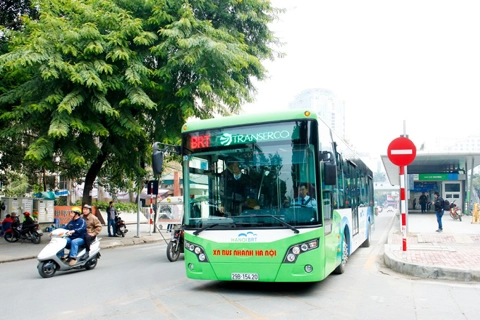
In terms of public transport, new electric bus lines and metro routes are reducing reliance on private vehicles. Around 50 new monitoring stations now provide real-time forecasts, while drones help detect major emission sources such as illegal crop burning. Construction sites face stricter rules, and outdated diesel trucks are being targeted by police patrols.
Nguyen Thai Nam, Director of the Center for Agricultural and Environmental Engineering, stressed the importance of cross-sector coordination. “We’re working closely with local authorities to control all sources of pollution and bring air quality back to safe levels,” he said.
Change is also visible at the street level. Tay Ho resident Le Thu Hang rides an electric scooter by choice. “It’s not just about convenience, but about the future of the city. If we all do our part, Hanoi’s skies will be clearer in a few years.”
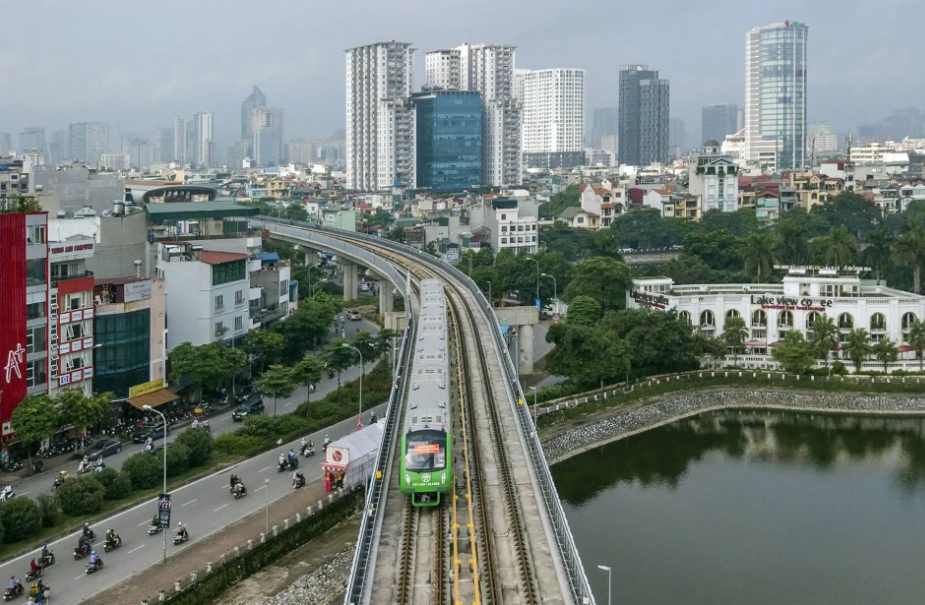
Cat Linh–Ha Dong metro line. Photo: Hai Linh/The Hanoi Times
University student Nguyen Minh Quan switched from a motorbike to electric bus for his daily commute, saying that it helps him save money and feels more comfortable.
“If more people use public transport, we can make a big difference,” said Quan.
City officials aim for public transport to handle 30–35% of commuters by 2030, once key metro and BRT projects are completed.
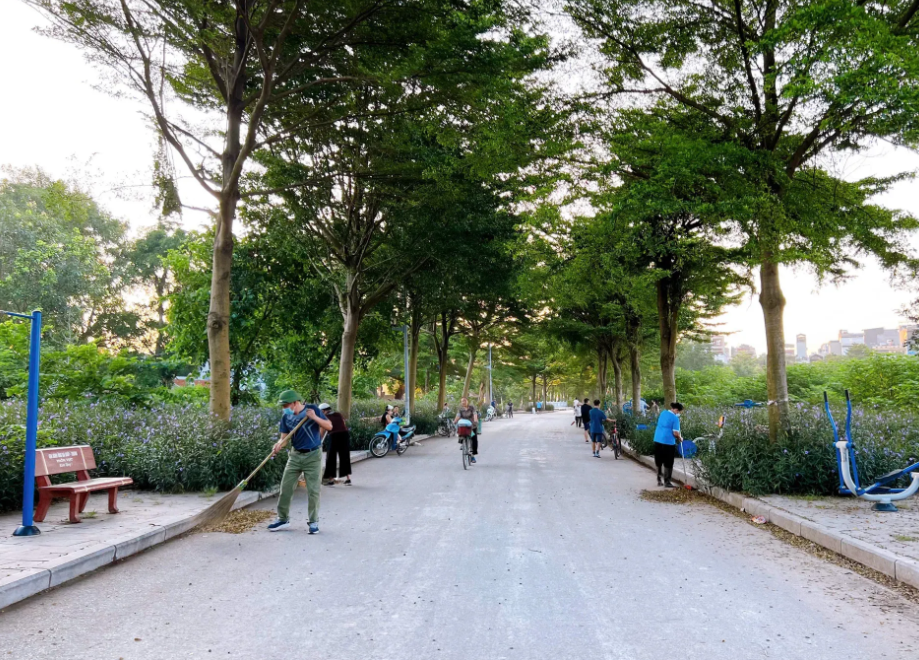
Officials and residents of Thanh Liet Ward join a community environmental clean-up. Photo: Nam Bac/The Hanoi Times
Towards a sustainable 2030 and beyond
The city’s newly enacted Resolution No. 08/2025/NQ-HDND, which took effect on September 1, doubles fines for environmental violations. Waste collection is being modernized, while industrial parks are required to achieve full wastewater treatment coverage by 2030.
Looking further ahead, Hanoi’s Climate Action Plan targets net-zero emissions by 2050. The plan rests on six pillars, including education, compliance, pollution prevention, resource efficiency, and stronger law enforcement.
According to Nguyen Xuan Dai, Director of the Hanoi Department of Agriculture and Environment, the city will never sacrifice the environment or public health for short-term growth.
“Sustainable development requires clean air and healthier lives,” said Dai, emphasizing that true progress cannot be measured only by economic growth but also by the well-being of communities, the protection of natural resources, and the creation of an environment where future generations can thrive.
From tougher rules and new technology to small lifestyle changes by citizens, Hanoi’s fight for cleaner air is gaining momentum - one policy, one action and one breath at a time.
|
Hanoi’s climate action plan until 2050
|