Hanoi inaugurates Vietnam’s largest waste-to-energy plant, aiming for circular economy
The project is a groundbreaking step in Hanoi’s plan to modernize waste management, turning household waste into clean energy and reducing reliance on landfills.
THE HANOI TIMES — The Hanoi People’s Committee and Thien Y Hanoi Environmental Energy JSC on October 13 inaugurated the Soc Son Waste-to-Energy Plant at the Nam Son Waste Treatment Complex in Trung Gia Commune.
The facility marks a major step forward in Hanoi’s waste management and supports the city’s transition toward a circular economy.
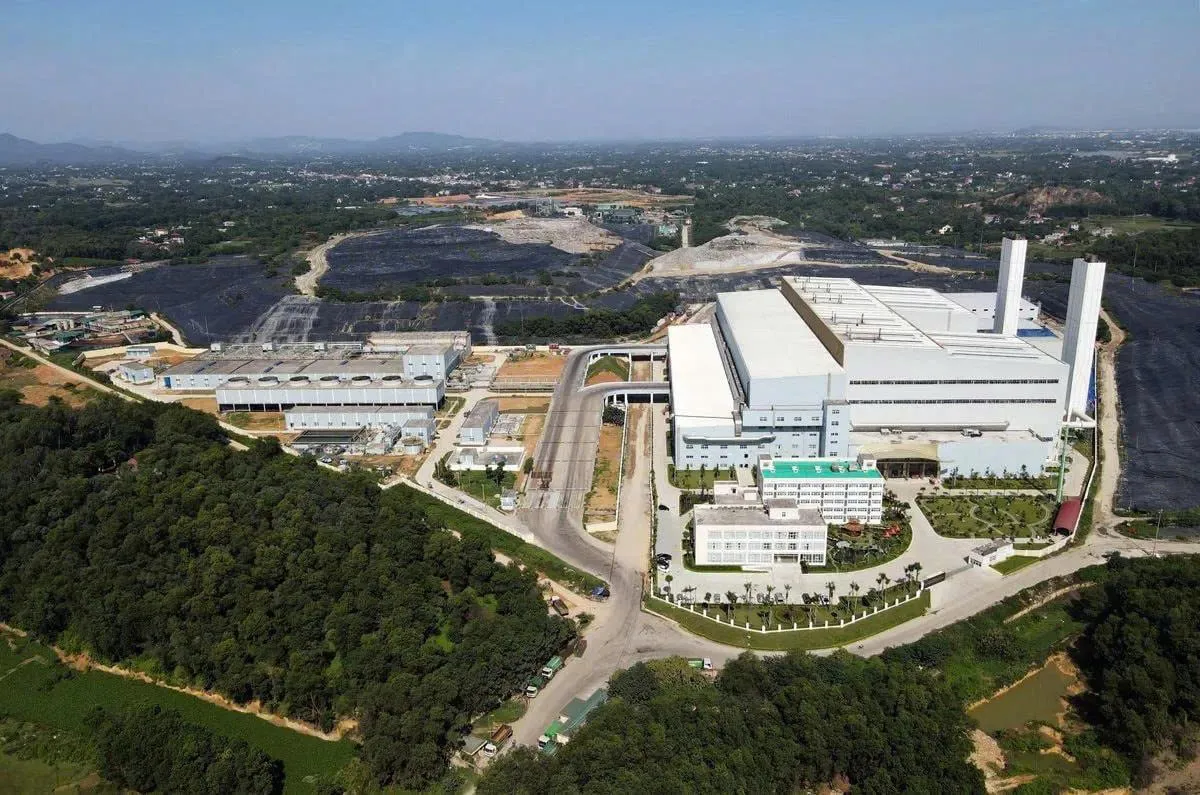
The Soc Son Waste-to-Energy Plant has a processing capacity of 5,000 tons of waste per day. Photo: Kinh te & Do thi Newspaper
Construction began in August 2019. The plant started receiving waste in May 2022 and has now completed all stages to officially begin full operation.
With a daily capacity of 5,000 tons of waste and power generation of 90 MW, it stands as Vietnam’s largest and the world’s second-largest waste-to-energy plant.
The facility uses Belgium’s Waterleau mechanical grate incineration technology, featuring five incinerators and three turbine generators. Waste goes through drying, burning and full combustion, enabling thorough incineration of mixed waste without extensive sorting.
Its exhaust gas, wastewater and ash treatment systems meet both European and Vietnamese environmental standards, ensuring safety and minimizing emissions.
This technology allows municipal waste to be efficiently processed and converted into renewable energy, easing pressure on landfills and supporting Hanoi’s socio-economic growth.
According to the Hanoi Department of Agriculture and Environment, the city generates around 7,600 tons of household waste daily, increasing by about 5% each year.
The department projects that by 2030, daily waste generation could reach nearly 10,000 tons, creating major challenges for urban infrastructure and environmental management.
Deputy Director Nguyen Minh Tan said the waste collection rate has reached 98%–99% in urban areas and about 95% in suburban localities. Most waste undergoes energy-recovery incineration, while less than 20% still goes into sanitary landfills.
Tan said landfilling takes up large areas and poses risks of air and groundwater pollution. As available land for waste disposal shrinks and waste volume rises, Hanoi must speed up the use of modern, eco-friendly treatment technologies.
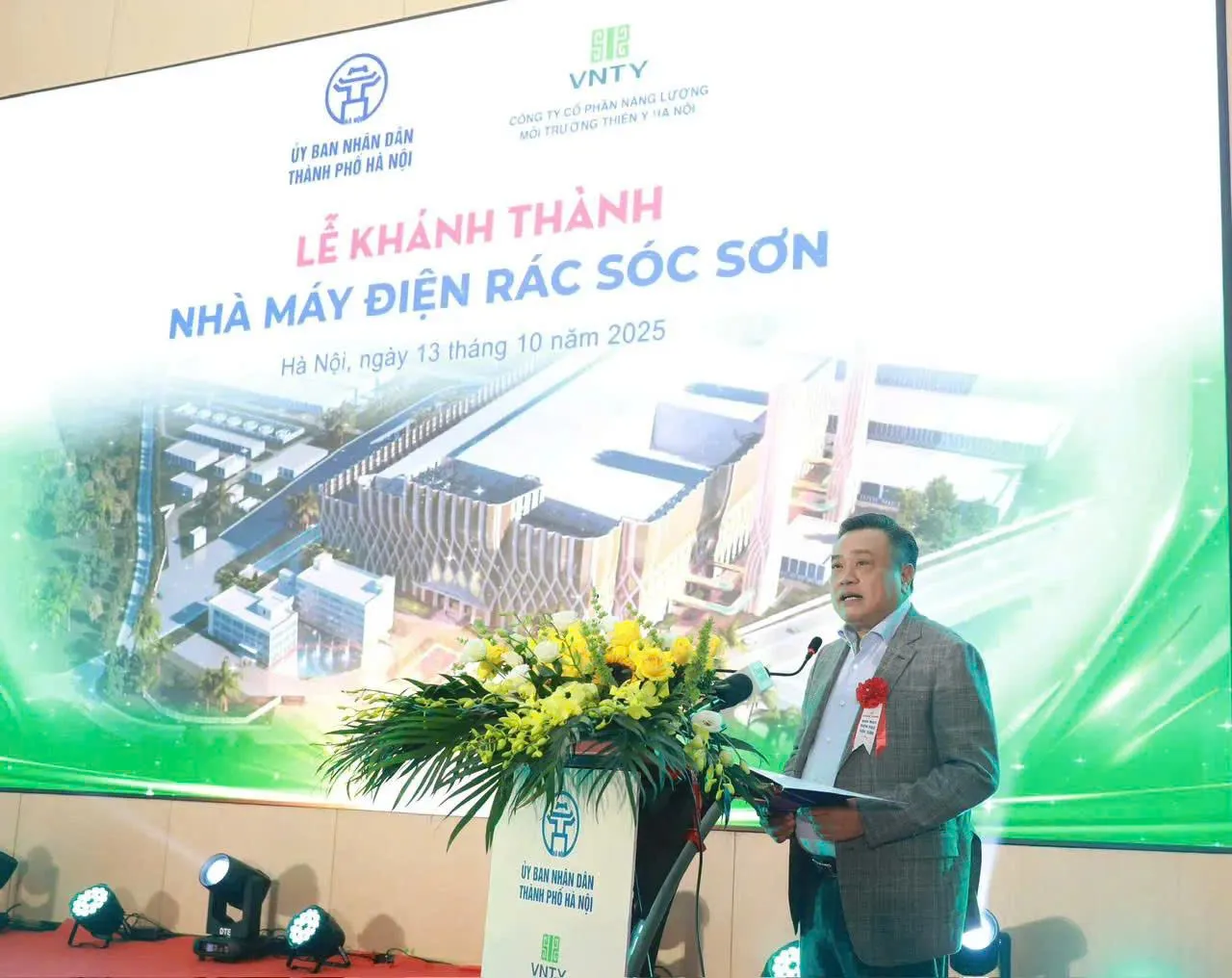
Chairman of the Hanoi People’s Committee Tran Sy Thanh delivers a directive speech at the ceremony. Photo: Kinh te & Do thi Newspaper
Speaking at the ceremony, Chairman of the Hanoi People’s Committee Tran Sy Thanh said that the project is a crucial step in building a green, clean and civilized capital.
He emphasized that the plant reflects Hanoi’s strong commitment to environmental protection, sustainable development and international integration.
Chairman Thanh expressed hope that the Soc Son Waste-to-Energy Plant will help Hanoi phase out landfilling and move toward a circular economy where waste becomes a resource.
The city plans to develop more waste-to-energy plants, promote waste segregation at source and invest in a modern, integrated waste collection and transport system.
Thanh said Hanoi will continue to attract green technology projects, expand waste treatment capacity and modernize its solid waste management system to reduce emissions and improve residents’ quality of life.
“The Soc Son Waste-to-Energy Plant is a symbol of hope and aspiration for a green, clean and civilized Hanoi,” Thanh said.
He requested Thien Y Hanoi Environmental Energy JSC to begin Phase 2 of the project, expanding its capacity by 1,600 tons per day.
He also urged the company to coordinate with relevant departments to develop a second waste-to-energy plant within the Nam Son Waste Treatment Complex.