Hanoi steps up household waste sorting with stronger policies and local action
A seminar in Hoang Liet Ward on November 7 brought together over 300 policymakers, experts, businesses and residents to discuss practical steps to turn waste sorting commitments into real action and build a cleaner, more sustainable Hanoi.
THE HANOI TIMES — Proper waste sorting requires joint efforts from local people, government agencies, businesses and organizations to reduce waste, save resources and protect the environment, said Assoc. Prof. and Dr. Nguyen Thanh Loi, Editor-in-Chief of Kinh te & Do thi (Economic & Urban) Newspaper.
Domestic waste management is both an environmental issue and a measure of urban civility and community awareness, Loi spoke at the seminar, titled “Waste Sorting at Source: From Commitment to Action” held today (November 7).
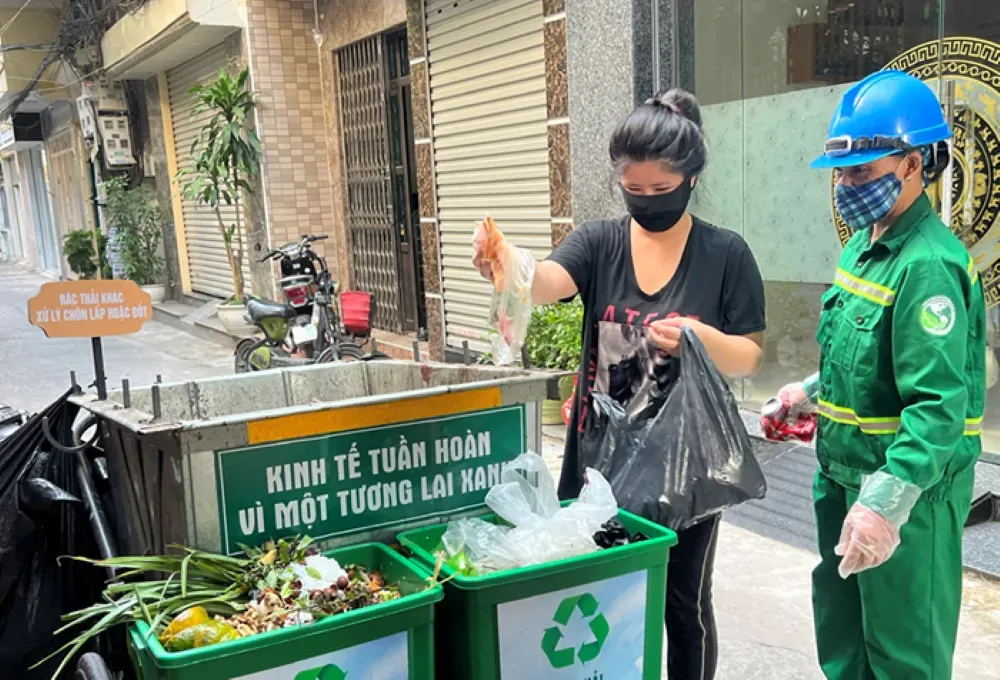
Domestic waste bags being sorted and collected in Hanoi. Photo: Quy Nguyen/The Hanoi Times
Waste sorting at source is a progressive regulation reflecting the State’s long-term vision for a green, clean and livable capital city, he added.
“However, turning commitments into real action remains challenging. Many residents want to cooperate but lack clear guidance; local authorities lack mechanisms, staff and funding; and the collection and transport system is still inconsistent,” said Loi.
Domestic waste pollution remains one of the biggest environmental challenges in urban areas. From January 1, 2025, all households must sort domestic waste into three categories before handing it over to collection units.
Individuals who fail to sort solid waste at source face fines from VND500,000 (US$19) to VND1 million ($38). Organizations violating the rule will be fined from VND1 million ($38) to VND2 million ($76). Waste collection units may refuse to collect unsorted garbage.
According to the Ministry of Natural Resources and Environment, Vietnam produces around 60,000 tons of domestic waste daily, with urban areas accounting for 60%. Hanoi and Ho Chi Minh City alone generate between 7,000 and 9,000 tons per day.
The rate of waste collection and treatment has yet to reach 100%, while the volume of solid waste is forecast to increase by 10%–16% annually. Many localities still face difficulties in monitoring and enforcing proper sorting and disposal.
In June 2024, Hanoi launched a pilot program for waste sorting in several inner-city wards. However, many residents still misunderstand the concept of “recyclable waste”. Some households use up to three trash bins in limited spaces, while others sort their waste but later mix it due to a lack of matching public bins.
The city has required synchronized investment in sealed garbage trucks and divided waste bins, yet by early 2025, many wards still use handcarts instead of modern vehicles.
Several streets lack suitable waste collection points, with garbage trucks parked along sidewalks, blocking traffic and causing unpleasant odors and visual pollution.
Many pilot sites have done little more than distribute trash bags and set up awareness signs. Infrastructure has not kept pace with policy, so many people still see waste sorting as symbolic rather than meaningful.
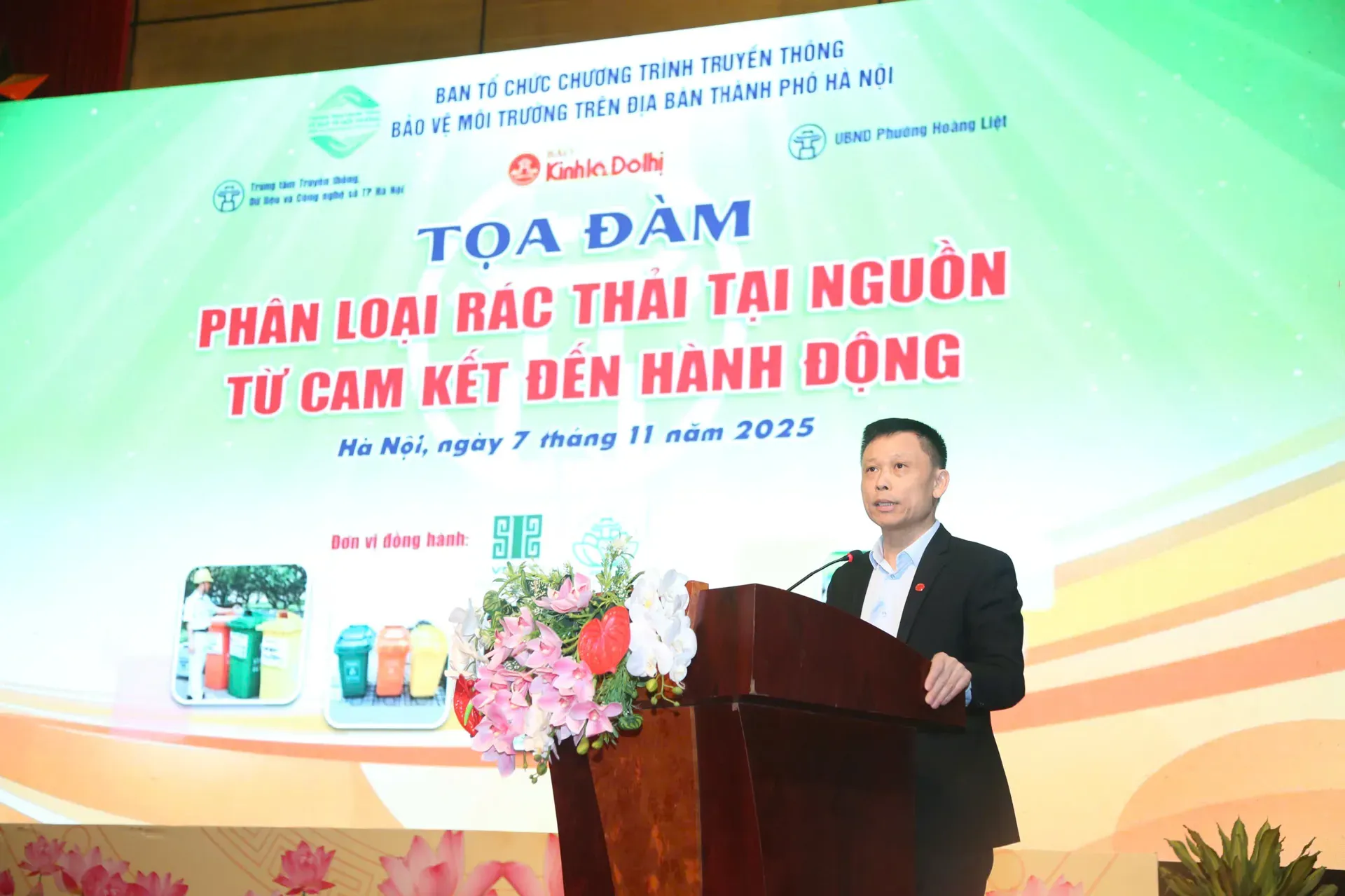
Editor-in-Chief Nguyen Thanh Loi of Kinh te & Do thi (Economic & Urban) Newspaper delivers his opening remarks at the event. Photo: Pham Hung/The Hanoi Times
Editor-in-Chief Loi said that Kinh te & Do thi has consistently accompanied the city government, enterprises and residents through its long-running communication program “Protecting the Capital’s Environment”.
He expected that the seminar is an open forum to find real and sustainable solutions for waste sorting instead of short-term or symbolic campaigns. In his remarks, Loi called on citizens, government agencies, businesses and organizations to join hands in proper waste sorting.
“Changing awareness takes time. Changing behavior requires example and determination. If every person does one simple thing every day: putting waste in the right place and the right bin, the whole city will transform,”
“If every neighborhood and apartment building has a few active role models, the movement will turn into a shared culture. And if every journalist and media outlet spreads the green message, public awareness will become a reality,” Loi said.
Co-hosted by Kinh te & Do thi Newspaper and the People’s Committee of Hoang Liet Ward, the seminar discussed three main themes regarding policies and infrastructure developments, issues with people and local authorities and solutions and actions.
Specialists and experts agreed that the main obstacles with waste sorting lie in the incomplete regulations, underdeveloped infrastructures and facilities, as well as public awareness about how to classify domestic wastes.
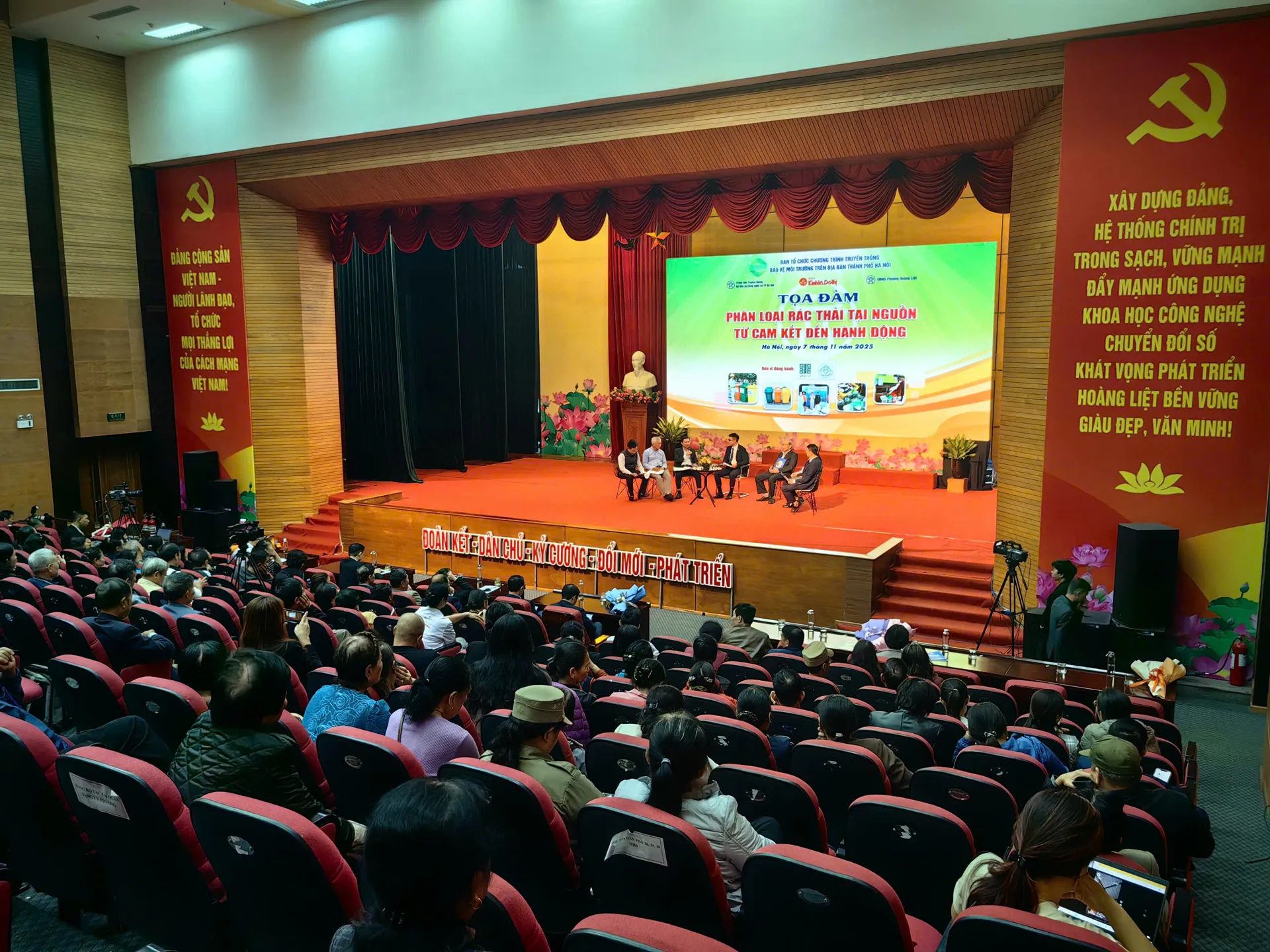
Experts and participants discuss urgent issues in household waste classification and treatment.
The seminar was livestreamed by Kinh te & Do thi Newspaper and the Hanoi Center for Communication, Data and Digital Technology, connecting 126 communes and wards across the city through the newspaper’s digital ecosystem.
More than 300 participants, including policymakers, environmental and urban planning experts, waste treatment companies, residents and representatives of apartment building management boards, joined discussions on urgent issues in household waste classification and treatment.