Building traffic culture in Hanoi
To build a strong driving culture, it's essential to adhere to road rules, particularly by yielding to pedestrians and other vehicles.
Building a traffic culture, raising awareness of traffic rules and safety regulations, and changing the attitudes and behaviors of road users have always been important goals for Hanoi.
According to Colonel Tran Dinh Nghia, Head of the Hanoi Traffic Police Department, traffic police and authorities in the capital are concerned about the low level of traffic safety awareness among road users, resulting in a high number of traffic accidents in the city.
Speeding, driving under the influence of alcohol, driving in the wrong lane, talking on the phone while operating a vehicle, and driving side by side are the most common traffic violations, he said.
"They only obey traffic rules when traffic police are present. Low awareness and wrong behavior in traffic safety cannot be changed by persuasion alone, but tough measures and heavy fines are required, Nghia told The Hanoi Times.
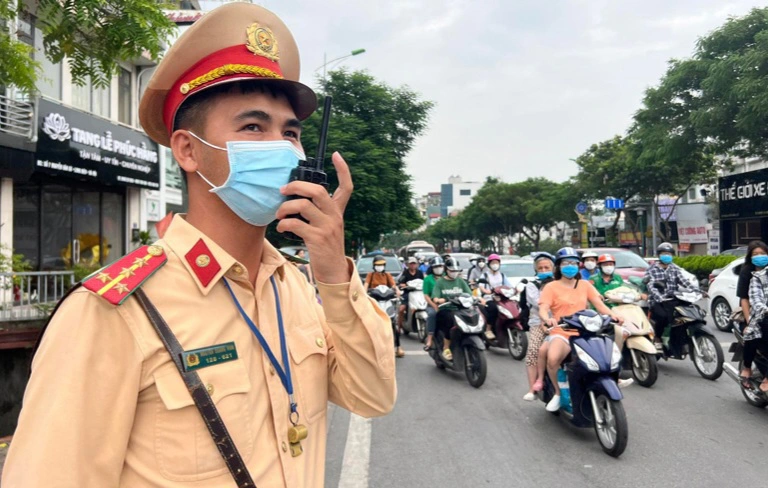
A policeman controls the flow of traffic in Hanoi. Photo: Cong Hung/The Hanoi Times |
"We must strive for a higher level of traffic culture in which road users voluntarily comply with traffic regulations, and such voluntary attitudes should be encouraged and developed into an unconditional reflex," he stressed.
Hanoi has set key road safety targets for 2024, including reducing traffic accidents and accident-related deaths and injuries by at least 10%, reducing traffic congestion by 20%, and eliminating accident hotspots.
Nguyen Phi Thuong, director of Hanoi's Department of Transportation, recommended that drivers should not only behave well on the road but should also raise their children's awareness of road safety.
He said the principles that should be upheld to establish a driving culture include a willingness to obey the rules of the road, particularly giving way to pedestrians and other vehicles.
The official also advised young road users to start training themselves to obey traffic rules with the smallest demeanor. "Many young people today prefer small rearview mirrors and fancy helmets, which are unsafe for driving. Use standard helmets, use authorized mirrors from your motorcycle dealers, and secure them properly on your motorcycles," Thuong said.
Traffic in Hanoi is smooth during the social distancing period to prevent the Covid-19 pandemic. Photo: Ngoc Tu/The Hanoi Times |
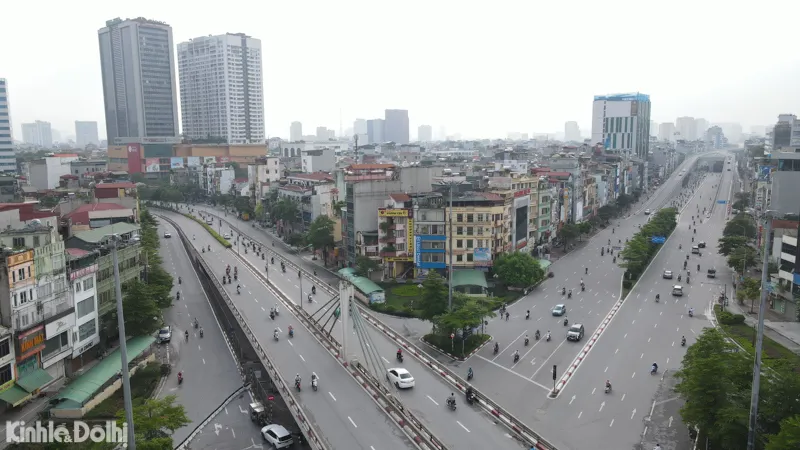
"I think Hanoi should take concrete measures to ensure that people obey traffic laws to establish a proper traffic culture in the capital," Thuong told The Hanoi Times.
Measures to reduce traffic congestion include adjusting work, study, and business hours in Hanoi's 12 districts, banning car and motorcycle parking on sidewalks and roadbeds, restricting private vehicles, and speeding up the construction of infrastructure facilities.
"A number of experts have suggested increasing fines for violators to raise public awareness of traffic laws and adjusting the duration of traffic lights on several roads," Thuong said.
Le Kim Thanh, Permanent Vice President of the National Traffic Safety Committee, told the Vietnam Government Portal about Sweden's Vision Zero road safety project as an example of road accident prevention.
"The project aims to achieve zero deaths and serious injuries in road traffic in 20 years. The Swedish government has taken responsibility for preventing road accidents by initiating measures to change driver behavior and by understanding the conditions of the country's traffic infrastructure and the habits and awareness levels of its citizens," he said.
Referring to Vietnam, particularly large cities such as Hanoi, Thanh emphasized the importance of government participation and cooperation with citizens in pursuing higher road safety goals.
"In Europe, road users often shake hands, smile, and apologize to each other after a minor car accident. It's up to the police and insurance companies to decide who's right, who's wrong, and how to resolve the case. I think we should follow them because it is a very polite traffic culture," Thanh said.