Log in
Hanoi

Hanoi to earmark US$10 million to tackle traffic congestion

The planned investment includes resizing sidewalks and medians where feasible and optimizing traffic management at key intersections on major roads.

The Hanoi Department of Transport has proposed a VND225 billion (US$10 million) investment to upgrade critical congestion hotspots in the city, aiming to alleviate traffic woes and enhance urban mobility.
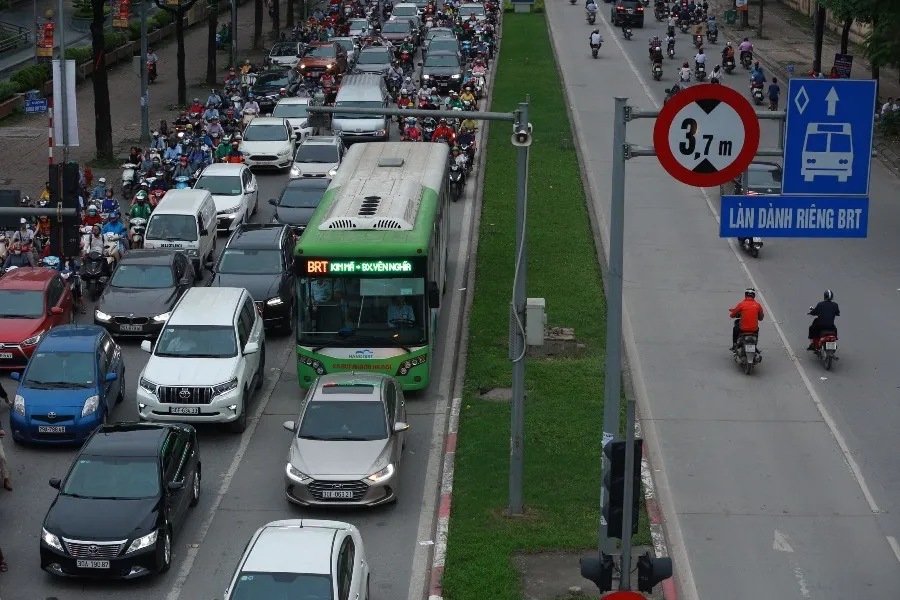
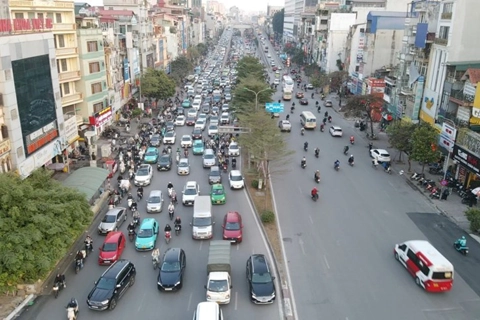
 The Giang Vo - Lang Ha road during rush hour. Photo: Tuan Khai

The project, scheduled for implementation between 2024 and  2027, aims to upgrade seven key roads: Giang Vo, Lang Ha, Le Van Luong, To Huu, Hoang Dao Thuy, Hoang Minh Giam, and Khuat Duy Tien. These roads carry exceptionally heavy traffic and tend to get jammed during rush hours.

Among these, Giang Vo, Lang Ha, Le Van Luong, and To Huu are the BRT (Bus Rapid Transit) corridor, which serves as a major artery in the city center. The concentration of vehicles accessing and exiting the city center leads to increased traffic volumes, especially during rush hours, causing significant congestion.

Therefore, investment in improving infrastructure, re-routing traffic at critical intersections, and upgrading these roads is essential to alleviating traffic congestion, as noted in the plan.

This will encourage people to use public transportation and support economic and social development in the areas served by these roads, it said.

The planned investment includes resizing sidewalks and central reservations where feasible and optimizing traffic management at key intersections on the seven roads.

Experts suggested that one of the main issues leading to traffic congestion in Hanoi is the rapid increase in the number of private vehicles, which is growing at a rate of 4-5% per year, while the development of transportation infrastructure is only around 0.6%.

Specifically, Hanoi's population now exceeds 8 million, not including the approximately 1.2 million people who regularly live, work, and study in the city. As of October, the number of road vehicles has reached over 7.8 million, including around 1.1 million cars and about 6.8 million motorcycles. Additionally, there are about 1.2 million vehicles from other provinces and cities operating within the city.

The capital's transportation master plan through 2030, with a vision to 2050 (Plan 519, approved in March 2016), allocated VND1,300 trillion ($54 billion) for transportation infrastructure. However, only VND325 trillion ($13.5 billion), or roughly 25%, has been spent so far. The city's medium-term investment plan for 2020-2025 allocated about VND225 trillion ($9 billion) for transportation infrastructure, of which over $130 trillion ($5.4 billion), or nearly 58%, has been implemented.
Reactions:
Share:
Trending
Most Viewed
Related news
Hanoi pilots intelligent traffic system

Hanoi pilots intelligent traffic system

25 May, 16:10

An Intelligent transport system is an advanced application that provides innovative services related to different modes of transport and traffic management.

Hanoi Metro launches automated ticket-control system to boost smart mobility

Hanoi Metro launches automated ticket-control system to boost smart mobility

Hanoi Metro has introduced a fully automated fare-collection system on the Cat Linh–Ha Dong line, marking a major milestone in the capital’s transition toward smart and green public transportation.

Hanoi to roll out time-based bans on polluting vehicles near pedestrian hotspots

Hanoi to roll out time-based bans on polluting vehicles near pedestrian hotspots

These locations already have the foundations for sustainable traffic and tourism management.

Hanoi, Seoul strengthen strategic cooperation in smart urban and river development

Hanoi, Seoul strengthen strategic cooperation in smart urban and river development

Both sides highlighted the strong foundation of their three-decade partnership and emphasized the need to deepen collaboration in innovation, urban planning and people-to-people exchanges.

Hanoi looks to Seoul’s Han River revival for Red River transformation

Hanoi looks to Seoul’s Han River revival for Red River transformation

The revival of the Han River transformed Seoul’s urban landscape, improved residents’ quality of life and supported South Korea’s broader growth, the possible transformation for the Red River.

Hanoi set for special measures to unlock mega projects

Hanoi set for special measures to unlock mega projects

Such a move would help Hanoi launch major infrastructure projects and advance the city’s long-term development.

Hong Van Commune rises as Hanoi’s emerging model for community-based tourism

Hong Van Commune rises as Hanoi’s emerging model for community-based tourism

Blessed with natural beauty, strengthened by deep cultural heritage and supported by its residents, Hong Van Village is emerging as one of Hanoi’s most distinctive tourism destinations. From ecology and agriculture to handicrafts and festivals, this Red River village is shaping a dynamic vision of sustainable community tourism for the capital.

Hanoi unveils digital heritage journeys to connect tradition with modern urban life

Hanoi unveils digital heritage journeys to connect tradition with modern urban life

Hanoi has launched a new digital heritage program that brings centuries-old cultural assets into a modern, interactive format. By mapping key monuments and creating themed journeys, the city aims to help residents and visitors explore its deep-rooted identity through fresh, engaging experiences.

Hanoi launches two-wheel electric vehicles to expand green urban mobility

Hanoi launches two-wheel electric vehicles to expand green urban mobility

Hanoi has introduced two-wheel electric vehicles for the first time in its transport network, offering residents a new green mobility option and marking a key step in the city’s smart-transport development.