Cat Linh-Ha Dong Metro Line operator reports US$4 million gain
In 2023, the company's ridership target is more than 10.6 million passengers with more than 81,300 trips.
Hanoi Metro, the operator of the Cat Linh – Ha Dong metro line, posted a profit of nearly VND97 billion ($4.1 million) in 2022, marking its first year of profitability after the launch in late 2021.
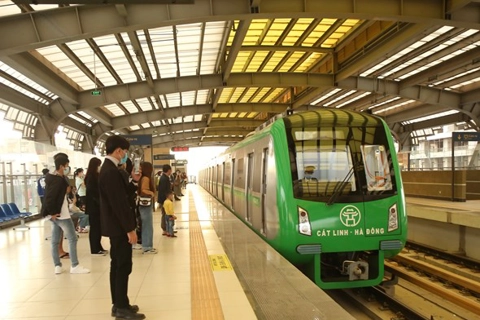
| Cat Linh - Ha Dong metro line. Photo: Hoa Thang/The Hanoi Times |

According to the audited financial report, Hanoi Metro generated a total revenue of VND483 billion ($20.5 million) from sales and services last year, an increase of seven times compared to 2021.
Ticket sales grew nearly 12.5 times, contributing VND65.8 billion ($2.8 million) to the revenue.
The company's revenue in 2022 increased sharply, mainly because the Cat Linh - Ha Dong urban skytrain line (Line 2A) started charging tolls in November 2021.
Hanoi Metro received a subsidy of VND417 billion ($17.7 million) in 2022, 6.6 times more than in 2021. This subsidy helped the company avoid operating at a loss, as its gross profit was VND109.5 billion ($4.7 million).
Hanoi Metro's cost structure shows that depreciation accounts for 60% of its costs, amounting to VND225 billion ($9.6 million). Labor costs almost doubled from the previous year, reaching VND99.4 billion ($4.23 million), while service costs increased 3.7 times to about VND60 billion ($2.5 million).
After accounting for all expenses, Hanoi Metro's pre-tax profit amounted to VND96.8 billion ($4.1 million), a significant improvement from a loss of VND37 billion ($1.57 million) in 2021. As a result, the company's accumulated loss was reduced to VND36.8 billion ($1.56 million) by the end of December 31, much higher than the VND160 billion ($6.8 million) by late 2021.
In the middle of last year, Hanoi Metro noted that its financial situation would improve significantly after taking into account the subsidy provided by the city.
Similar to the public bus network, the metro is considered a service sector, and its fare is set at a low price (thanks to subsidies) to incentivize people to use it. This approach aims to gradually reduce dependence on private transport, minimize congestion and reduce pollution.
The current minimum fare for the Cat Linh - Ha Dong railway line is VND8,000 ($0.34) for a one-way trip and VND15,000 ($0.64) for the entire route. A daily pass for unlimited travel costs VND30,000 ($1.28) per person, while a monthly pass costs VND200,000 ($8.53) for regular passengers and VND100,000 ($4.26) for students and workers in industrial zones.
To meet the high demand from passengers, Hanoi Metro added two more trains in September last year, bringing the total number of trains to nine. During peak hours, the trains run every six minutes instead of every 10 minutes.
The Cat Linh - Ha Dong metro line is 13 km long and has 12 stations. Each train consists of four carriages and can accommodate up to 960 passengers. The maximum speed of the train is 80 km/h, with an operating speed of 35 km/h. The train takes 23 minutes to cover the entire distance.
In 2023, Hanoi Metro released a cautious profit forecast of only VND5.9 billion ($251,000), while its revenue is expected to increase to VND519 billion ($22.1 million), up 7% from 2022.
Of the projected revenue, ticket sales are expected to generate nearly VND74 billion ($3.15 million). The company aims to serve more than 10.6 million passengers with more than 81,300 trips