Coronavirus in Vietnam: No need to cover up mass infections
Amid the global rising infections, Vietnam's authorities have attempted to keep the case count below 1,000.
Vietnam’s early response to the novel coronavirus has resulted in low infections and no deaths. Therefore, it’s not necessary for the country to hide data on the pandemic.
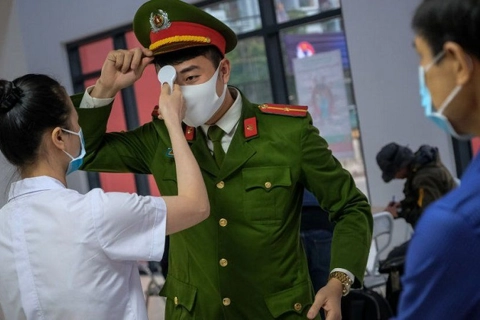
| Temperature screening is among many preventive measures. Photo: VNA |

It is likely that Vietnam did not have to cover up mass infections and deaths because it acted before the virus could reach that point, VOA has reported.
“If it was hit with the thousands, ten thousands, hundreds of thousands of cases that are being seen in other countries, it also would be overwhelmed like other countries,” Todd Pollack, head of the Harvard Medical School Partnership for Health Advancement in Vietnam, said on US television network PBS. “But, at the current state, that’s not the situation here.”
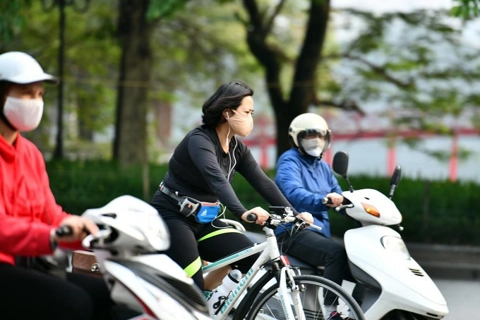
Half a year into the Covid-19 pandemic, Vietnamese still practice health measures here and there, though the nation reported no deaths from the disease and, for more than two months, no local infections.
At the time of writing, Vietnam confirmed 352 cases, including 329 or 94.3% of total Covid-19 patients recovered, according to the Vietnamese Ministry of Health.
The statistics put Vietnam in a unique spot as the biggest nation by population to report no deaths, despite its border with China and limited resources. The statistics have ignited a debate, pitting those skeptical that a one-party state could have such success without fixing the data against those who resent the criticism.
It is hard for outsiders to verify official data, though health experts say Vietnam headed off a full-blown calamity because of its drastic and early action. The government was hyper-aware of the threat to hospital and quarantine capacity, VOA reported.
It has sparked a question how the country deals with the global health crisis and the answer may convince the most conservative skeptics.
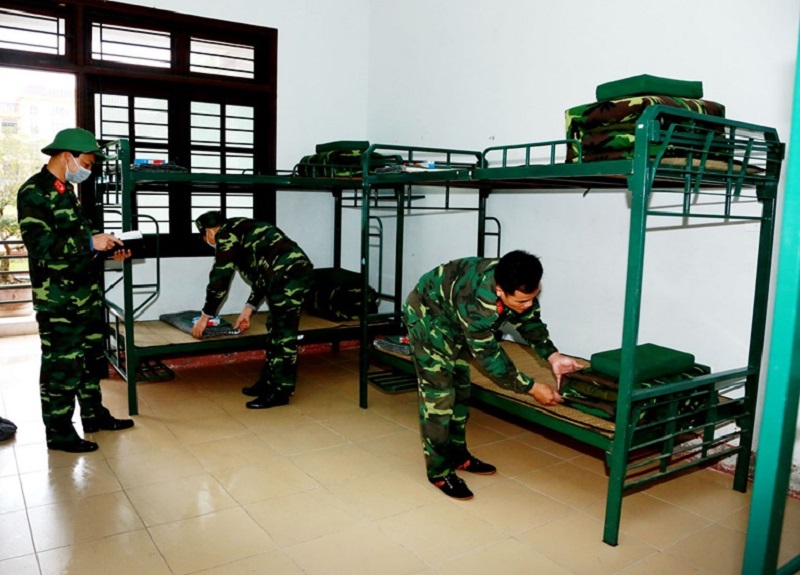
| Military barracks used for quarantine centers. Photo: Baovinhphuc |
Measures against coronavirus
Deputy Prime Minister Vu Duc Dam, who is also head of the National Steering Committee on Covid-19 Prevention and Control, said that the country would manage to keep the coronavirus infections below 1,000.
In a meeting on March 24, Ho Chi Minh City leaders said the nation could handle 1,000 cases of the coronavirus. Beyond that, they feared the health system could be inundated, as in Italy and Spain.
“During the next 10 days to two weeks, do not allow the number of cases to exceed 1,000 nationwide, otherwise the risk of disease outbreaks is very high,” a summary of the meeting on the city government website said.
Timing was critical because of the virus’ ability to spread exponentially. The Ho Chi Minh City government said, for instance, that for every 300 people infected, 84,000 people had to quarantine.
According to VOA, the US and Vietnam both reported their first cases in the same week in January. The US could have avoided 36,000 Covid-19-related deaths if it had begun a lockdown March 8 instead of March 15, according to Columbia University. By contrast, Vietnam saw the disease as a threat early on, treating its first patient in January and proceeding to contact trace and restrict movement.
In addition to national coordination, targeted testing and isolation, Vietnam can decree measures regardless of public debate, like tapping a national security network to monitor the physical and virtual space.
Accordingly, police and relevant agencies visited every house to find out if anyone has come from other countries or affected areas to ensure timely quarantine anyone at risk at home or quarantine areas.
In addition, Vietnam used fines and takedown orders to curb the spread of false information about the virus, as have other nations.
Social media allowed some false information to spread in Vietnam, but also greatly heightened people’s awareness of the virus and what they should do, concluded a study by 11 authors published in April in science journal Sustainability.
Vietnam’s success is believed to come from mobilizing citizens’ awareness of disease prevention without spreading panic, via fostering genuine cooperation between government, civil society and private individuals.