Decentralized relations – foundation for Vietnam’s foreign affairs framework
It is essential to identify the strengths of each locality to boost decentralized cooperation.
Decentralized development cooperation is a special partnership channel that plays an active role in enhancing relations between Vietnam and many countries, including France.
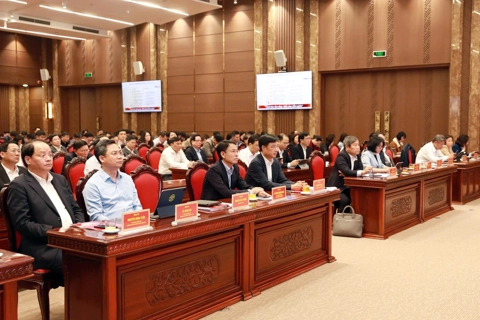
| Overview of the conference. Photo: Cam Anh/The Hanoi Times |
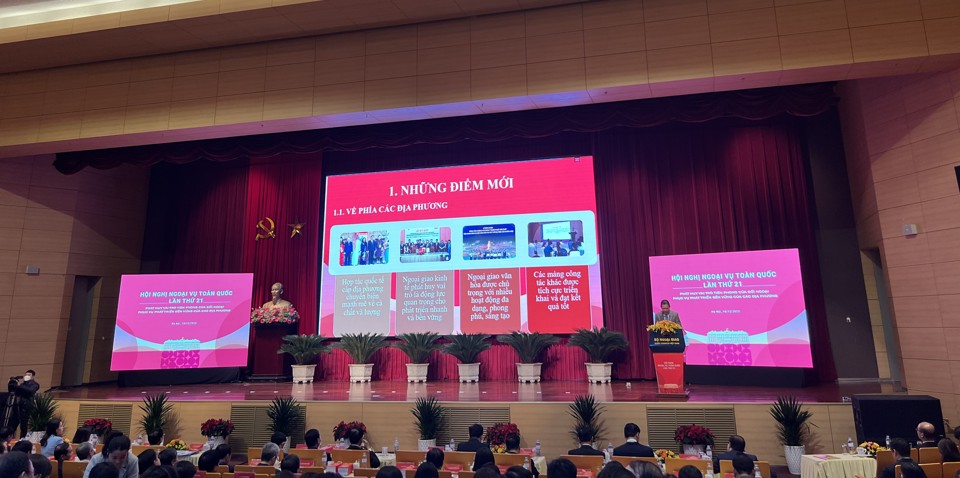
Vietnamese Ambassador to France Dinh Toan Thang shared his thoughts at the national foreign affairs conference on December 18.
Reviewing the inter-local collaboration between France and Vietnam, Thang highlighted that since its initiation in 1989 with the establishment of a partnership between Hanoi and the Ile de France region, there are now over 33 provinces/cities in Vietnam that have entered into cooperation with 24 French localities, resulting in the implementation of approximately 55 projects and local-level cooperation agreements.
"Since the beginning of 2022 and with the gradual resumption of delegation exchange activities, the Embassy has documented nearly 30 local delegations, including 12 in 2022 and 15 in 2023," Thang mentioned.
To ensure the effectiveness of local cooperation, Thang stressed the importance of taking into account the specific differences between the two sides. In particular, Vietnam and France differ in administrative division and local budgets, in addition to changing priorities of French localities' cooperation policies.
“In the current context, the preference for twinning is no longer favored by French localities; instead, they have prioritized cooperation focused on specific fields, in particular," he said.
Thang emphasized that when seeking partners to build relationships with, localities should clearly define goals, fields, and content of cooperation.
“It is essential to identify the strengths of each locality and foster cooperation based on shared strengths, avoiding the misconception that support one-sided or that proposed projects are beyond the capacity of the French local partners,” he said.
To sustain and expand cooperation with French localities, leveraging the roles of businesses and associations in both Vietnam and France, as well as key individuals, is necessary to support and promote collaborative efforts, he added.
Additionally, the Ambassador suggested improving access, consultation, and connections with various partners and organizations deeply involved in interlocal cooperation, such as the French Development Agency (AFD) and local associations.
Thang also emphasized the need to draw from specific practical experiences, such as developing representative office models to enhance cooperation efficiency and exploring the establishment of a common coordination mechanism among localities or regions to streamline resources and facilitate information sharing.
Setting up network of reputable overseas Vietnamese
At the framework of the conference, Vietnamese Ambassador to the US Nguyen Quoc Dung stressed the need for local industries, units, and businesses to formulate specific plans/projects for local development.
Dung also underscored the significance of building a database of overseas Vietnamese businesspeople and intellectuals. He suggested a focus on local compatriot associations and the selection of capable and knowledgeable overseas Vietnamese with strong reputations to serve as local representatives in the host country.
“Vietnamese missions abroad are ready to help identify and connect a network of intellectuals and overseas businessmen based on the specific policies and requirements of localities and businesses,” he said.
Improving efficiency of decentralized diplomacy
Director of the Department for Local Diplomacy Facilitation under the Ministry of Foreign Affairs Nguyen Nhu Hieu emphasized the pivotal role of diplomatic staff, stating that people are the creators of modern diplomacy. He highlighted the importance of training and nurturing foreign affairs officials at the local level.
Hieu revealed that the Ministry of Foreign Affairs is actively implementing this initiative in three main ways: overseeing training and development programs under the Foreign Affairs Professional Training Project, coordinating with localities to organize training courses, and collaborating with international partners to conduct capacity-building courses by topic.
He also suggested that the Ministry of Foreign Affairs could send officials to work at the People's Committees of provinces and cities to support foreign affairs and international integration through secondment/advisory, rotation, or remote support/collaborator networks.
Localities were also encouraged to consider sending foreign affairs officers for 3-6 months internships to units under the Ministry of Foreign Affairs. Additionally, the director suggested sending foreign affairs officers from border regions to work for a term at Vietnamese missions in relevant neighboring countries.