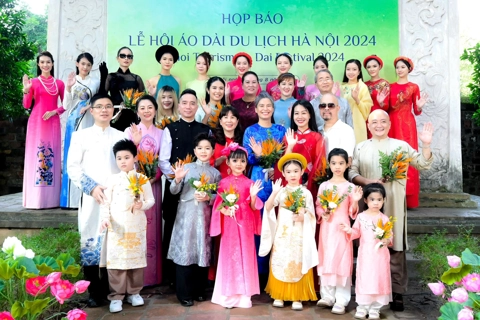
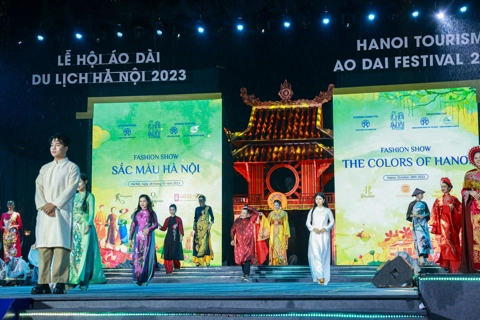
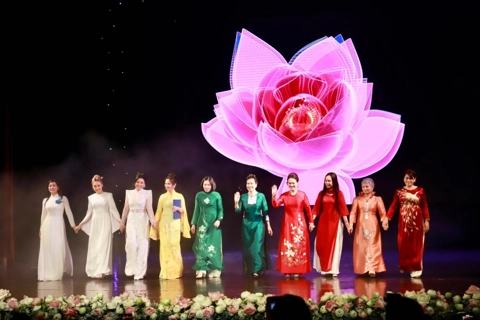
Designers and artisans working together to promote traditional ao dai
Ao dai tailoring, a unique craft passed down through generations, is now highly prized for its ability to produce eye-catching creations for Hanoi's tourism industry.
There have been numerous changes since the community and state brought back the traditional ao dai ngu than (five-panel garment) over ten years ago, and the proportion of people donning traditional attire has greatly increased.
In addition to restoring aesthetic values, sewing secrets, and traditional artisan communities, the revival of traditional clothing is helping Vietnamese people preserve the value of their traditional history and foster cultural identity. But because it's mostly a community movement, there are many difficulties.
Recently, the Hoan Kiem District People's Committee organized a workshop with many experts to find ways to develop traditional ao dai in contemporary life.
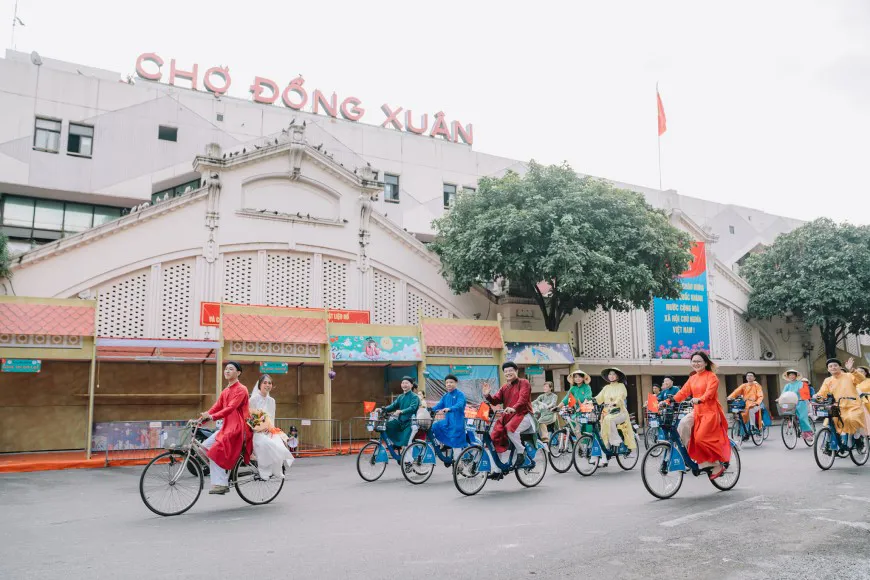
| Ao dai enthusiasts parade through Hanoi's Old Quarter in traditional long dresses and bicycles. Photo: Nguyen Hieu |
According to researcher Ton That Minh Khoi, the revival of Vietnamese traditional costumes has gained significant momentum in the past five years. This has resulted in the establishment of many Vietnamese traditional costume firms and an increasing number of mass media projects using Vietnamese traditional costumes.
A successful case is the music video of singer Hoa Minzy, who tells the love story of Emperor Bao Dai and Queen Nam Phuong. The product attracted tourists to Hue, who took pictures of the relics in traditional costumes. After that, many other singers wore five-panel dresses in their music productions, such as Van Mai Huong, Hoang Duyen, Phuong Thanh...
Ton That Minh Khoi said that many young people dress in traditional Vietnamese clothing for every occasion. This result, developed over many years by tailors and designers, is considered positive.
"We have only used standard forms of costumes, not really innovated to create a buzz like South Korea is doing with music products. Everything takes time, we are in the first steps of gradually standardizing the designs inspired by traditional culture after a very long period of cultural disruption," said Khoi.
| Members of the Dinh Lang Viet Club have been promoting traditional long dress and culture for 10 years. Photo courtesy of Dinh Lang Viet Club |
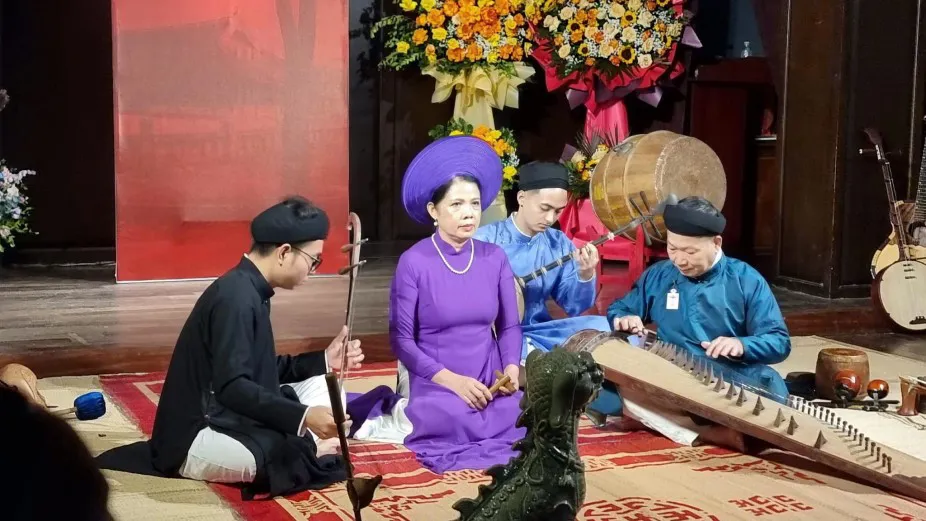
According to researcher Dang Ba Minh Cong, a member of the Dinh Lang Viet (Vietnamese Communal House) Club, the proliferation and competition among brands have helped shape the Vietnamese costume market, bringing traditional Vietnamese dress closer to the public.
The five-panel dress has been widely used in wedding photos and school yearbooks. However, despite its popularity, it still has some shortcomings and limitations, such as many garment manufacturers making the garments incorrectly and carelessly, which more or less affects the taste of the wearer.
"The popular materials for making the five-panel dress (estimated at 60-70%) are mainly imported fabrics (silk, brocade, Chinese and Korean gauze), while Vietnamese silk has not really dominated this style of dress, no matter how good the quality is. This is because the price is still high and the designs are not diverse," he said.
Faced with that situation, Phan Thanh Hai, Director of the Department of Culture and Sports of Thua Thien-Hue Province said: Ao dai is a special heritage of the Vietnamese people, and currently ao dai is truly a special craft to create impressive products, contributing to the development of the cultural industry and promoting the local socio-economic development.
Therefore, in order to most effectively preserve and develop traditional Vietnamese ao dai, Hai said it is necessary to have projects related to the work of preserving and promoting the value of ao dai.
According to Hai, it is necessary to have connections and build a network between artisans and designers nationwide. It is also necessary to train professional tailors and designers who understand the value of ao dai. When the designer's ideas and art are combined with the craftsman's skillful tailoring, new aesthetic values will be created, which will help raise the value of ao dai to a higher level.
Hai mentioned the need to create favorable conditions for veteran artisans to teach the skills of ao dai tailoring profession in families, clans, schools, and clubs, to protect and preserve the heritage value for future generations.
| Young people present traditional long dresses at Ha Noi Old Quarter Culture Exchange Center, 50 Dao Duy Tu Street. Photo courtesy of Management Board of Hoan Kiem Lake and Hanoi Old Quarter |
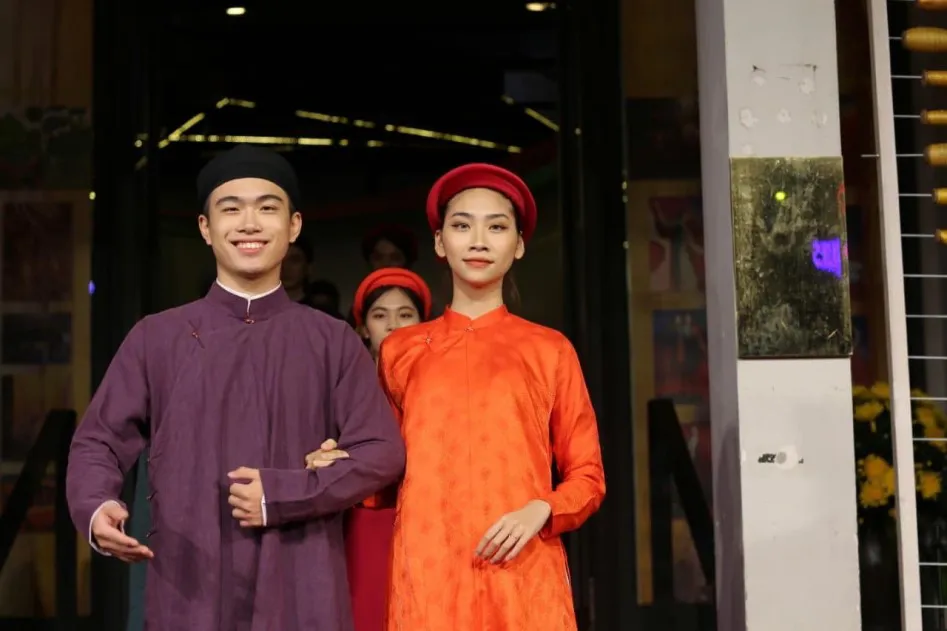
Sharing the same view, Deputy Head of the Management Board of Hoan Kiem Lake and Hanoi Old Quarter, Tran Thi Thuy Lan, also emphasized the need to create motivation and opportunities for connection and linkage between organizations and individuals, artisans, craftsmen, researchers, designers, especially young designers in the process of creation and develop traditional ao dai.
At the same time, it is necessary to strengthen communication on the value of traditional ao dai through various cultural activities such as seminars, lectures, shows, and exhibitions.
"I hope that ao dai will be increasingly cherished and preserved in cultural and social life while creating its own brand with international friends, becoming a resource for the tourism and service industries, and becoming part of the non-material life and asset resources of the community," Lan said.