Dien Bien Phu Battle in memories of war veterans
Soldiers and volunteers were essential to winning the Battle of Dien Bien Phu for their resilience, toughness, and determination.
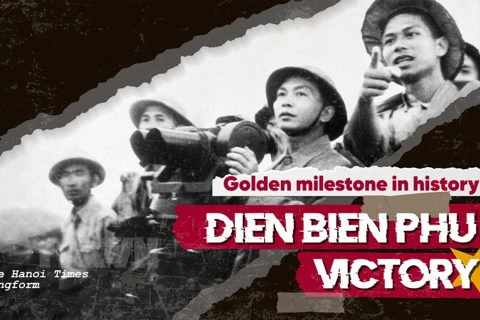
Seventy years after the historic victory at Dien Bien Phu, war veterans and former frontline volunteers remain proud of the resilience that contributed to the glory.
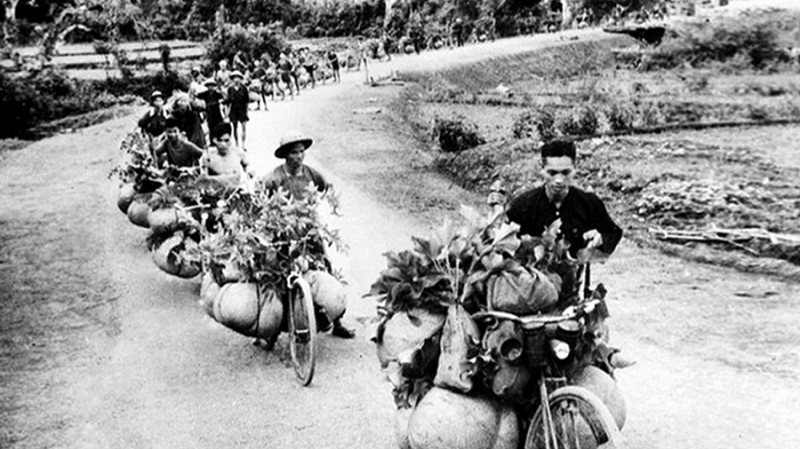
| Porters carry supplies to the front during the battle of Dien Bien Phu in 1954. Photo: Vietnam News Agency |
The victory was the combination of forces, resilience, determination, and perseverance of soldiers and volunteers.
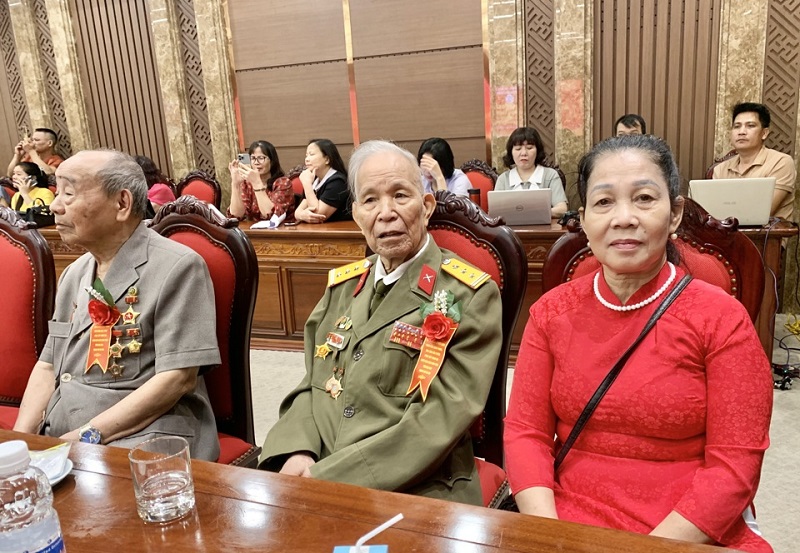
In Chuc Son Town, Chuong My District, Hanoi, former revolutionary comrade Nguyen Van Tuoc is now 98 years old. He proudly recalled the historic days when Regiment 102 of Division 308, known as the Capital Regiment, fought in the Dien Bien Phu Campaign.
Tuoc and his companions took the firearms and shovel to dig the trenches to surround the enemies
"We never forget the battles of Him Lam, Hong Cum, Muong Thanh, and Hill A1. We fought with our rifles and even with our bare hands to secure our positions," he told The Hanoi Times.
After the Battle of Dien Bien Phu, the officials and soldiers of the Capital Regiment marched to Hanoi to take over the city from the French army. Before leaving, they had the opportunity to meet President Ho Chi Minh at the Hung King Temple Relic.
"I always keep in mind what Uncle Ho taught that day to preserve our ethics and code of conduct."
"Your fight against planes, guns, and tanks was brilliant and resilient. But now you can easily fall to the 'invisible bullets' if you are not disciplined enough," Tuoc said, quoting the late President Ho Chi Minh.
On October 10, 1954, the Capital Regiment and other units entered Hanoi as heroes.
"My Company 263 of Battalion 18 was assigned to guard Long Bien Bridge. On October 10, 1954, we raised the national flag on the bridge to celebrate the liberation of the capital," Tuoc said.
"We swore to the flag that we would always uphold the ethics and qualities of Uncle Ho's soldiers under all circumstances and difficulties, complete all missions, and defend the country against foreign invaders."
| Nguyen Van Tuoc (center), the 98-year-old former soldier who fought in the Battle of Dien Bien Phu. Photo: Thanh Hai/The Hanoi Times |
Where there is a need, there are young volunteers to help
In addition to the efforts of soldiers, the Battle of Dien Bien Phu involved young volunteers who helped carry thousands of tons of military and medical equipment and food to the battlefield.
For Tran Khac Long, a resident of Hoang Mai District, the memories of the battle are still crystal clear, even though he is now 90 years old.
During the campaign, Long served as a medic on the route between Chen Pass, the Co Noi T-junction, and the T100 site. Day after day, he traveled through the reign of fire to rescue the wounded soldiers and bring them back to the rear.
With his teammates, Long made sure the roads were safe and clear for battle. "After each combat, we did our best to fill in bomb craters and repair the road so it would be usable the next day," he said.
"Our war was not on the front lines. We fought it in passages, waterfalls, streams, and bridges to ensure clear and safe roads for our comrades."
After serving in the military, Long was appointed Director of Vietnam Medical Insurance from 1992-1997, paving the way for the development of the Vietnam Medical Insurance Fund.
Former young volunteer Nguyen Huu Ai, an 88-year-old resident of Vinh Tuy Ward, Hai Ba Trung District, said he marched with hundreds of others from Do Luong District, Nghe An Province, to Dien Bien Phu, covering a distance of nearly 1,000 kilometers.
| Nguyen Huu Ai, 88 years old, former volunteer in the Dien Bien Phu campaign. Photo: Thanh Hai/The Hanoi Times |
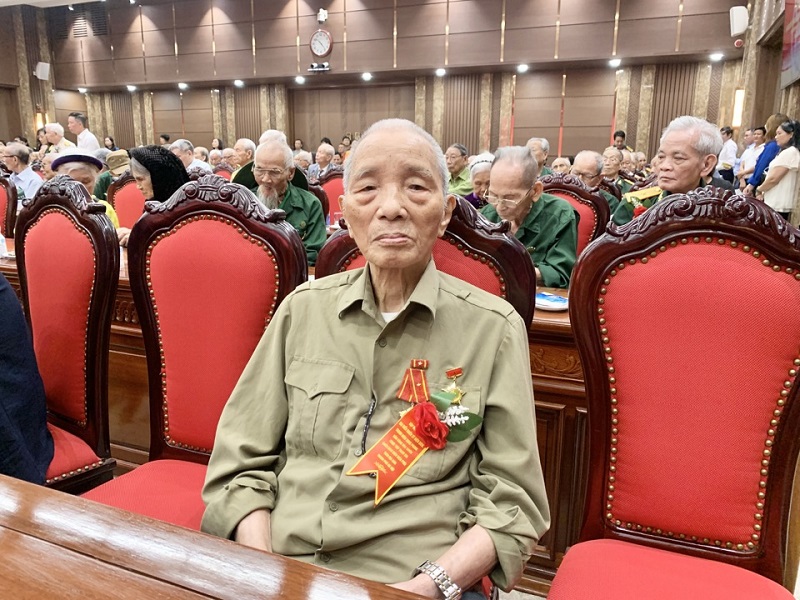
The 17-year-old's job was to build and repair roads, ensure smooth and safe transportation for the campaign, detect and destroy bombs and mines, and carry supplies to the front.
The indelible memory came when two of his teammates were killed by French bombs while repairing the road at Lung Lo Pass in Yen Bai Province.
Despite the hardships, Ai and other young volunteers never gave up. After the historic battlefield, he settled in Dien Bien before moving back to Hanoi in 1966.
According to official figures, more than 51,000 Vietnamese soldiers fought in the Battle of Dien Bien Phu, and some 251,000 people volunteered to support the army by transporting supplies to the battlefield, repairing roads, and treating wounded soldiers.
The Battle of Dien Bien Phu lasted from March 13 to May 7, 1954. The victory ended nine years of resistance to French colonization and opened a new chapter of independence and freedom for the Vietnamese.
The historic victory cheered the people of other nations struggling for their sovereignty, especially in Africa and Latin America.