Dong Ho folk painting: A new milestone for Vietnam’s heritage
For generations, families in northern Vietnam welcomed the lunar New Year with Dong Ho prints, whose images offer decoration, blessings and moral guidance.
THE HANOI TIMES — In Dong Khe Village in the northern province of Bac Ninh, the rhythm of woodblocks on paper has echoed for centuries to make Dong Ho folk paintings. That enduring craft reached the global stage as UNESCO has placed this 500-year-old printing on its List of Intangible Cultural Heritage in Need of Urgent Safeguarding.
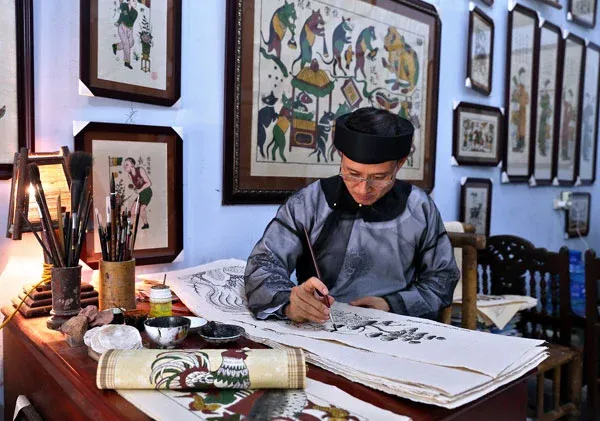
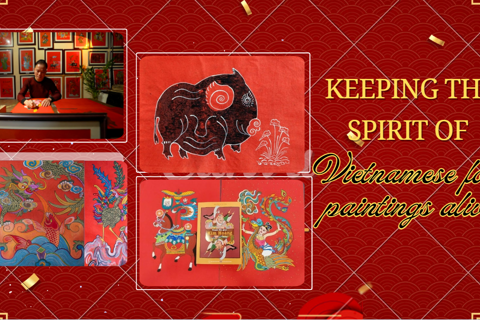
Dong Ho folk painting. Photos: Tranhdangiandongho
The recognition on December 9 marks both pride and renewed responsibility for Vietnam.
Prof. Dr. Tu Thi Loan of the Vietnam National Institute of Culture and Arts Studies calls Dong Ho one of the four pillars of Vietnam’s folk painting heritage.
She describes its visual language as “genuine, idyllic, profound and philosophical” – an art that distills the essence of village life into bold lines, symbolic space and colors borrowed from nature.
Its themes move between worship, history, daily scenes and poetic allegory. Many prints still serve as cultural references in contemporary literature, music and design, showing how the craft continues to shape Vietnamese imagination.
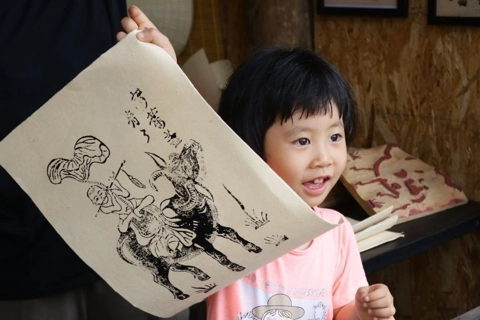
Dr. Loan said the craft’s beauty lies in its simplicity. Artisans carve motifs into wooden blocks, mix pigments from earth, leaves and flowers, then press each colour layer onto do paper coated with seashell powder.
The result is a palette that is bright yet natural, an aesthetic deeply rooted in the environment that nourishes it.
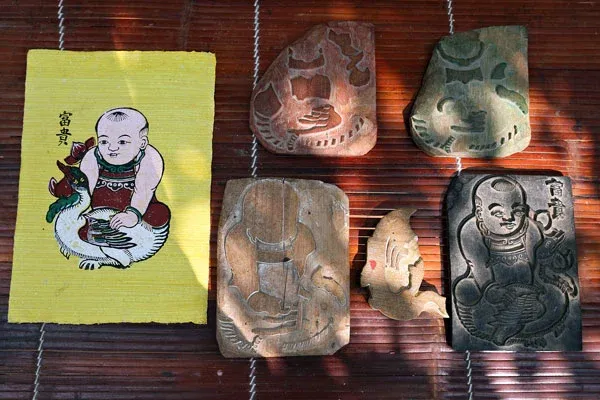
Dong Ho woodblock printing is one of four types of folk paintings in Vietnam with unique contents and artistic values.
For generations, Dong Ho prints appeared in northern Vietnamese homes each lunar New Year. Families chose images not only for decoration but for blessings and moral lessons, as the prints spoke of prosperity, harmonious families, good harvests and the virtues that held communities together.
As modern life reshaped rural traditions, these scenes grew quieter. The number of artisans shrank, and with them, the vibrant cultural world of Dong Ho risked fading.
UNESCO’s recognition is both a celebration and a warning. Deputy Minister of Culture, Sports and Tourism Hoang Dao Cuong said the inscription is a timely acknowledgment of a heritage “rich in history and humanity.”
He affirmed that cultural agencies will work closely with local communities to ensure the craft is preserved and passed on.
His words echo a wider sense of shared responsibility among those who have watched the tradition wane.
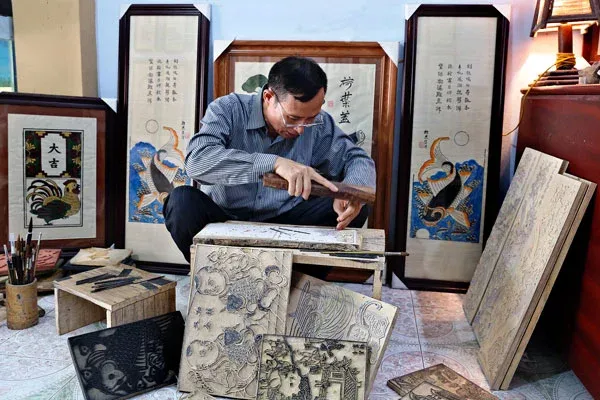
This kind of folk painting requires meticulous process.
For Bac Ninh province, the birthplace of Dong Ho, the recognition carries significance and emotion. Mai Son, Vice Chairman of the Provincial People’s Committee, said that for artisans and villagers, the UNESCO listing is not just international recognition but a renewed affirmation of their cultural identity.
He described the craft as a testament to generations of folk knowledge and refined technique, its natural colours and lively forms reflecting the hopes and humour of Vietnamese life.
Nguyen Thi Van Anh, Head of Vietnam’s Permanent Delegation to UNESCO, said the inscription honors traditional Vietnamese cultural values within the broader heritage of humanity and reflects international respect for Vietnam’s contributions to cultural diversity and sustainable development.
The decision is especially significant as Vietnam and UNESCO prepare to mark 50 years of partnership in 2026.
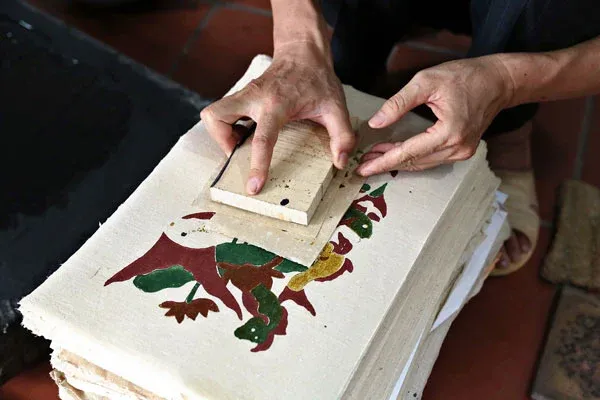
Craft of making Dong Ho woodblock paintings remains hand-made.
Local experts say safeguarding Dong Ho now centres on training, education and community participation. Workshops, demonstrations and revitalized craft markets help young people understand the full printing process and strengthen transmission.
Meanwhile, sustainable livelihoods remain essential. Therefore, craft cooperatives, cultural tourism and product certification can improve artisans’ incomes while preserving traditional standards.
Experts agree that preservation should not freeze the craft. Dong Ho has long adapted to social change, and its motifs continue to inspire contemporary artists and designers.
For global audiences, the UNESCO listing offers insight into rural philosophy, humour and resilience. For Vietnam, it strengthens cultural diplomacy and affirms the value of community-based heritage.
The craft’s future rests with the families in Bac Ninh who preserve ancestral woodblocks and pass down knowledge through daily practice. UNESCO recognition brings visibility, but long-term sustainability depends on continued local engagement and economic support.
The inscription is both a tribute to a unique artistic legacy and a beginning for renewed preservation, ensuring Dong Ho folk painting endures for generations.
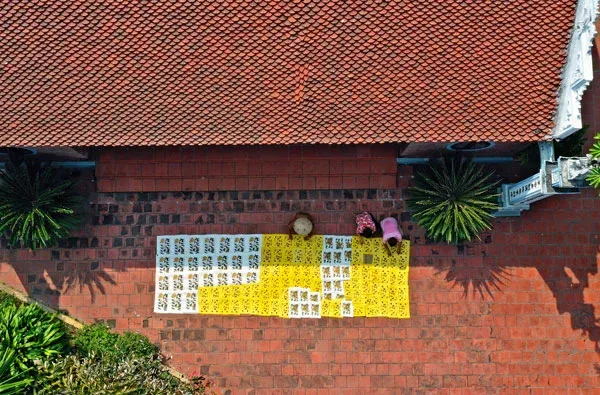
Drying paintings in Dong Khe Village, Bac Ninh Province.
So far, Vietnam has eight UNESCO-inscribed intangible cultural heritage elements, including Dong Ho folk woodblock printing, and Representatives of the Intangible Cultural Heritage of Humanity.
The seven others are Xoe dance of the Thai people, Then practice of the Tay, Nung and Thai ethnic groups, Xoan singing of Phu Tho, the worship of the Mother Goddesses of the Three Realms, Don ca tai tu music and singing of southern Vietnam, Giong Festival of Phu Dong and Soc temples, and Sam Mountain Lady Temple Festival (Festival of the Lady of the Realm).