Early warning science shields Vietnam’s border forests from invasive pests
The forest tells a story of hard-earned change and now faces silent invasive threats, prompting scientists to bring early warning tools into the woods to protect it before unseen dangers take root.
THE HANOI TIMES — A winter afternoon drifts gently over the pine forest in Ban Anh Hamlet, Thuy Hung Commune of the northern province of Lang Son, as the air fills with the scent of resin and the wind slips softly between rows of tall and orderly trunks.
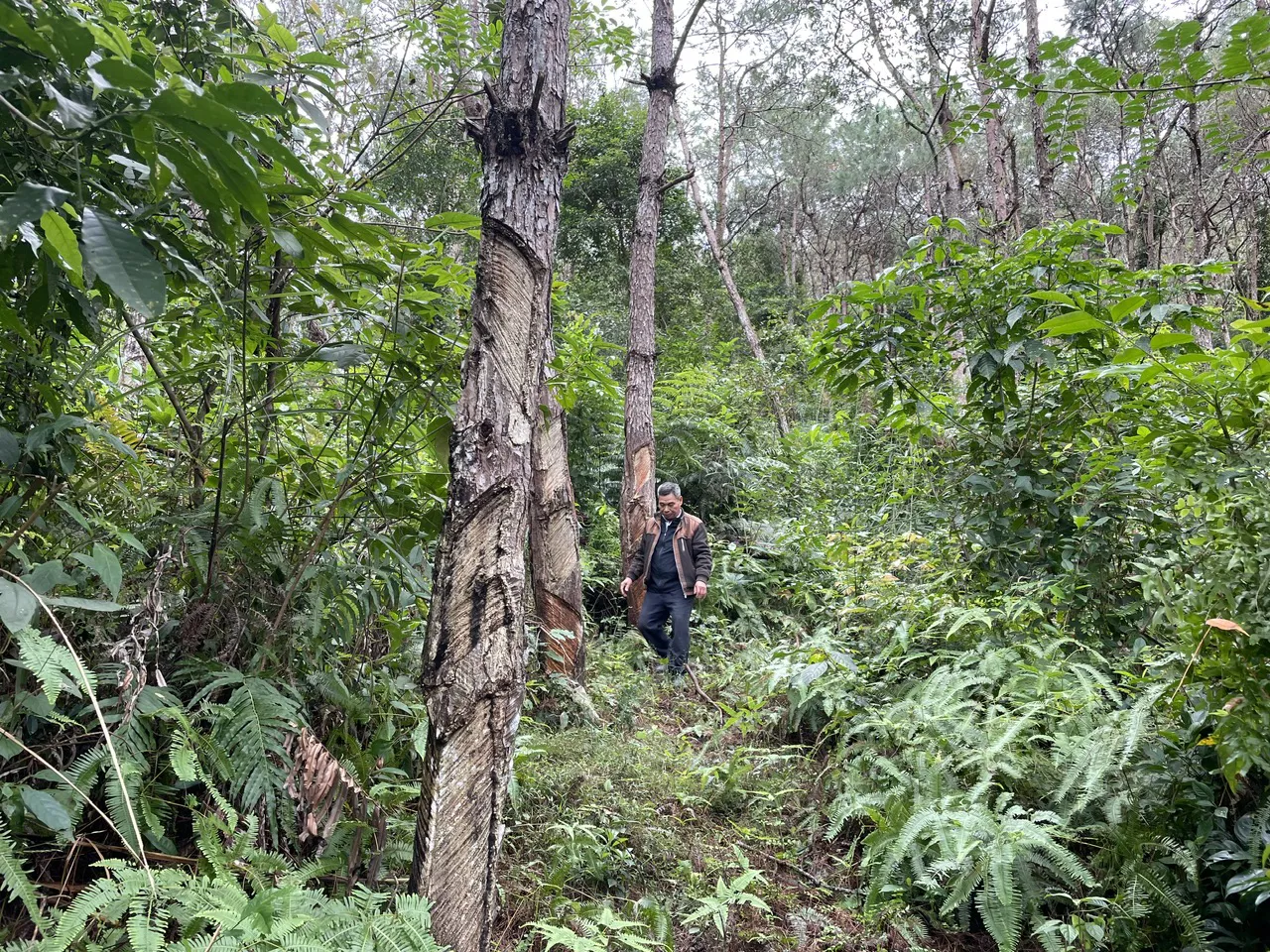
Hoang Van Thanh, who led Ban Anh Hamlet for nearly two decades, in Thuy Hung Commune, Lang Son Province. Photos: Linh Pham/The Hanoi Times
Standing beneath the canopy is Hoang Van Thanh, who spent nearly 20 years leading Ban Anh Hamlet. His weathered hand rests on the rough bark of an old pine tree while his eyes follow the green expanse stretching to the horizon.
For him, the forest is not just scenery but a living record of change shaped by time, effort and hard-earned lessons.
For nearly two decades as hamlet head, Thanh witnessed the transformation of local forestry, from unsuitable early planting models until residents were encouraged to grow pine trees that matched the soil and climate of this border area.
The pine forest today is the result of years of adjustment and persistence. Yet it also faces a quiet and growing threat from invasive alien species that can undermine forest health from within.
That risk has drawn science deep into the forest, bringing researchers, monitoring systems and early warning tools into spaces once guided only by experience, in an effort to stop unseen threats before they take root.
A regional shield for forest health
Ban Anh is one of the field sites of the project “Building an effective forest health and biosecurity network in Southeast Asia,” funded by the Australian Government through the Australian Centre for International Agricultural Research (ACIAR).
Designed as an early warning system, the project aims to detect harmful forest pests before they spread, protecting timber production, local livelihoods and forest ecosystems.
Globally, scientists estimate that insects destroy about 35 million hectares of forest each year. The threat is rising as global trade expands and climate change alters ecosystems.
In Vietnam, the project has been implemented since 2022 alongside Laos, Cambodia, Thailand, Malaysia and Indonesia. The Hanoi-based Forest Protection Research Center under the Vietnamese Academy of Forest Sciences is the lead implementing agency.
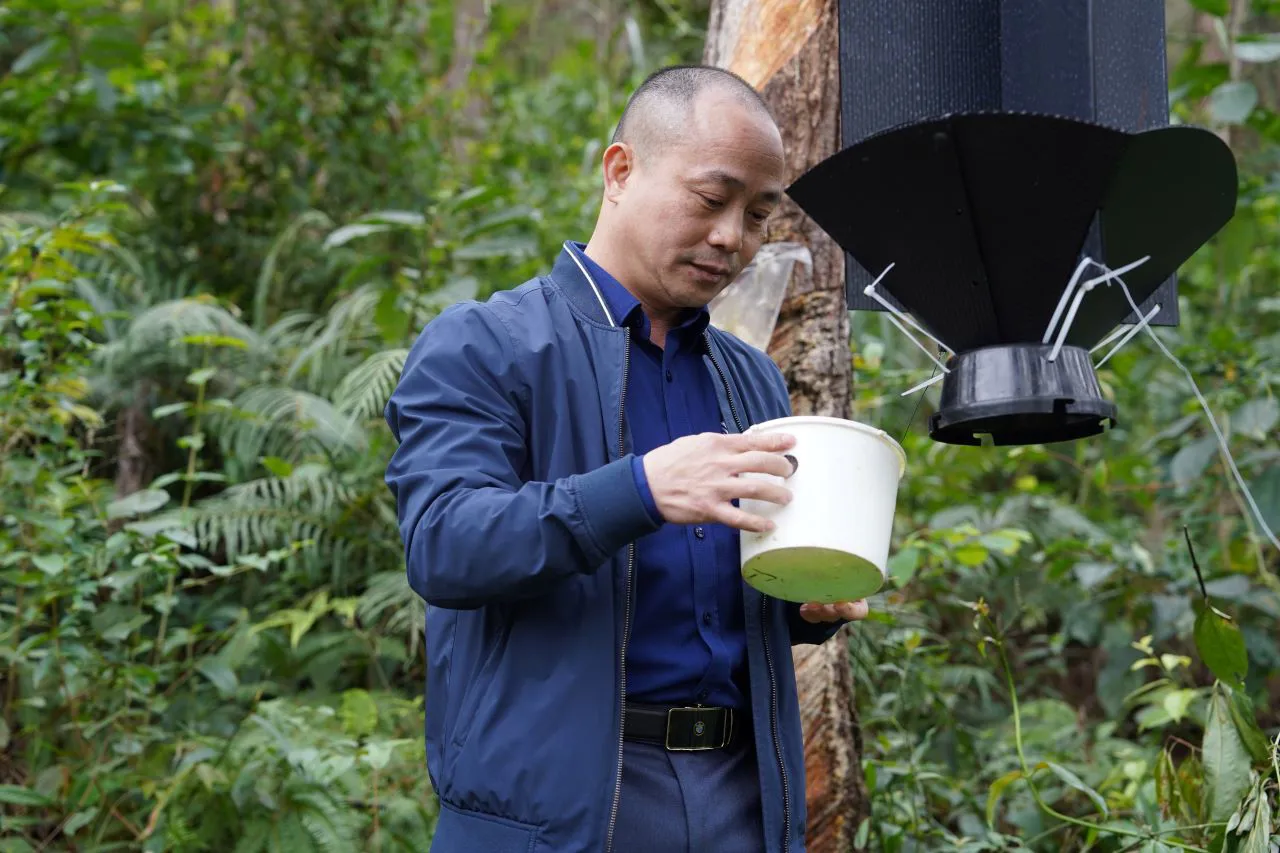
Dr Dao Ngoc Quang, Director of the Hanoi-based Forest Protection Research Center under the Vietnamese Academy of Forest Sciences.
Dr Dao Ngoc Quang, the center’s director, said the project serves two main purposes, namely building a forest biosecurity and health network to improve readiness against invasive alien species and strengthening technical capacity for agencies and staff involved.
Alien species are organisms introduced beyond their native range. While many fail to survive, others thrive in the absence of natural predators and under favorable ecological conditions.
“When that happens, they multiply rapidly, disrupt ecological balance and become invasive species that are difficult to control,” he said.
Watching the first points of entry
To detect threats early, the project targets high-risk entry points where alien species are most likely to appear.
In Vietnam, monitoring sites include the cargo terminal of Hanoi’s Noi Bai International Airport, a timber market near Dinh Vu Port in the northern city of Haiphong and pine forests near the border in Lang Son Province.
The Lang Son site was proposed by Vietnam due to the high risk of cross-border pest movement through natural forest corridors.
A key component is the High Risk Surveillance Site program. From 2023 to 2024, researchers collected nearly 3,000 insect samples from about 40 species, including bark beetles, ambrosia beetles and longhorn beetles.
Although monitoring in Lang Son began later, samples from the border forest already account for nearly half of the total. The data suggest this is a potential hotspot for pest intrusion.
Every week, project staff from the Forest Protection Research Center shoulder backpacks and trek through forest paths to inspect traps and collect samples. The work is repetitive, demanding and precise.

Dr Nguyen Manh Ha, a project researcher at the Forest Protection Research Center in Hanoi.
Dr Nguyen Manh Ha, a project researcher, said each panel trap attracts different insect groups using a combination of lures that mimic scents released by stressed or damaged trees, including Cerambycid mix lure, alpha-pinene and 99% ethanol.
“The traps are installed in open areas at a height of about 1.5 meters to maximize their effectiveness, while each collection tray holds around 600 milliliters of diluted glycerol to safely preserve captured specimens for later identification and analysis,” Ha explained.
Tran Xuan Hung, a forest entomologist at the Forest Protection Research Center, said the collection process follows strict procedures.
“We filter the solution carefully to ensure no specimen is lost, even the smallest ones. Each sample is labeled, stored in cold containers and transported to the laboratory for identification,” Hung shared.
Difficult specimens are photographed and sent to international experts or analyzed through DNA testing.
“Our job is sometimes described as searching for gold in wood. The real gold lies in early detection, because identifying a harmful species in time can prevent far greater damage to forests later on,” said Hung.
In Lang Son, monitoring traps are installed in pine forests near the Na Hinh Border Guard Station as well as in household forests in Ban Anh hamlet, placing scientific surveillance directly within local forest landscapes.
Residents play a crucial role in supporting this work, helping guide researchers to the sites, safeguarding the traps and keeping watch over the surrounding areas.
Hoang Van Thanh said villagers are actively involved in the process. “Every week I collect insects caught in the traps and pass them to the researchers,” he said, adding that this hands-on participation gives him a strong sense of contributing to the protection of the forest.
Hoang Trong Khoi, Head of the Van Lang Forest Protection Unit, stressed that early detection is decisive in forest protection efforts.
He noted that once pests spread over a wide area, conventional control measures are often costly and largely ineffective, while early discovery provides a solid scientific basis for timely intervention, targeted responses and more effective protection of forest resources.
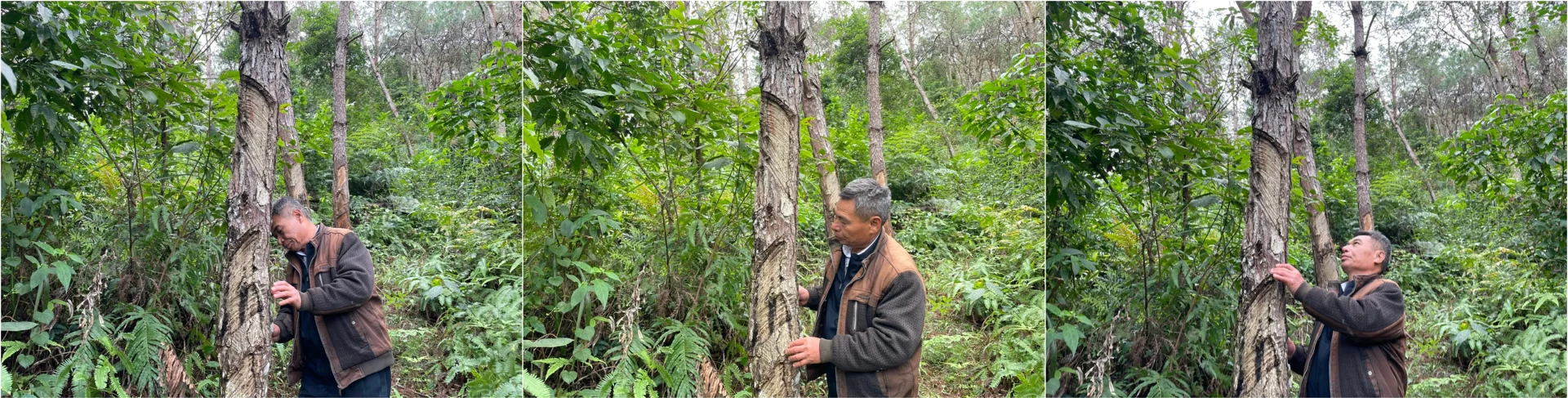
For Hoang Van Thanh, the forest is not just scenery but a living record of change shaped by time, effort and hard-earned lessons.
High returns from early prevention
Dr Dao Ngoc Quang noted that international studies show investment in early prevention and monitoring can deliver benefit-to-cost ratios as high as 30 to 1.
By comparison, annual monitoring costs in Vietnam are about 80,000 Australian dollars for all three sites. That is far lower than the cost of managing a large-scale outbreak.
Dr Dao Ngoc Quang noted that international studies consistently show early investment in prevention and monitoring delivers exceptional returns, with benefit-to-cost ratios reaching as high as 30 to 1.
By contrast, annual monitoring costs in Vietnam amount to about AUD80,000 (US$53,000) for all three sites, a modest expense compared with the far greater financial and ecological losses that would arise from controlling a large-scale pest outbreak once it takes hold.
Gillian Bird, Australian Ambassador to Vietnam, said the project has helped Vietnamese researchers build the scientific evidence needed to safeguard the economic value and health of plantation forests against invasive pests.
She noted that for 32 years Australia has invested in agricultural research to support Vietnam’s economic development through the Australian Centre for International Agricultural Research (ACIAR), with more than 260 research projects involving Vietnam.
“It is encouraging to see this project supporting a regional biosecurity network where Vietnamese scientists share research and help build capacity for colleagues across Southeast Asia, including Cambodia, Laos, Thailand, Malaysia and Indonesia,” she said.
Quiet footsteps continue through the forest in Ban Anh Hamlet, where scientists, forest rangers and locals work side by side in an effort that draws little attention.
By detecting early warning signs, they protect forests from the ground up, giving border woodlands like Ban Anh greater resilience against the growing pressures of nature and human activity.