EC works with Vietnam for progress of illegal fishing
Extensive inspection proves that Vietnam has made efforts to improve its fishing status, but the commission will work with the country in the next six months for further assessment.
A European Commission (EC) delegation has worked with the Government of Vietnam in an open meeting held in Hanoi to discuss the progress of preventing illegal, unreported, and unregulated (IUU) fishing.
| Roberto Cesari, IUU Fisheries Policy Unit Head, Directorate-General for Maritime Affairs and Fisheries (MARE), EC, at a meeting in Hanoi on Oct 28. Photos: VGP |
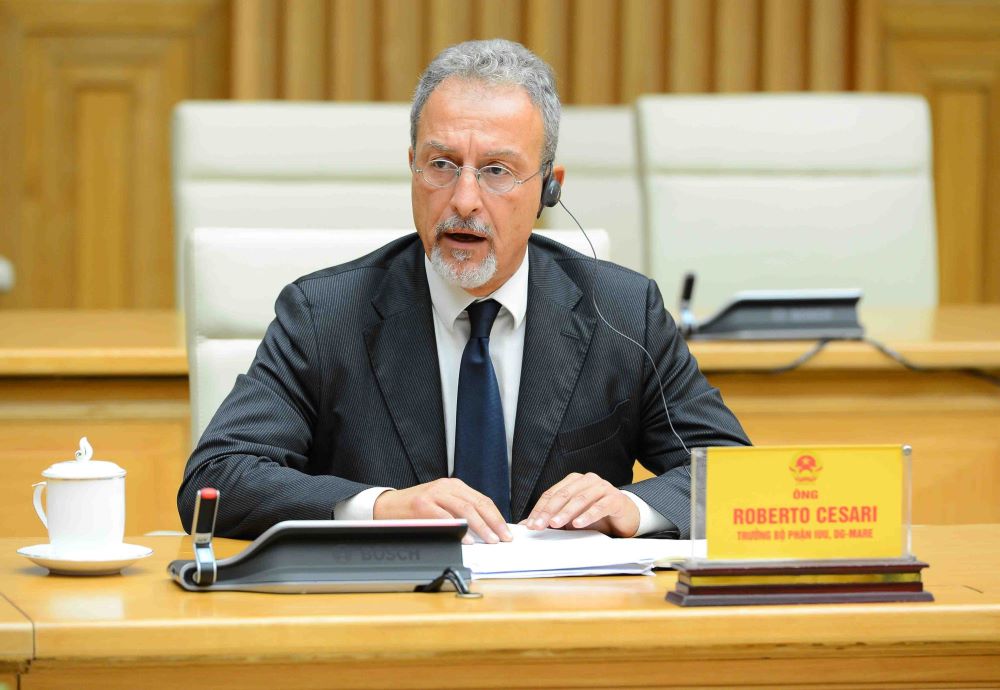
EC officials acknowledged significant changes in Vietnam's efforts in combating IUU fishing at the meeting on Oct 28 between Roberto Cesari, IUU Fisheries Policy Unit Head, Directorate-General for Maritime Affairs and Fisheries (MARE), EC, and Vietnamese Deputy Prime Minister Le Van Thanh.
The mission has observed significant advancement and improvement in the fight against IUU fishing through random inspection in coastal towns. In 28 coastal areas, they observed substantial improvements in information transparency and fishery managers' capacity building.
The EU officials appreciated Vietnam's extensive political efforts to combat IUU fishing. They claimed that while Vietnam has taken strong measures against IUU fishing at the national level, implementing these measures at the grassroots is still found wanting.
Vietnam must establish an efficient monitoring system with stringent legal requirements and ensure synchronized and consistent enforcement from the national to local levels. Sanctions will also need to be strengthened to deter perpetrators effectively and harshly punish them. Additionally, a strategy for managing all aquatic resources and tightly regulating the import of marine materials for processing exports is required.
Last, it's necessary to stop fishermen from plying foreign waterways.
Roberto Cesari affirmed that the EU considers combating IUU fishing a top priority in the bloc's overall collaboration and each member state's cooperation with partner nations.
The mission is anticipated to continue with inspection and assessment in Vietnam in six months.
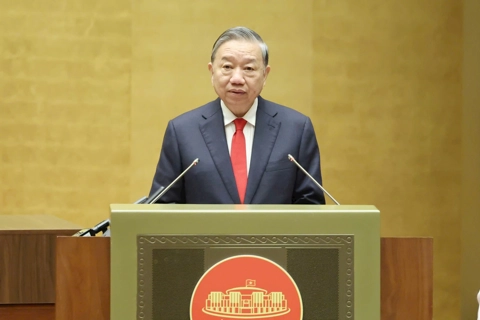
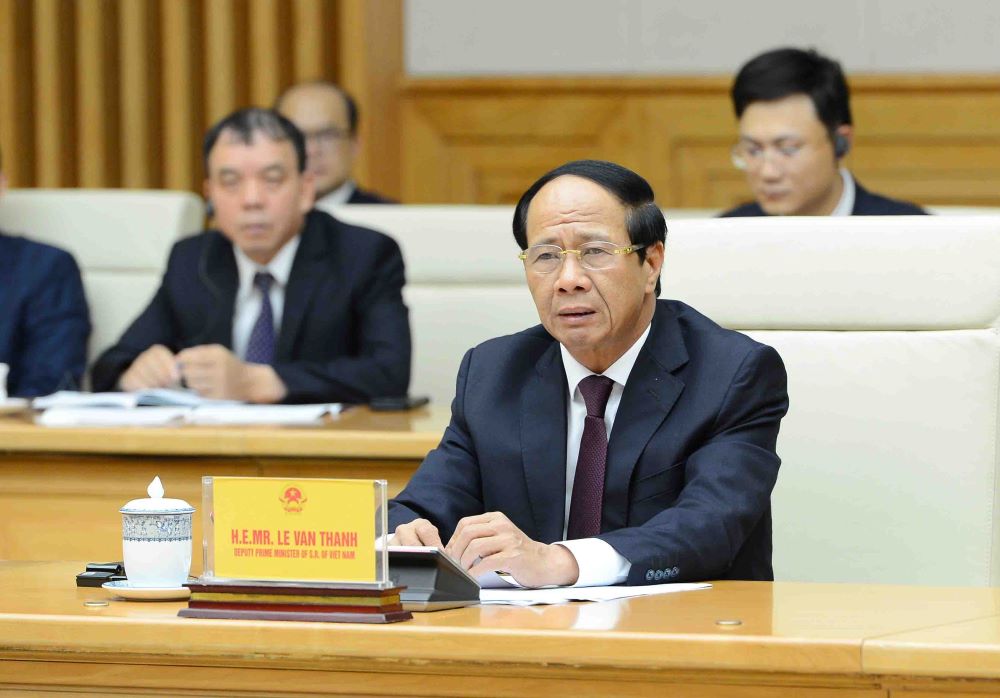
| Vietnam's Deputy Prime Minister Le Van Thanh at the meeting. |
Vietnam’s consistent policies
Deputy PM Le Van Thanh highly respected MARE's advice for Vietnam to combat IUU fishing during the meeting attended by Ambassador Giorgio Aliberti, Head of the European Union Mission to Vietnam.
Most of these suggestions support responsible fisheries management and work toward developing sustainable fisheries.
Thanh asserted that Vietnam has been working hard to implement the suggestions for discouraging and ending IUU fishing to create a sustainable, accountable, and managed fishing industry.
He reaffirmed that Vietnam's objective is to encourage fishermen to register for environmentally acceptable fishing activities and maintain sustainable aquatic resources.
Vietnam actively conducts marine conservation activities, including stocking, restoring, and regenerating aquatic resources. At the same time, quotas for fishing permits are being implemented, and short- and long-term plans are in place to gradually reduce the fishing intensity to protect aquatic resources.
Vietnam reiterates its unwavering commitment to combating IUU fishing and demonstrates that efforts are being made at all levels in tandem with the nation's fishing industry and community.
However, given Vietnam's limited resources, its fisheries are tropical, multi-species, and specific to different regions of the South China Sea. Sustainably eradicating IUU fishing will take time, effort, and a well-defined plan.
In light of this, the Deputy Prime Minister suggested that the EC and EU member states continue their close collaboration and prompt technical assistance, taking into account the unique aspects of Vietnam's fisheries in implementing the EC guidelines on IUU.
It is advised that the EC withdraw Vietnam's yellow card warning as soon as they recognize Vietnam's efforts to combat IUU fishing and its successful outcomes.
Vietnam received a yellow card from the European Commission in October 2017. Since its enactment, the EU has been examining Vietnam's fisheries-related regulations to decide which course it will take out of three options: maintaining the yellow card status, issuing a red card that forbids all seafood imports from Vietnam to the EU, or rescinding the yellow card and resuming normal trade.
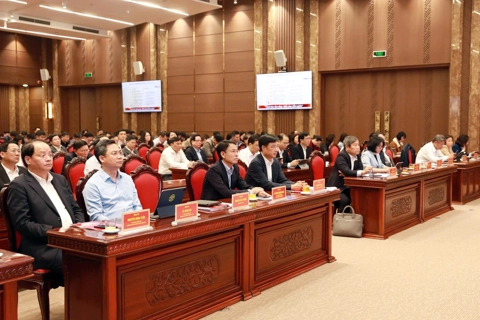
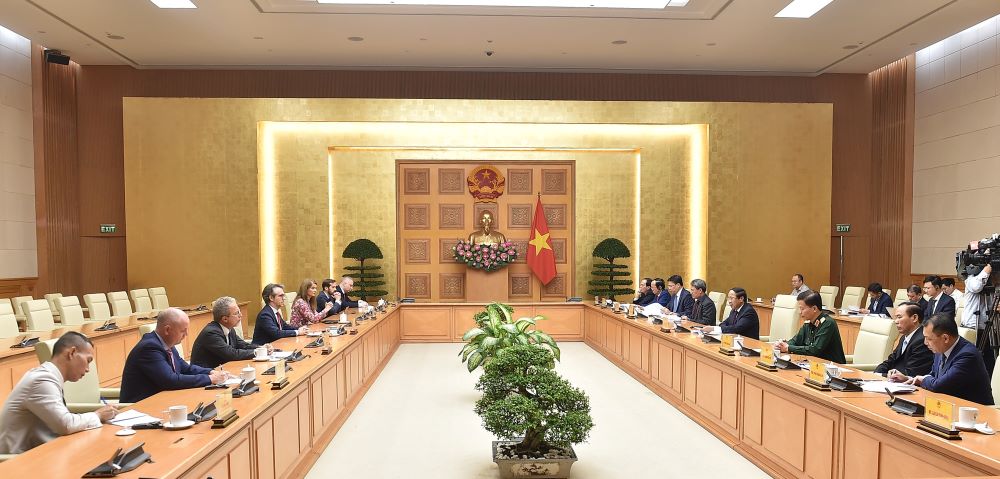
| Overview of the meeting. |
EU-Vietnam Cooperation
At the meeting, Deputy PM Thanh said the EU is Vietnam’s leading partner in trade, investment, and development cooperation.
EU is the country’s 5th biggest trade partner, the 3rd largest importer, the 5th biggest import market, and the 6th biggest investor. The two-way trade between the EU and Vietnam rose to US$63.6 billion, up 14.8% on-year, following the validity of the EU-Vietnam Free Trade Agreement (EVFTA) in August 2020.
So far, the EU is pouring $27.5 billion into more than 2,300 projects in Vietnam.
Seafood is one of Vietnam’s main export staples. In 2021, the country earned US$8.9 billion from seafood exports, up 6% year on year. The volume to the EU accounted for 12% of Vietnam’s total seafood exports in 2021. Shrimp remained the primary item in seafood export.