Efforts to make Vietnam’s government apparatus effective
Vietnam’s administrative reforms aim to boost efficiency and reduce redundancy, ensuring a more agile and responsive governance.
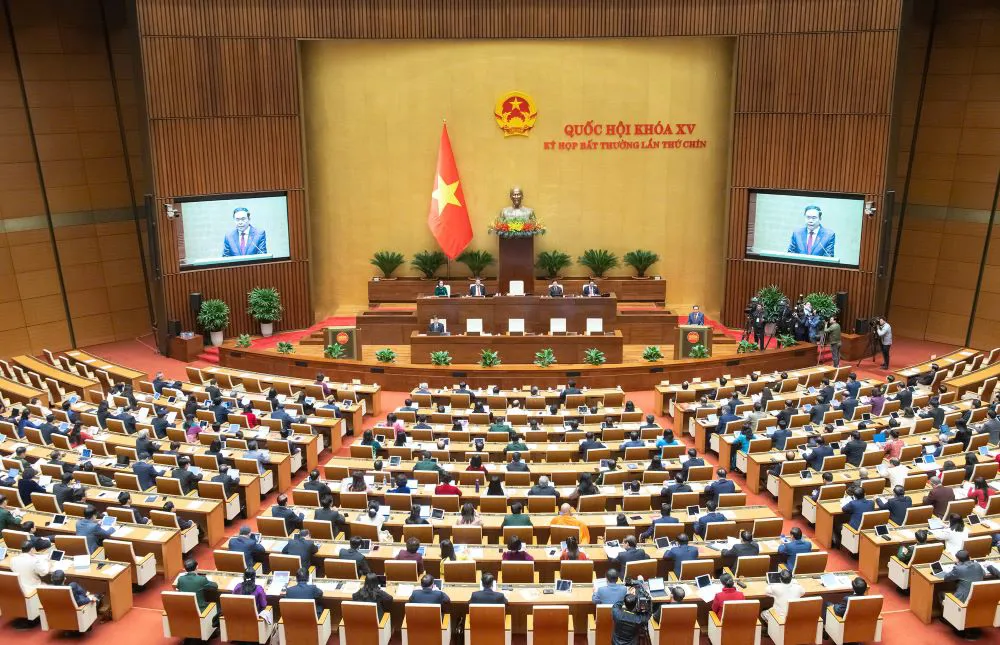
After a week, the 9th Extraordinary Session of the 15th National Assembly concluded on February 19, having completed its agenda, particularly on government restructuring.
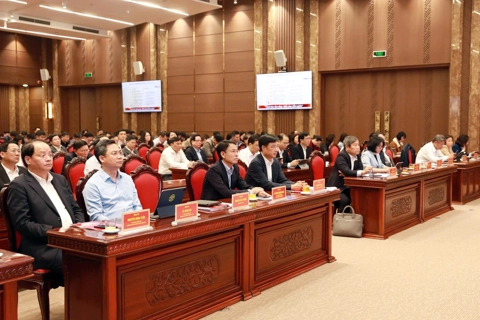
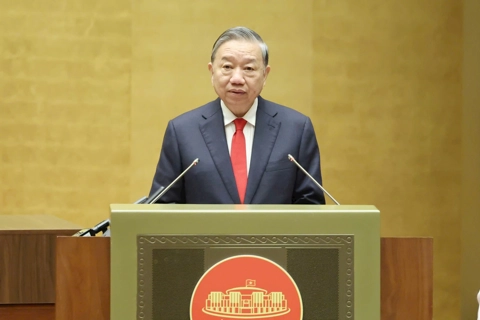
| Deputies at the National Assembly's 9th Extraordinary Session. Photos: Quochoi |
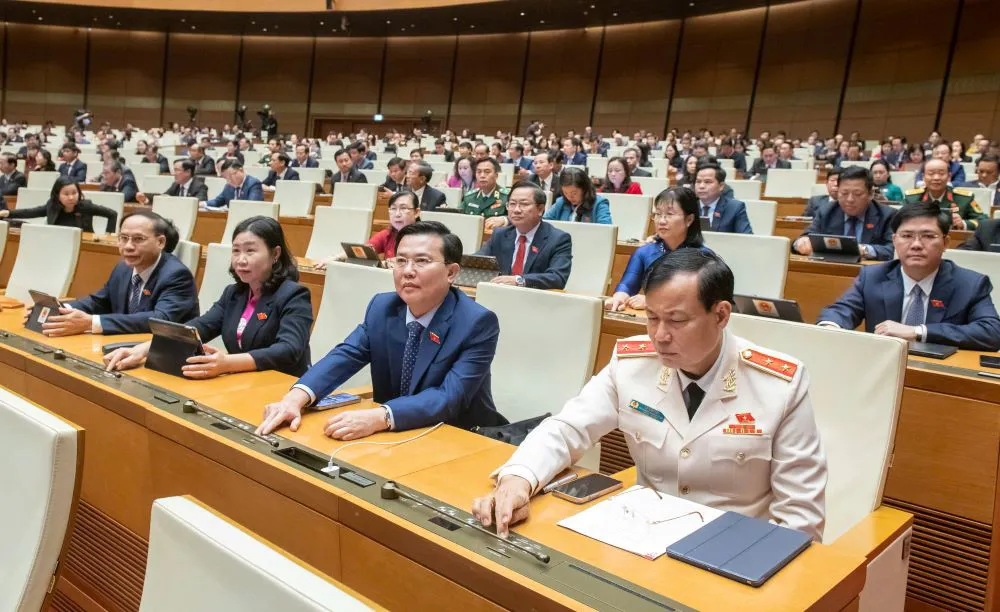
The session completed 17 key agenda items related to legislation, socio-economic issues, the state budget, and personnel matters. The National Assembly passed four laws and ten important resolutions, including policies on administrative restructuring and socio-economic development.
The National Assembly approved the restructured government for the 2021-2026 term, which now consists of 25 members (three fewer than before the streamlining), including one prime minister and seven deputy prime ministers (two more than before the streamlining). The government now has 14 ministries and 3 ministerial-level agencies (five fewer than before the restructuring).
Chairman of the National Assembly Tran Thanh Man emphasized that these moves by the legislative body were timely and necessary as they would remove obstacles and create breakthroughs for national development.
He expressed confidence that, with the unity of the political system and the people, Vietnam will overcome challenges and achieve its set goals through an effective apparatus system.
The restructuring of the political system is aimed at streamlining administrative structures, unlocking resources, and driving national development in the hope that Vietnam will overcome challenges, successfully achieve its national goals, and enter a new era that will transform the nation as stated by General Secretary of the Communist Party of Vietnam To Lam.
Dr. Nguyen Si Dung, former Deputy Head of the Office of the National Assembly said that streamlining the administrative apparatus through the “run while aligning” approach is a pragmatic strategy that fosters flexibility and adaptability in administrative reforms.
During the Extraordinary Session, substantial reforms were institutionalized, in line with the Party system: several agencies were merged or dissolved to eliminate overlapping and functional redundancy, while the number of departments in Party committees was significantly reduced.
| Overview of the session. |
Restructuring Vietnam’s administrative system: Key move towards efficiency
Vietnam is streamlining its administration to improve efficiency, avoid redundancies, and strengthen governance, a key step in its political and economic reforms.
The push for administrative restructuring stems from the need for a more effective government capable of meeting the challenges of rapid economic expansion and increasing global integration.
Nguyen Si Dung said that the existing administrative framework has become outdated, resulting in slow policy implementation. “Our system has struggled to keep up with the fast-changing social and economic landscape. Streamlining is essential for modern governance.”
Rather than halting governance operations to overhaul the system, the government has been making phased changes while maintaining public services and administrative activities.
“This approach allows for real-time adjustments based on practical outcomes, which is crucial because there’s no one-size-fits-all model for reform,” Dr Dung explains. He stressed that this method reduces disruptions, optimizes resources, and facilitates the testing of new structures before scaling them up nationally.
There has been significant restructuring within the Party system, with several agencies merged or dissolved to avoid redundant functions.
Other changes include the consolidation of several theoretical councils into the Ho Chi Minh National Academy of Politics.
The National Assembly streamlined its committees from nine to seven and closed both the Legislative Research Institute and National Assembly Television.
The government also reduced the number of ministries and agencies from 30 to 21, cutting 30%-50% of intermediate units. Additionally, the Vietnam Fatherland Front and various political-social organizations underwent significant restructuring to enhance operational efficiency.
Sharing the same view, Professor Le Hong Hanh, a governance expert, argues that although the strategy minimizes disruptions, the reshuffle might cause temporary confusion among civil servants and the public, who will have to adapt to new structures while maintaining day-to-day operations.
Long-term vision
Vietnam’s ultimate goal is to improve governance quality and public service delivery. Dr. Dung stated: “This reform aims to create a more agile, responsive, and effective government.”
The streamlined system is expected to accelerate decision-making, enhance coordination among different government levels, and make public services more accessible and efficient.
Reducing bureaucratic layers will lead to faster policy implementation and greater transparency, accountability, and interagency cooperation. Experts emphasize that these reforms should be continuously refined.
Vietnam’s administrative reforms are part of a broader strategy to modernize governance and align it with the evolving global and domestic landscape. As Dr. Dung said: “Vietnam is moving towards a leaner, more efficient governance model that better serves the people and the economy.”
Local experts believe that by optimizing its administrative system, Vietnam aims to boost global competitiveness, attract investment, and strengthen public trust in state institutions.
Vietnam’s efforts to restructure its administrative apparatus were seen as an important step toward more effective governance as they expected.