Electric bus service launched to Hanoi airport
The aim of this step is to build a green airport, where the quality of service for local and international tourists is constantly improved.
On January 1, VinBus officially launched an electric bus line connecting downtown Hanoi with Noi Bai International Airport.
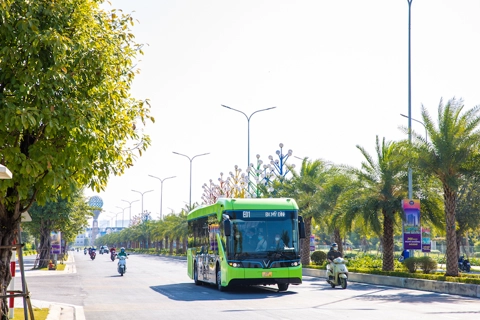
Accordingly, the new route E10 is operated by electric buses over a distance of 35 kilometers, from Vinhomes Ocean Park Urban Area in Gia Lam District to the airport. The service is operated by VinBus Transport Ecological Services Limited Company.
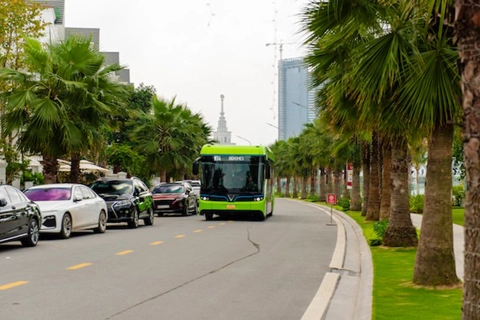
An electric bus operated by Vinbus Ecological Transport Service Co., Ltd in Hanoi. Photo: Van Trong/The Hanoi Times |
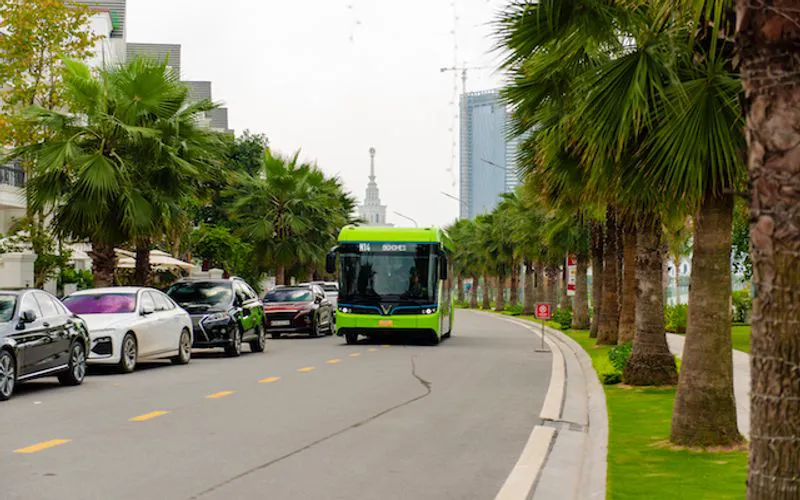
According to Nguyen Cong Nhat, general director of VinBus, the bus route is aimed at commuters who use private cars and taxis to go to the airport, helping to ease traffic flow on roads leading to the airport and prevent traffic congestion. The bus service also reduces travel time compared to the regular service as it makes fewer stops.
He added that more and more people are choosing public transport to travel to the airport. "It is expected that we will operate more bus routes to meet people's travel demand and take another step in the mission to create green transportation," Nhat stressed.
In addition to the shuttle buses operated by Vietjet Air, Vietnam Airlines and Jetstar Pacific, Hanoi currently operates a number of bus lines connecting the city center with Noi Bai International Airport, including Cau Giay-Noi Bai (Line 07), Long Bien-Noi Bai (line 17), Ha Dong - Noi Bai (line 68), Kim Ma-Noi Bai (line 90), My Dinh-Noi Bai (line 109), and an express bus line 86 connecting Hanoi Railway Station to Hoan Kiem Lake in the heart of Hanoi City and Noi Bai Airport.
VinBus Transport Services Limited Company, a subsidiary of Vietnamese conglomerate Vingroup, launched the country's first smart electric bus service in Hanoi on April 8, 2021.
The buses are manufactured and assembled by automaker VinFast at its factory in Haiphong City, about 120 kilometers from Hanoi.
With a battery capacity of 281 kWh, the bus can travel between 220 and 260 kilometers on a single charge and carry 68 passengers.
The bus service is part of the company's goal to develop a modern public transportation system that reduces air and noise pollution in Vietnam's major cities.
The launch of the E10 route provides more choices for Hanoi residents who need to travel to Noi Bai Airport, as well as for foreign passengers. Visitors can experience other electric bus routes to travel to famous attractions, monuments and entertainment areas in Hanoi.