Elephant blessing ceremony – sacred tradition in Vietnam’s Central Highlands
The ceremony brings the village together, reinforces cultural identity and highlights the community’s responsibility to preserve both their heritage and the endangered elephants of Dak Lak.
THE HANOI TIMES — The elephant health blessing ceremony is one of the most sacred cultural traditions in the Central Highlands, where elephants hold enduring spiritual value for ethnic communities.
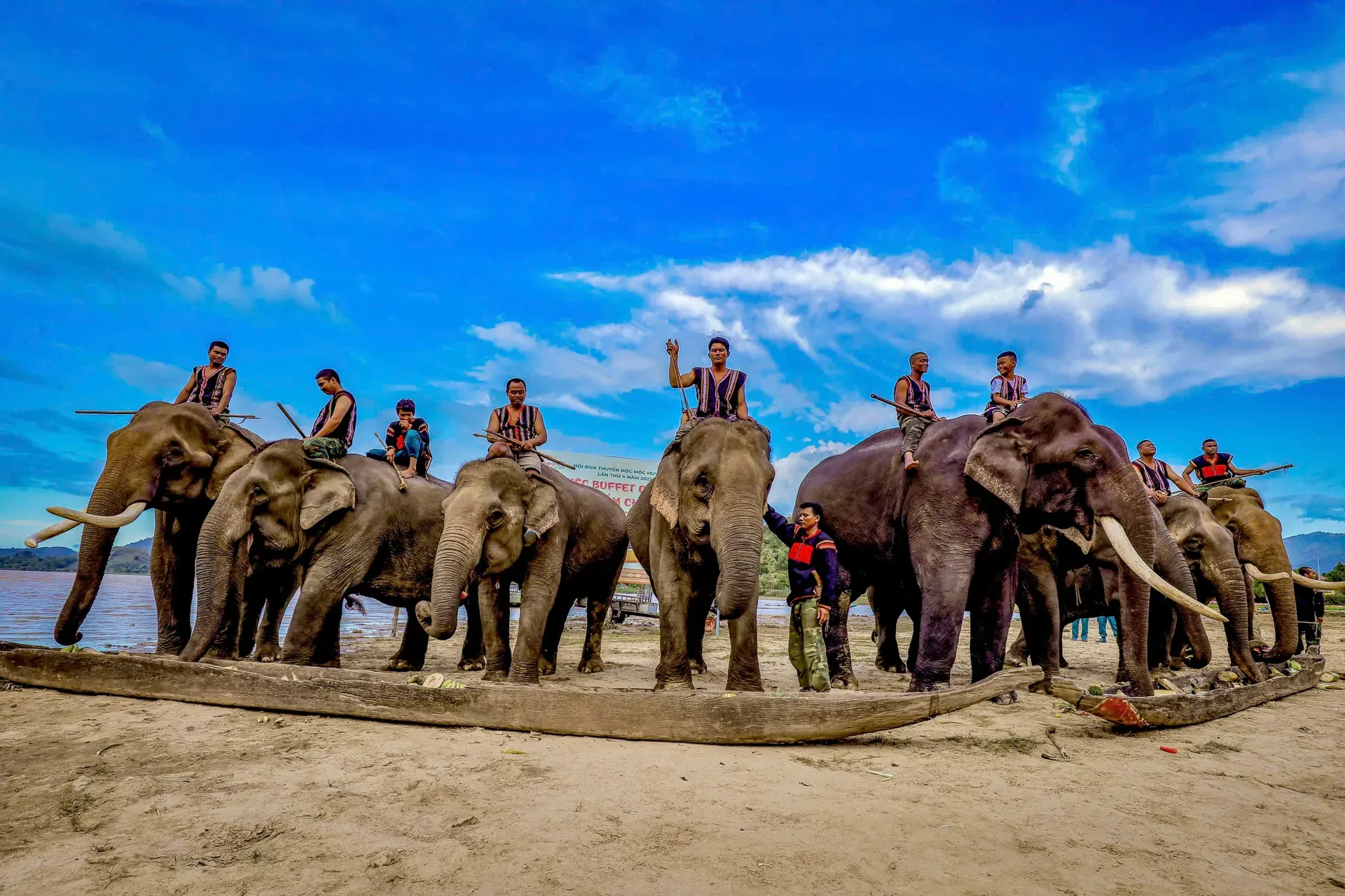
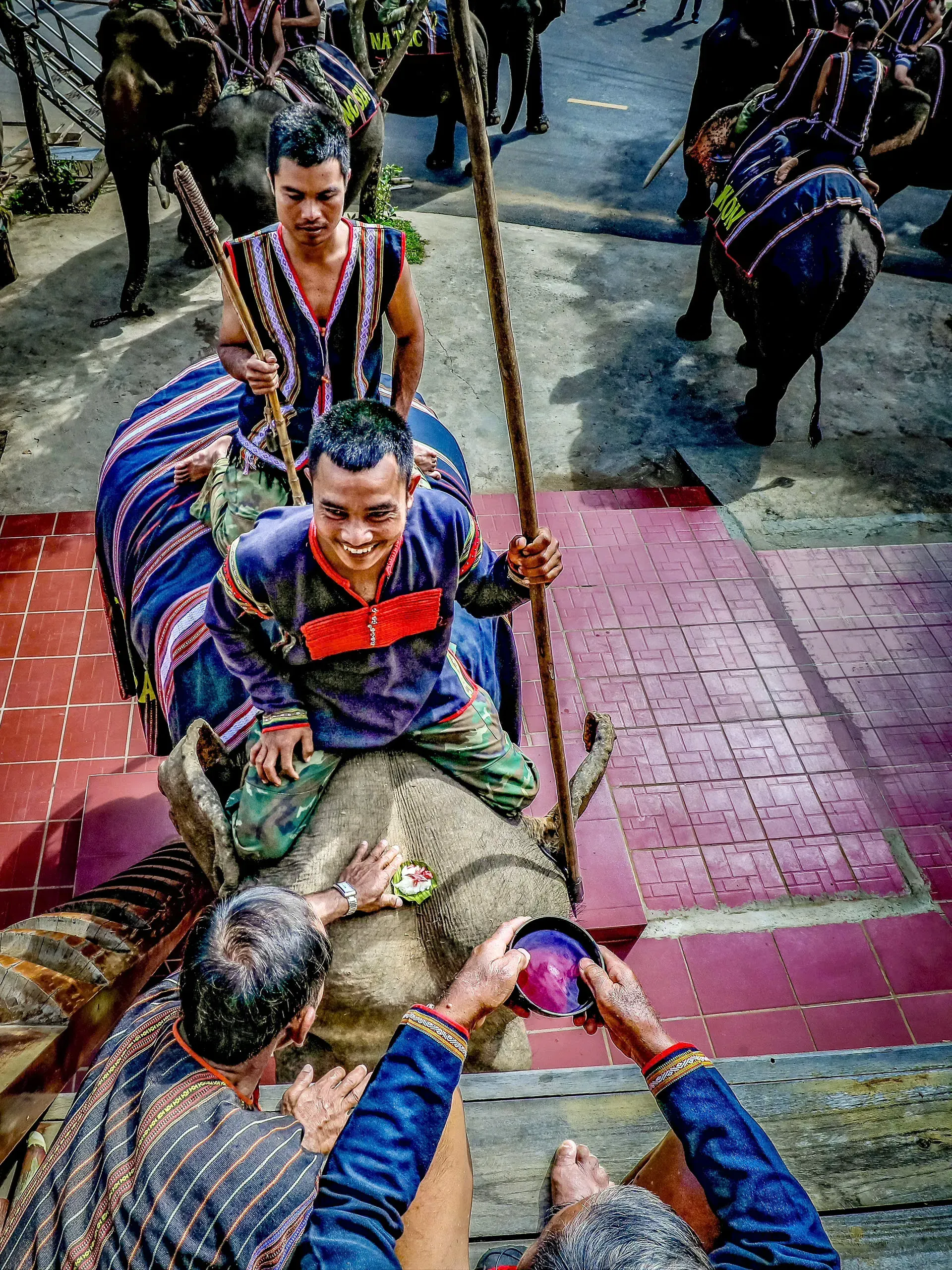
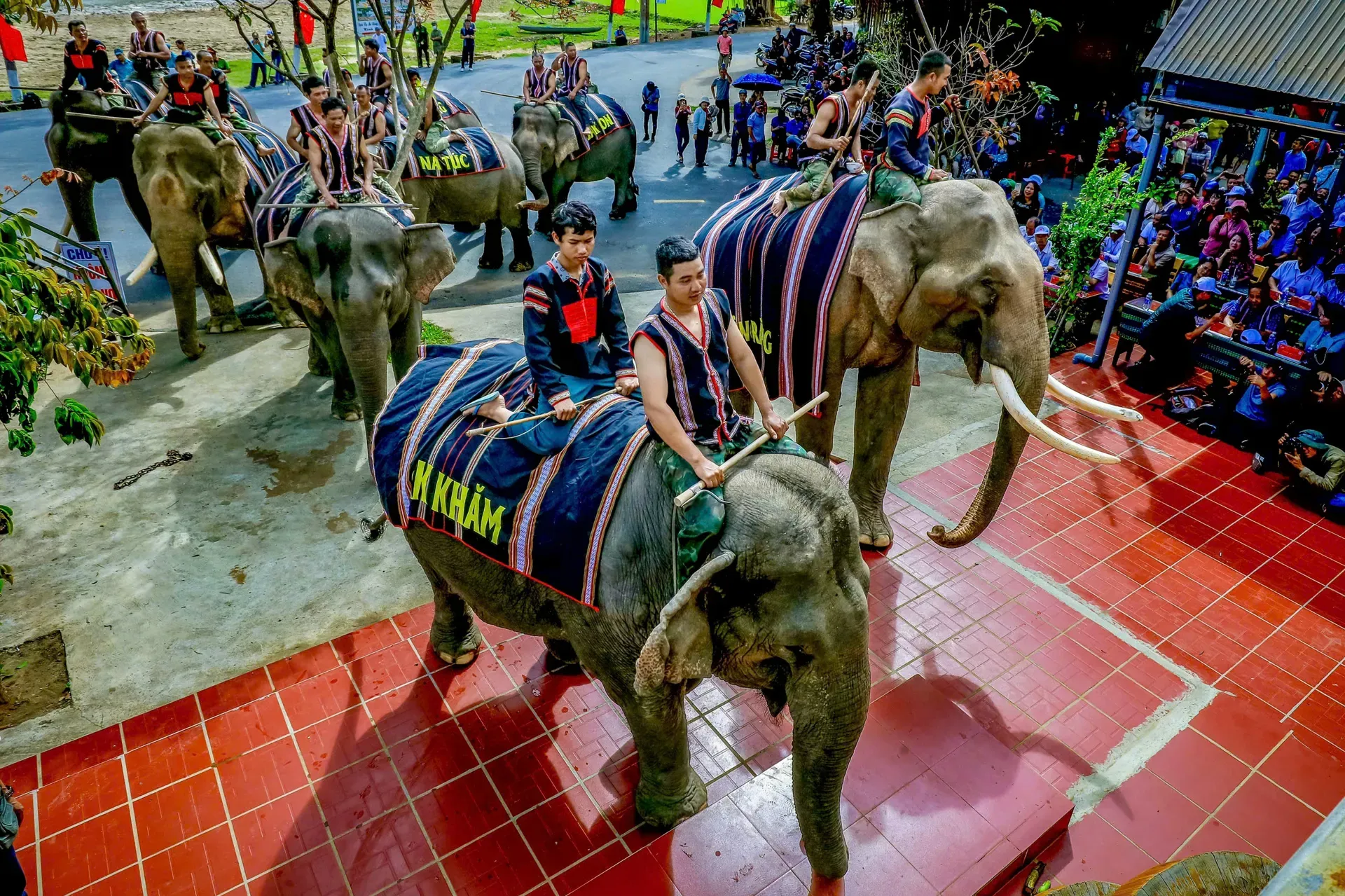
Elephants hold enduring spiritual value for ethnic communities in Vietnam's Central Highlands. Photos: Duy Thuong/The Hanoi Times
For generations, elephants have symbolized pride and prosperity for families and villages in Dak Lak Province.
Each year, elephant owners host a ceremony to pray for the health of their elephants, themselves, the mahouts and the community.
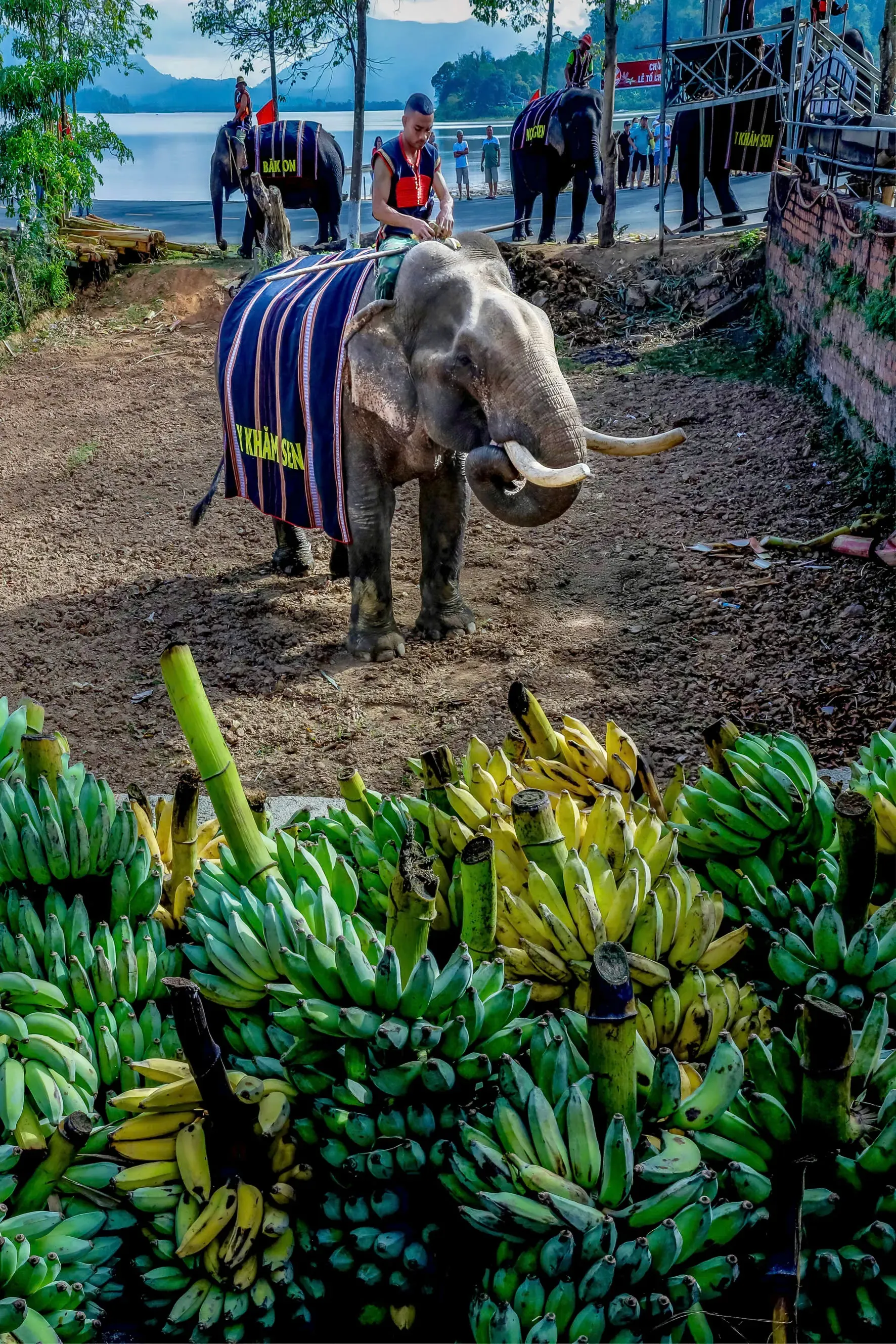
Elephants symbolize pride and prosperity for families and villages in Dak Lak Province.
The ritual usually takes place at the beginning of the year, when people ask for strength and good fortune for the elephants, while reaffirming their responsibility to protect this endangered species.
The ceremony is deeply rooted in the cultural and spiritual life of the Central Highlands, especially among the Mnong people of Dak Lak.
It reflects the close bond between humans and elephants, regarded as symbols of strength, authority and good luck.
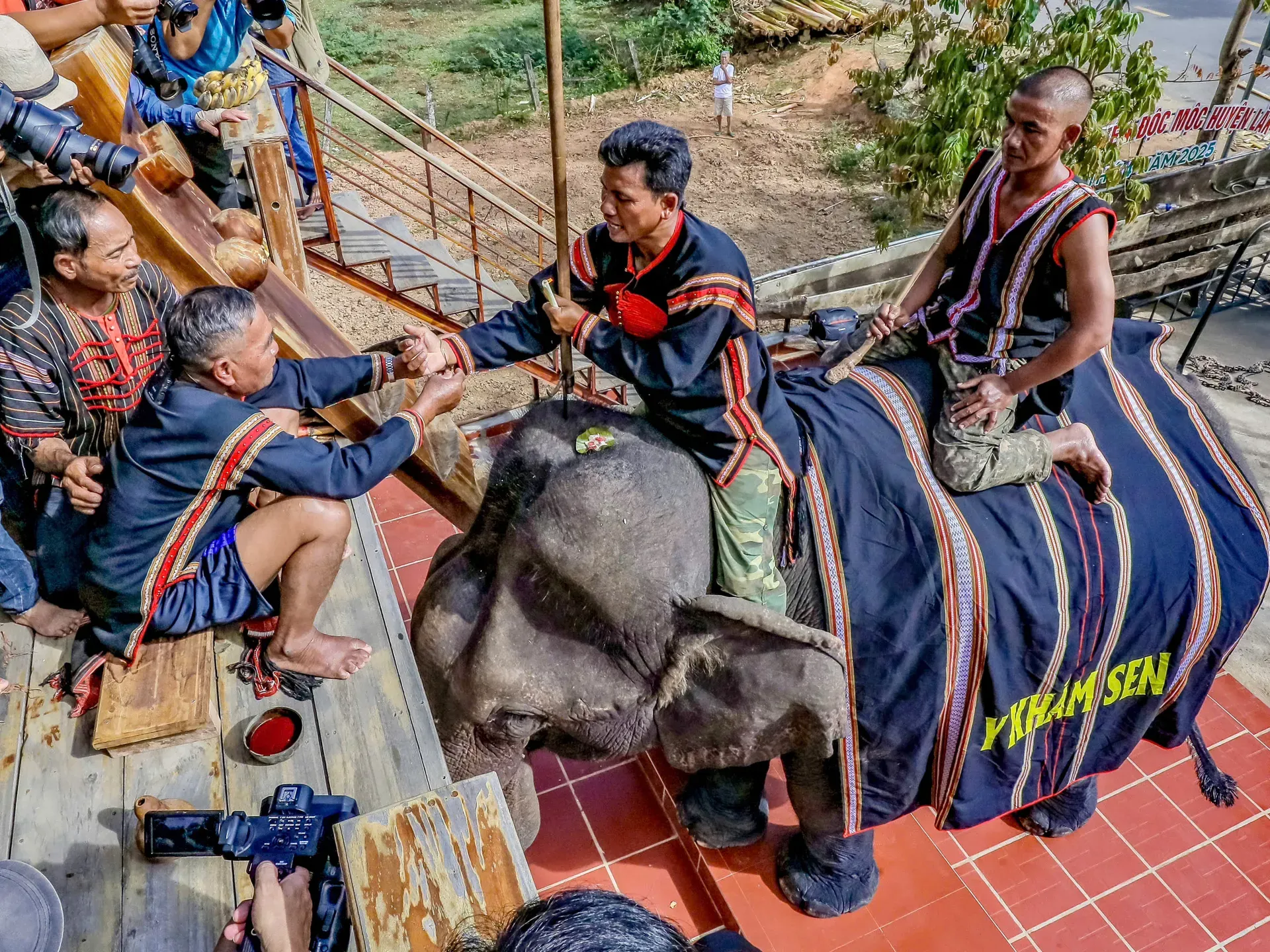
In Buon Don Commune, elephants are more than livestock or labor but the foundation of a family’s livelihood and a symbol of wealth and spiritual power.
Elephants are treated as family members, and their well-being is tied to the peace and prosperity of the village.
The ceremony is usually held once or twice a year, either at the end of the harvest or before a new season begins.
A respected village shaman presides over the ritual, which begins with the sound of gongs to summon the spirits and gather the community.
In the sacred atmosphere, the shaman calls upon the Elephant Spirit, the Earth Spirit and the Sky Spirit to bless the ceremony.
The blessing for the elephant becomes a highlight of the ritual. The shaman sprinkles rice wine and applies fresh animal blood to the elephant's head and legs, praying for strength and vitality.
A bronze bracelet is placed on the elephant’s leg as a symbol of good fortune, along with blessings for the mahout, signifying the bond between humans and elephants.
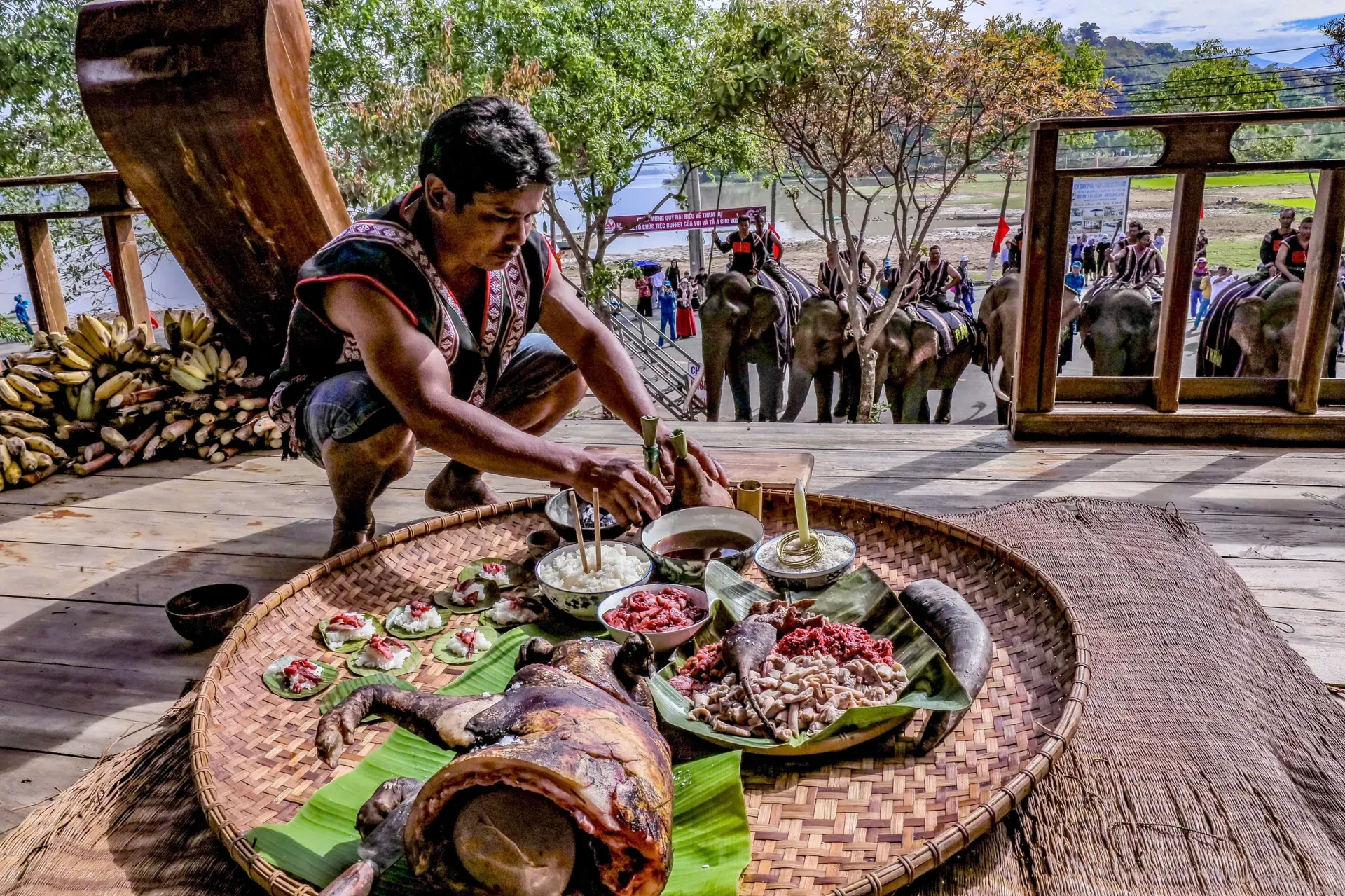
The ceremony ends with a feast prepared for the elephant, using the offerings from the altar.
The offerings include rice wine, pork or buffalo meat, glutinous rice, sticky rice cakes, fresh blood, betel leaves, areca nuts, beeswax candles, woven fabrics and bronze bracelets. Each item carries symbolic meaning and reflects the community’s prayers for peace and prosperity.
Apart from its spiritual value, the ceremony reminds the community of the elephant’s role in their history and culture. It is an occasion for village members to gather, strengthen bonds and reaffirm their commitment to nature conservation and humane treatment of wildlife.
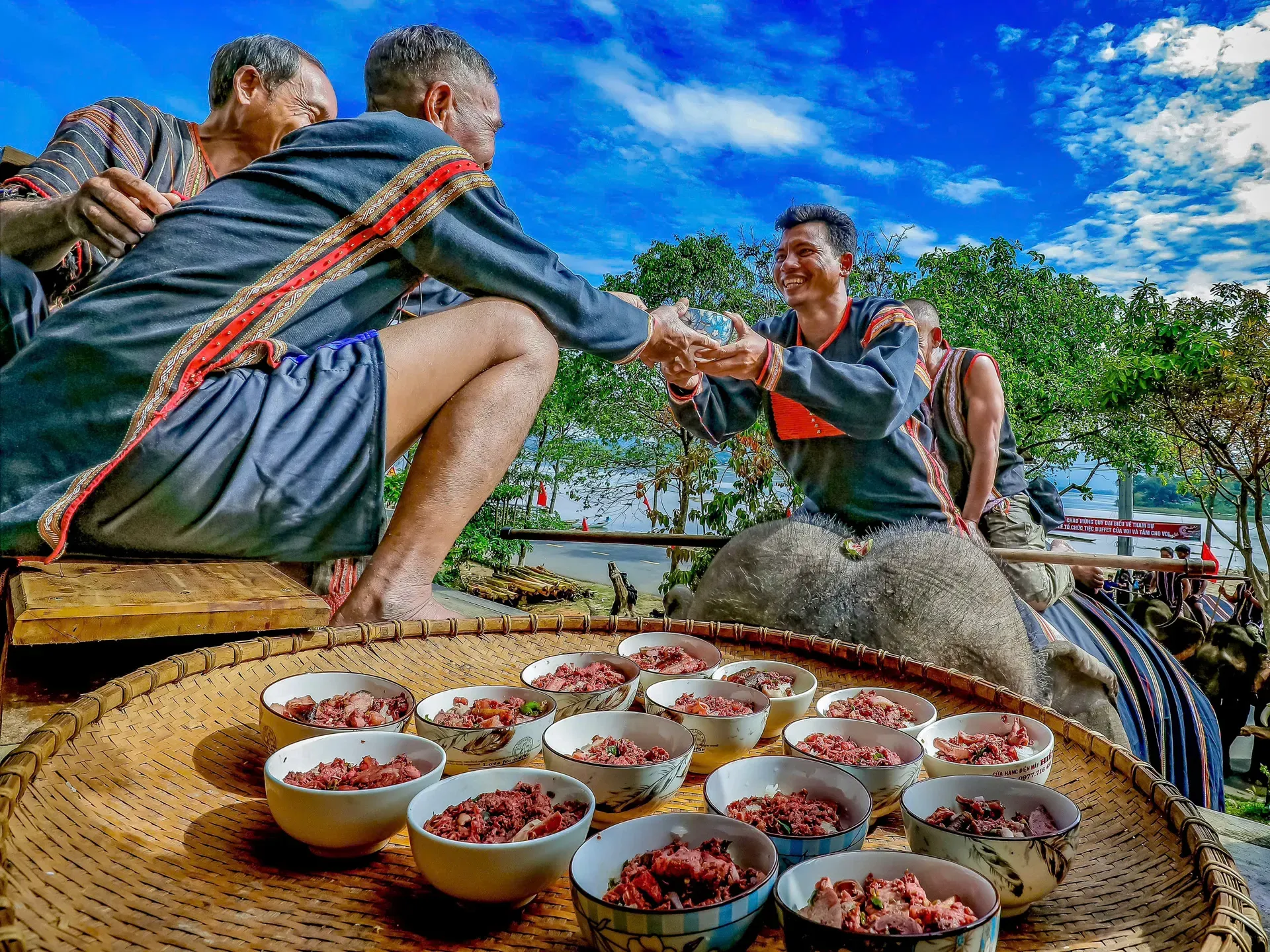
Preserving this ceremony helps safeguard traditional cultural identity while raising awareness of the need to protect elephants, a natural and cultural heritage of Dak Lak.
The ritual is a living testament to the harmony between people, culture and nature, reminding future generations of the importance of gratitude and conservation in the vast forests of the Central Highlands.