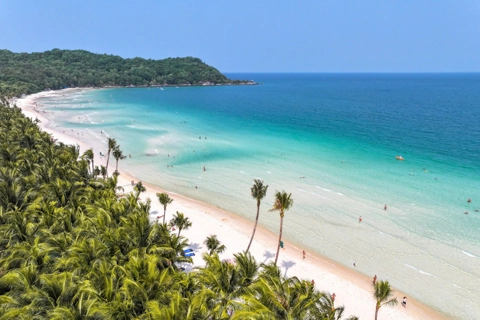
Endangered sea turtle lays eggs on beach in central Vietnam
This is an encouraging sign for the conservation of this turtle species.
THE HANOI TIMES — A sea turtle (Chelonia mydas), an endangered species listed in Vietnam’s Red Data Book, recently returned to Hon Cau Beach in Central Highlands province of Lam Dong to lay eggs.
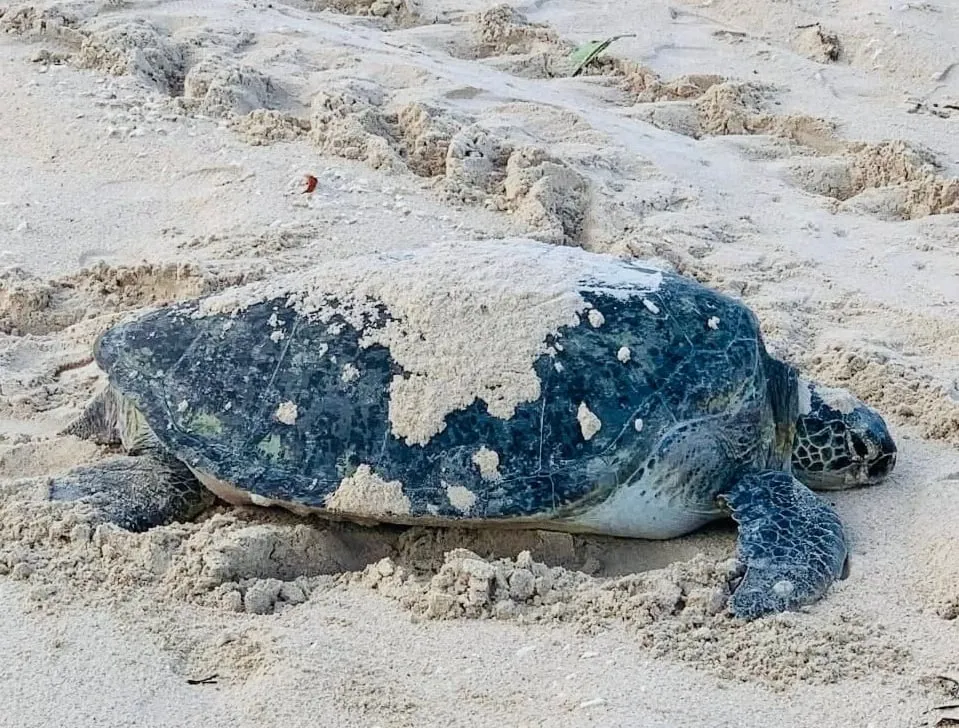
A sea turtle lays eggs on Hon Cau Beach in Lam Dong Province. Photo courtesy of the Hon Cau Marine Protected Area.
During a routine marine inspection this weekend, a patrol team from the MPA Management Board found a nest with 112 eggs.
The eggs were subsequently moved to the Marine Protected Area’s designated incubation area. Under normal weather conditions, they are expected to hatch within 45 to 60 days.
This marks the second return of this turtle species to Hon Cau this year, following a previous nest of 108 eggs laid on June 23. The sea turtle nesting season normally runs from May to October.
Hon Cau, around 10 kilometers offshore, is one of Vietnam’s 16 nationally designated marine protected areas of environmental significance. Spanning 12,500 hectares, it features diverse ecosystems, including coral reefs, seagrass beds, and coastal habitats that serve as breeding grounds for numerous valuable marine species.