Explore how Hanoi’s artisan keeps bamboo weaving craft alive
For over five decades, People’s Artisan Nguyen Van Tinh has remained passionate about humble strands of rattan.
THE HANOI TIMES — In a modest workshop in Phu Vinh Hamlet, Phu Nghia Commune, the familiar sounds of rattan splitting and bamboo shaving echo through the air like the steady heartbeat of a traditional craft village.
It’s the place where People’s Artisan Nguyen Van Tinh works with steady hands, weaving glossy rattan strands into graceful forms amid the scent of fresh bamboo.
Half a century of weaving

Artisan Nguyen Van Tinh conducts a final quality check on his handcrafted bamboo and rattan creations. Photo: Bich Hoi/ The Hanoi Times
Born in 1964, Tinh grew up in a family where craftsmanship was both a trade and a legacy. His father, artisan Nguyen Van Khieu, was the first in Vietnam to portray late President Ho Chi Minh (1890-1969) using bamboo and rattan materials, and a pioneer in developing decorative motifs in Phu Vinh Craft Village.
At an early age, Tinh was aware of raw materials being the lifeblood and pride of the community. “Bamboo and rattan are the village’s materials and soul. Without passion and patience, a craftsman will never be able to produce a vivid work of art,” he shared.
With skillful hands and a sharp eye for detail, Tinh has produced countless exquisite works, including flower vases, hanging lamps, decorative baskets and intricate sets of tables and chairs.
Each piece transcends mere utility, embodying the aesthetics, technique and soul of Vietnamese craftsmanship.

The sophisticated bamboo and rattan creations of Phu Vinh artisans are cherished by consumers both at home and abroad. Photo: Nong Nghiep & Moi truong
His talent soon gained national recognition. In 2006, his work “Hanging Lamp” won first prize in the “Golden-V Prize” logo design competition organized by the Vietnam Chamber of Commerce and Industry.
Two years later, his “Rattan Vase” took first place in the Vietnam Handicraft Competition
These awards honored his creativity and affirmed the growing status of Vietnamese bamboo and rattan on the regional handicraft map.
He became one of the first artisans to combine bamboo and rattan with iron, pottery and lacquer in modern and artistic styles while maintaining Vietnamese identity.
“For the trade to develop, craftsmen can’t just rely on the old things. They must be creative and keep up with new tastes, but must not lose the traditional spirit,” he said.
This balanced mindset has enabled Phu Nghia’s bamboo and rattan products to travel around the world, appearing at cultural events and exhibitions in France, Thailand, China, India, the Philippines and many other countries.

Phu Vinh bamboo and rattan weaving village on the outskirts of Hanoi boasts a centuries-long history. Photo: Van Phuc/ The Hanoi Times
Because of this prestige, Tinh’s works are frequently showcased at major cultural and tourism events of Hanoi and Vietnam.
At fairs and exhibitions, visitors often gather to watch him demonstrate his craftsmanship. “This job is taxing but fun. Every time I finish a product, I feel like I’ve just told another story about my hometown,” he shared.
Holding and passing the torch
Alongside his own creative pursuits, he has dedicated tremendous effort to training younger generations, the future torchbearers who will keep the soul of Hanoi’s bamboo and rattan weaving alive.
For years, he has traveled to many parts of Hanoi and northern provinces to conduct vocational classes. Many of his students are now workshop owners or successful exporters, providing jobs and stable incomes for hundreds of workers.
His own sons, Nguyen Van Binh and Nguyen Phuong Quang, have also been recognized as artisans; notably, Quang was honored with the title of Meritorious Artisan by the President of Vietnam in 2016 at the age of 28.
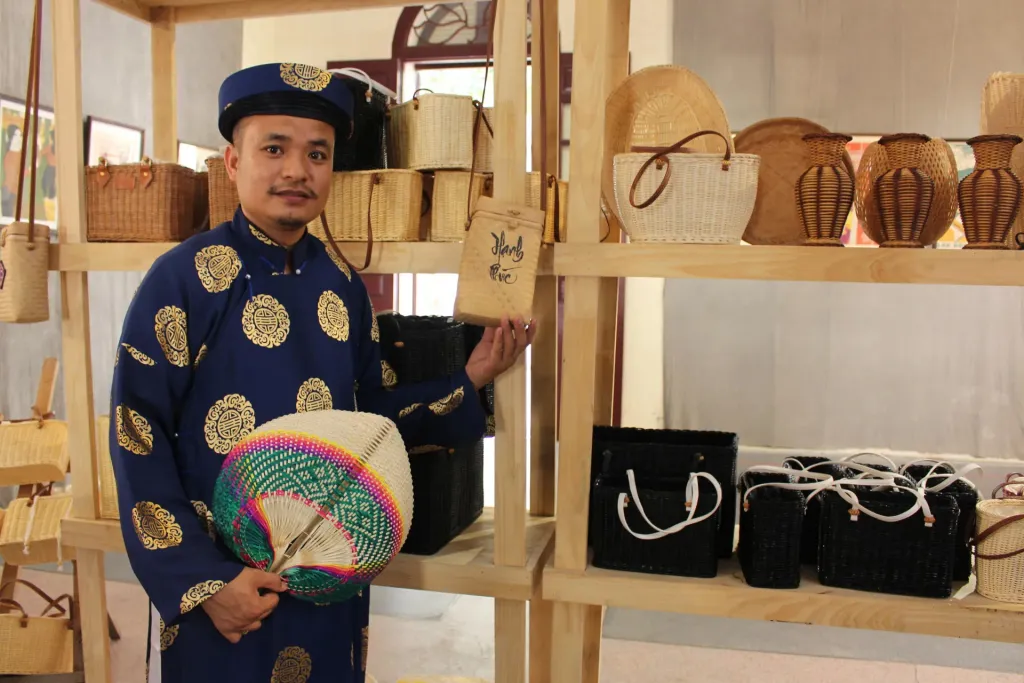
Meritorious Artisan Nguyen Phuong Quang is the son of People’s Artisan Nguyen Van Tinh. Photo: Moc Mien/ The Hanoi Times
Beyond teaching, Tinh plays an active role in bringing traditional craft villages closer to modern life. As a member of the Phu Nghia Bamboo and Rattan Association and the Hanoi Handicraft and Craft Village Association, he participates enthusiastically in trade promotion, OCOP product development and linking handicrafts with experiential tourism.
In the neighborhood, Tinh is a master craftsman and a role model who actively engaged in local movements, charity efforts and communal development.
According to Ha Thi Vinh, Chairwoman of the Hanoi Handicraft and Craft Village Association, in an age when many traditional crafts are fading, people like artisan Tinh are the soul of Vietnamese craft villages.
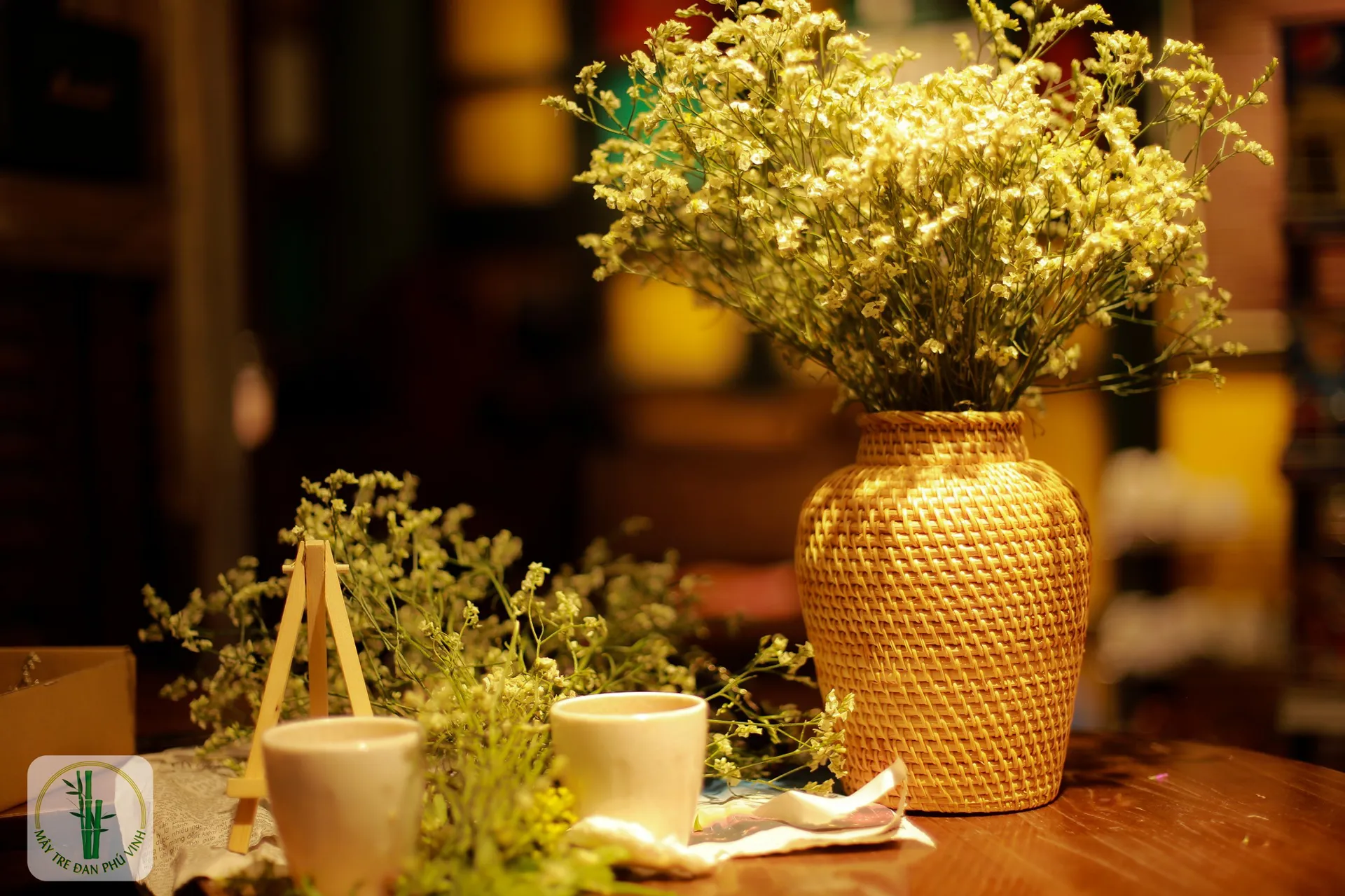
Phu Vinh Craft Village's bamboo and rattan products breathe the soul of Hanoi in modern life. Photo: May Tre Dan Phu Vinh
Thanks to their devotion, Phu Nghia’s rattan and bamboo products are recognized both at home and abroad. This development not only brings economic value but also preserves a vital part of Vietnam’s cultural identity.
Despite his long journey of preserving and developing the craft, Tinh remains humble: “I don't do anything big. I just try to do a good job as a craftsman, keep the craft passed down from our ancestors to younger generations for the future.”
In the midst of modern transformations, Tinh stands like the very bamboo he weaves: resilient, steadfast and proudly rooted in the cultural soil of Vietnam.