When Bat Trang village feast trays turn into cultural heritage
Renowned for centuries as a center of ceramics and scholarly tradition, Bat Trang Village also boasts a distinctive cultural heritage in its cuisine.
THE HANOI TIMES — Bat Trang’s offering trays, recently recognized as a National Intangible Cultural Heritage, stand out for their exceptional refinement and attract travelers seeking authentic cultural experiences in the famed pottery village.
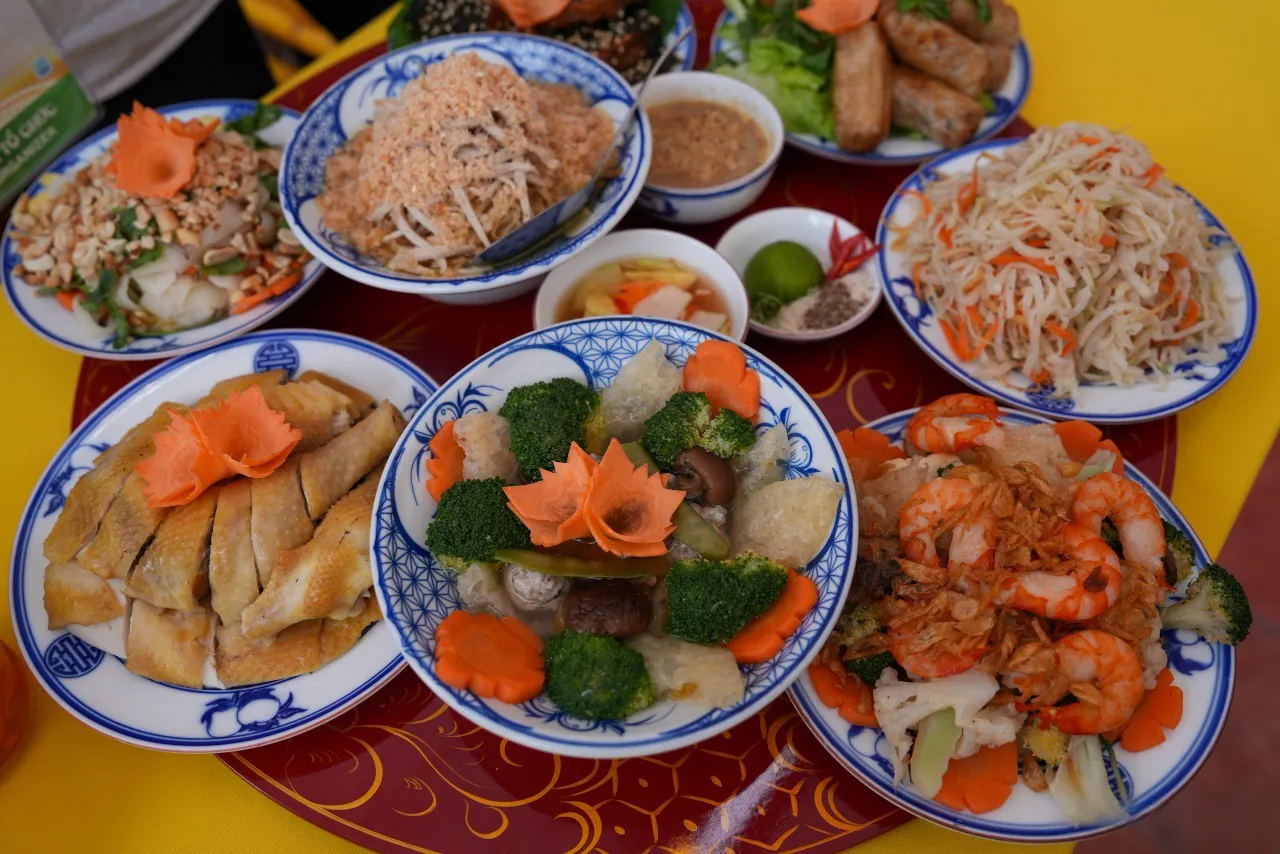
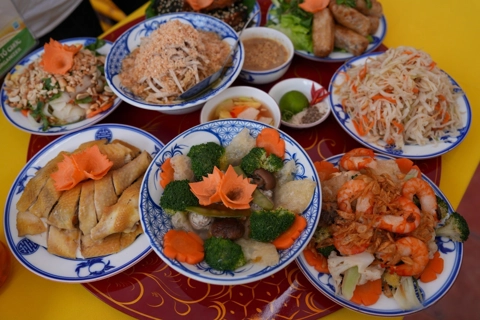
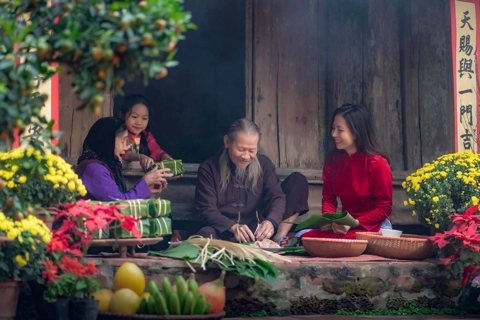
Bat Trang feast goes beyond refined cooking techniques, with each dish reflects family rituals, embodying the community's cultural norms and etiquette. Photo: Huy Pham/ The Hanoi Times
Nowhere is Bat Trang’s culinary artistry more evident than in its elaborate feast trays, traditionally prepared for Tet, village festivals and family death anniversaries.
Join The Hanoi Times to explore the meticulous techniques and fascinating stories behind these exquisite ceremonial feasts.
A feast as delicate as royal cuisine
At any time of year, especially during weddings, year-end celebrations, or early spring, visitors to Bat Trang Village near Hanoi often see women carefully shredding dried bamboo shoots into strands thinner than a toothpick.
These shoots are central to any Bat Trang feast, sourced exclusively from specific varieties in the northern province of Tuyen Quang. After removing the green and aged layers, cooks retain only the tender middle, which is boiled repeatedly to achieve the ideal texture.
The village’s signature bamboo shoot soup is complemented by premium female squid from the central province of Thanh Hoa. Freshly caught squid is grilled until fragrant, pounded until tender, then shredded.
The bamboo shoots and squid are stir-fried separately, then combined to harmonize their flavors before being added to a subtle chicken or shrimp broth, a hallmark of Bat Trang’s refined culinary style.
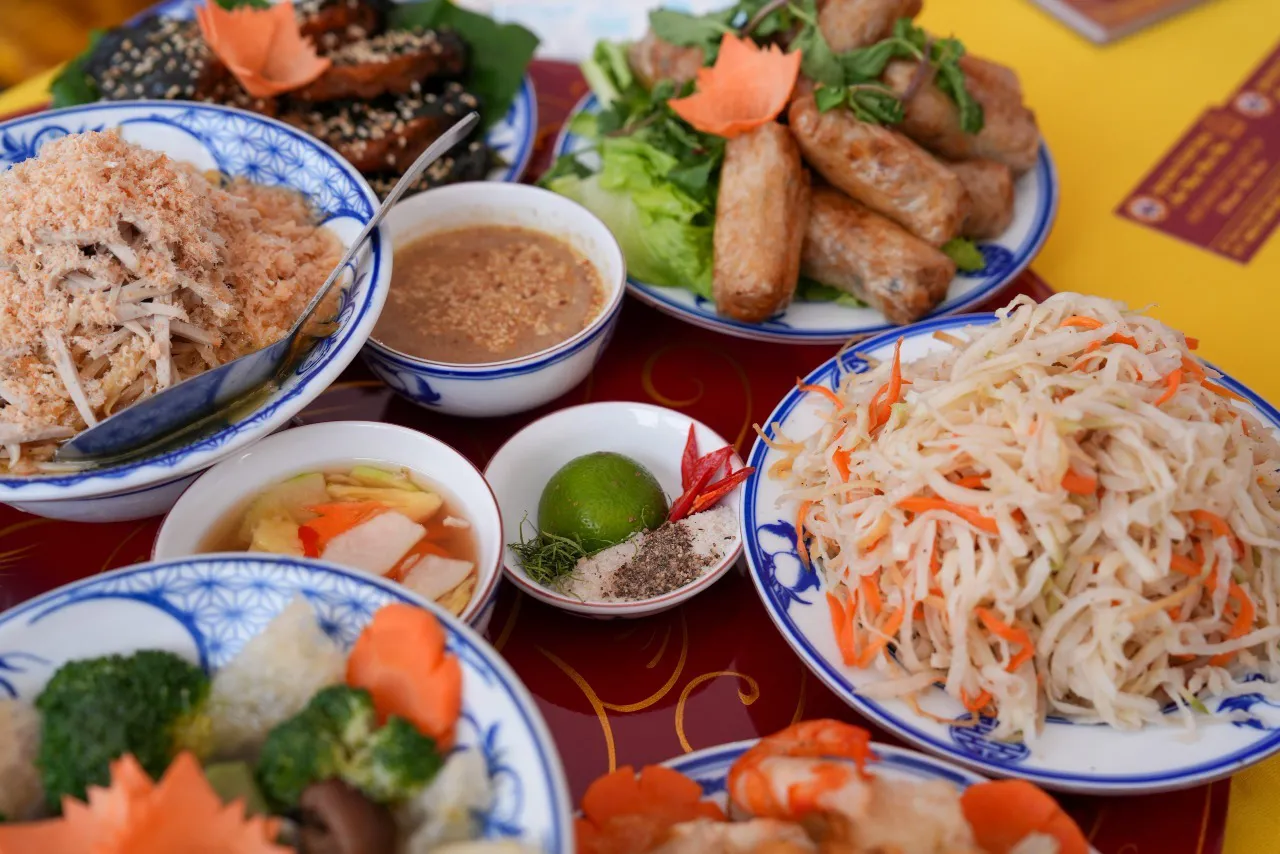
The eight-dish ceremonial meal at the Bat Trang feast made with great care by the village’s women.
Pigeon spring rolls are another Bat Trang specialty. Minced pigeon meat is stir-fried with onions, seasoned, wrapped in rice paper and deep-fried. While spring rolls are popular in Hanoi, Bat Trang offers a noticeably more refined version.
A local saying reflects the village’s pride: “Live as a man in Bat Trang, or die as a village deity in Kieu Ky,” honoring Kieu Ky’s gilding craft and Bat Trang’s longstanding reputation for entrepreneurial and culinary-skilled women.
Among them is Ha Thi Vinh, a renowned businesswoman and cook. “I come from the 15th generation, and my children are the 16th. Our recipes have been passed down through generations. From childhood, I learned from my family while preparing food for household and village banquets,” she recalled.
Bat Trang is home to many devoted cooks and discerning taste-testers. Vinh’s sister, Ha Thi Linh, 85, is regarded as a living archive of Bat Trang cuisine, while younger artisans such as Pham Thi Hoa, Pham Thi Dieu Hoai and Nguyen Thi Lam continue the tradition.
“Bat Trang people have run pottery kilns and traded goods for centuries, so the village developed economically early. That prosperity fostered refined dining habits. When good food is part of everyday life, people naturally become gourmets,” Lam explained.
This sensibility shapes even ordinary choices. Scented tea, a luxury elsewhere, is common here, and for simple dishes like boiled chicken, cooks select pullets or young hens, which are more flavorful though less economical than older birds used elsewhere.
Foundation for a commercial and cultural development zone
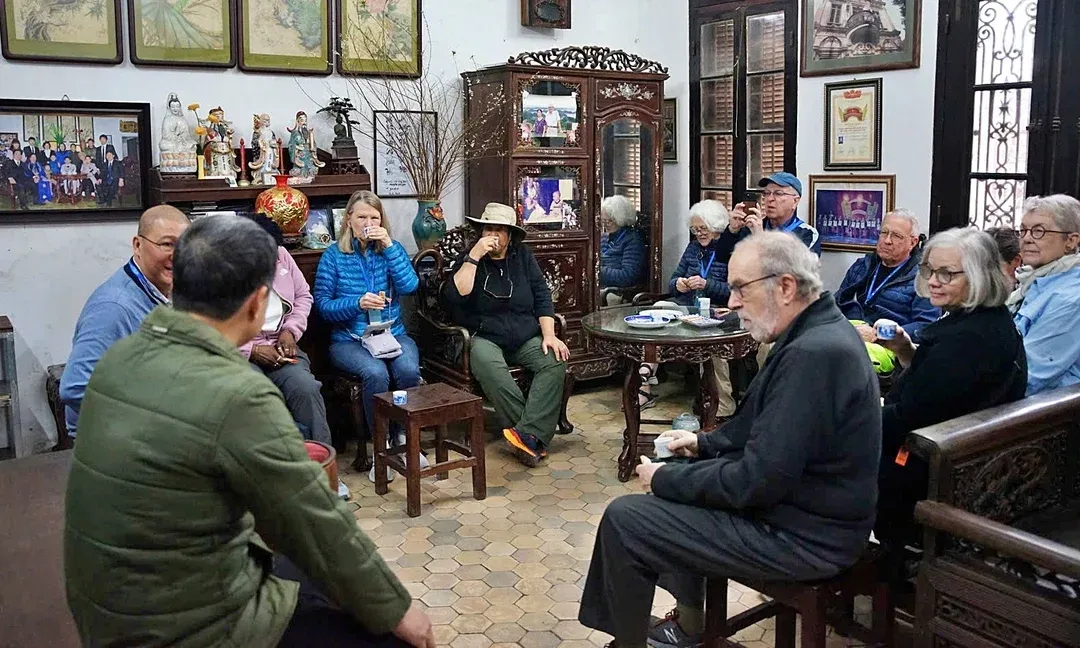
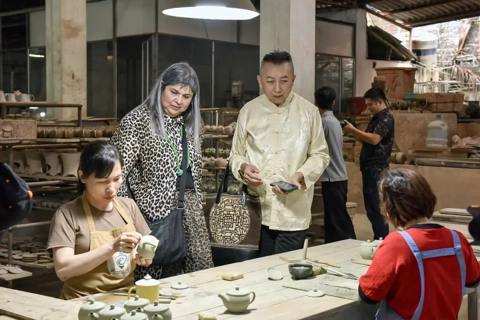
International visitors participate in a traditional tea talk inside an old house in Bat Trang Village. Photo: Nong nghiepmoi truong
While many villages are known for one or two signature dishes, Bat Trang’s culinary repertoire is so rich that the Ministry of Culture, Sports and Tourism recently inscribed Bat Trang feast-making knowledge as a National Intangible Cultural Heritage.
A traditional feast tray includes eight dishes and desserts, such as bamboo shoot and squid soup, kohlrabi stir-fried with squid, pork rind soup, glass fish soup, pigeon spring rolls, sticky rice and sweet soup, though many other local specialties could also merit recognition.
Bui Thi Huong Thuy, Deputy Head of the Heritage Management Division under the Hanoi Department of Culture and Sports and a key contributor to the nomination, said that Bat Trang cuisine’s value lies not only in its dishes but also in the community’s dedication to preserving and passing down this knowledge.
During village festivals, a ‘feast-making guild’ naturally forms. Everyone joyfully joins with a single purpose to prepare the finest offerings for the village’s patron saint and ancestors, keeping these practices alive today.
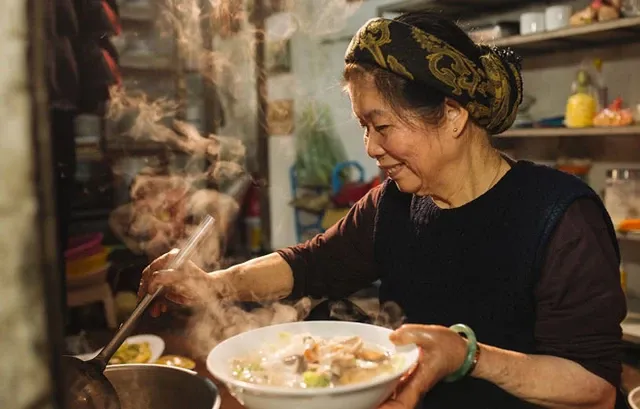
Nguyen Thi Lam, a renowned food artist of Bat Trang. Photo: Gia dinh & Xa hoi
As tourism grows, Bat Trang’s culinary heritage complements its pottery and historic architecture, drawing visitors and gaining recognition through events like the first Bat Trang Culinary Competition.
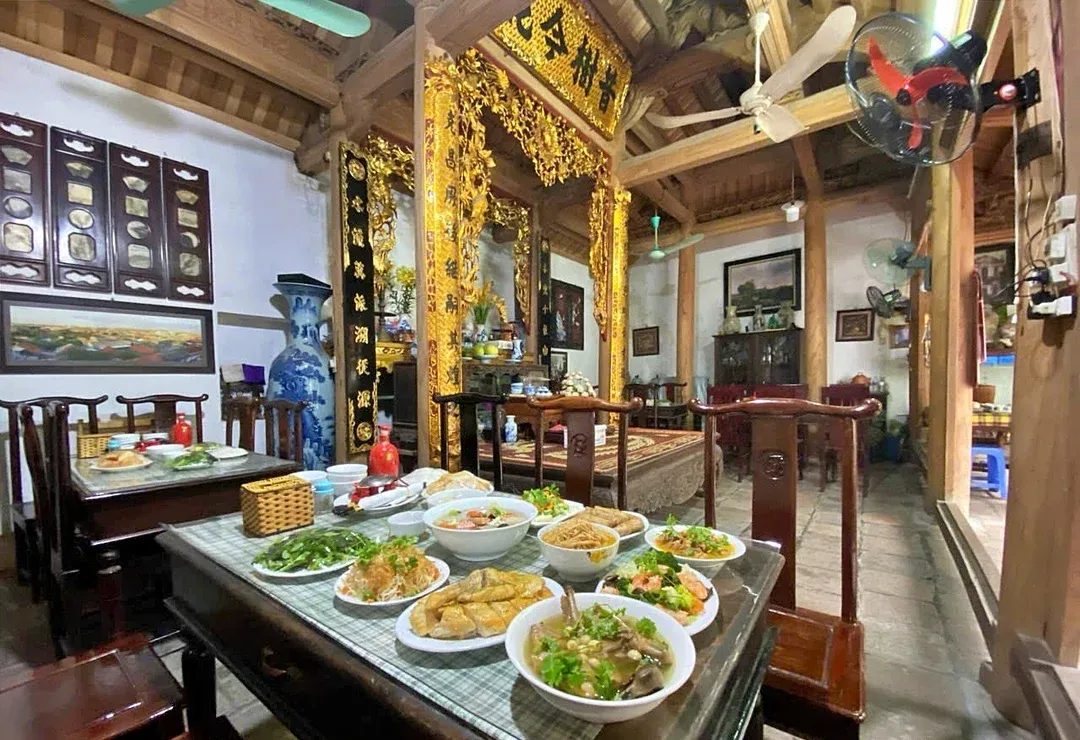
Bat Trang’s renowned specialties are ready to serve guests in an ancient house, Photo: Nongnghiepmoi truong
Bat Trang cuisine is expected to gain wider recognition and promotion through cultural industries.
While Bat Trang-style dishes are served widely, their full significance can only be experienced in the ancient village itself, walking its red-brick alleys, hearing the stories behind each dish and enjoying the food in its traditional sequence. Here, flavor and heritage merge, offering a rare insight into a village shaped by centuries of craft and culture.