Finance ministry proposes reshaping six socio-economic regions for future growth
The Red River Delta, with Hanoi at its center, will remain the country’s key growth engine, leading economic restructuring and the development of new growth models.
THE HANOI TIMES — Vietnam will keep its six socio-economic regions under the revised national master plan for 2021–2030 with a vision to 2050, but the boundaries and composition of several regions will change following provincial mergers, the government has announced.
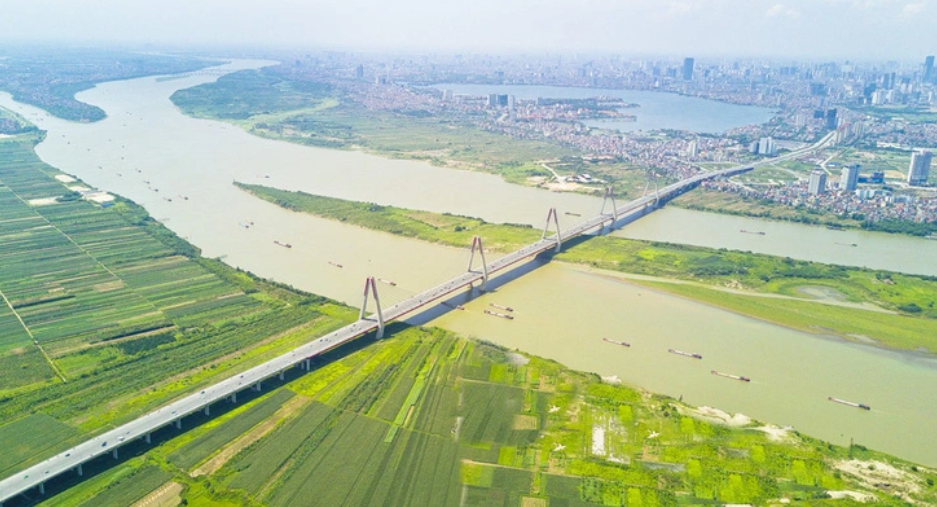
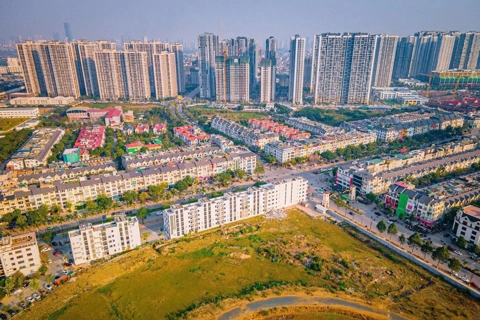
The Red River Delta. Photo: Pham Hung/The Hanoi Times
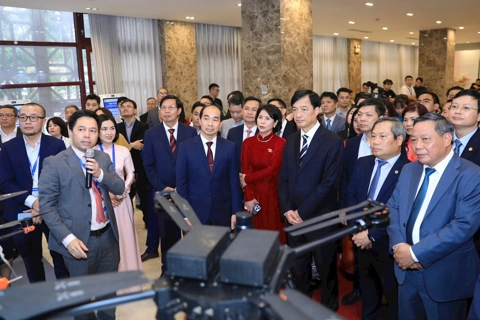
Deputy Minister of Finance Tran Quoc Phuong presented the proposal at the October 14 session of the National Assembly’s Standing Committee, which reviewed the draft revisions to the national master plan.
Under the new structure, six regions remain but are realigned to reflect the administrative changes taking effect from July 1, 2025.
For instance, the North Central region will be separated from the Central Coastal region to become a standalone unit, while the remaining Central Coastal provinces will merge with the Central Highlands to form a new “Coastal Central & Highlands” region.
Bac Giang, after merging with Bac Ninh, will move from the Northern Midland and Mountainous region to the Red River Delta. Meanwhile, Vinh Phuc, Hoa Binh and Phu Tho will shift in the opposite direction, from the Red River Delta to the Northern Midland and Mountainous region.
The Red River Delta, encompassing Hanoi, Haiphong, Ninh Binh, Hung Yen, Bac Ninh and Quang Ninh after the administrative merger, will continue to serve as Vietnam’s leading growth engine, driving economic restructuring, innovation and new growth models.
The new North Central region is envisioned as a national industrial hub specializing in petrochemicals, metallurgy, machinery, and supporting industries, while developing emerging sectors such as semiconductors, AI and digital technologies.
The government also proposes adjusting key national growth targets.
Average GDP growth for 2026–2030 is set at a minimum of 10%, with overall growth exceeding 8% for the 2021–2030 period.
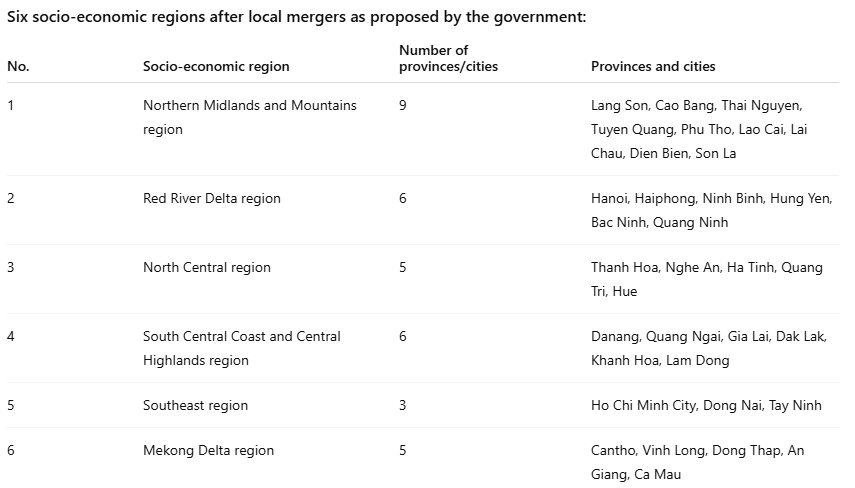
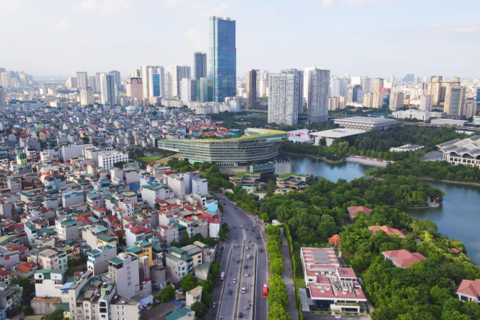
Six socio-economic regions in Vietnam.
By 2030, nominal per capita GDP is expected to reach about US$8,500, with total factor productivity (TFP) contributing more than 55% to growth. The Human Development Index (HDI) target is around 0.78.
Looking toward 2050, annual GDP growth is projected at 7%–7.5%, with nominal per capita GDP nearing $38,000 and HDI above 0.85.
Vietnam will prioritize developing and mastering technologies in emerging industries such as semiconductors, robotics, automation and AI, stated the deputy finance minister.
The country aims to become ASEAN’s second-largest e-commerce market by 2030. In agriculture, the government plans to promote digital, smart, green and circular farming models.
On infrastructure, the proposal calls for accelerating construction of high-speed rail lines connecting the north and south, international railway links and urban rail systems in Hanoi and Ho Chi Minh City.
The Ninh Thuan 1 and 2 nuclear power plants, along with other renewable energy projects, would be built and commissioned after 2030, with priority given to efficient operation.
During the review process, Deputy Chairman of the Economic and Finance Committee Nguyen Minh Son expressed support for the proposed adjustments to the national master plan, while emphasizing the need for clarity on how regional restructuring would influence each region’s development strategy.
He highlighted the importance of internal cohesion within each region, particularly between coastal and mountainous areas.
The reviewing agency recommended assessing the impact of transferring Vinh Phuc and Bac Giang from their current regions on overall connectivity. Son also advised the government to analyze the comparative advantages of the North Central and Central regions to avoid overlapping development strategies in areas such as petrochemicals, automobile manufacturing and seaports.
Concluding the session, Vice Chairman of the National Assembly Vu Hong Thanh urged the government to continue refining the plan to align with the updated administrative structure and names of newly merged provinces. He added that socio-economic targets should be comprehensive, modern and sustainable.
The National Assembly is expected to review and approve the revised national master plan for 2030 and 2050 during its 10th session, which opens on October 20.
![[Infographic] Vietnam after provincial mergers](https://cdn-media.hanoitimes.vn/resources2025/1/users/60/screenshot-2025-06-12-162049-1749720079.png?w=480&h=320&q=100)