Gender equality in digital transformation in Vietnam: Opportunities and challenges
Breaking down the barriers and empowering women in an inclusive way remain challenges for businesses operating in the technological domain in Vietnam.
Equipping women with necessary skills and supporting their transition to digitally relevant forms of jobs is critical to ensuring that women are not left behind.
| Policy Dialogue held in Hanoi on Mar 3. Photos: UN WOMEN |
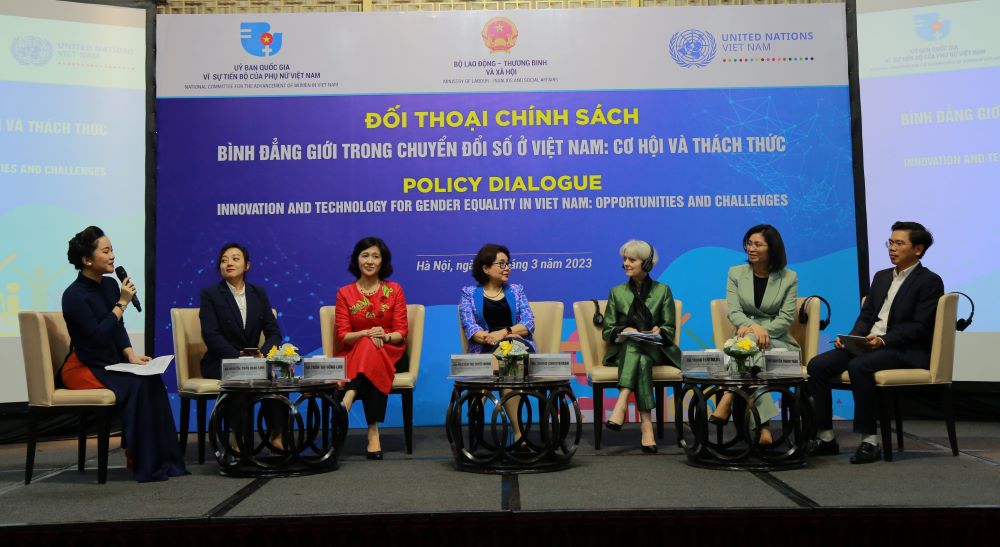
It’s the purpose of the Policy Dialogue opened in Hanoi on March 3 to bring together domestic and international recommendations to recognize and promote the contributions of women and girls in innovation, technology and digital education.
It also identifies the impacts of digital transformation on the risks of exacerbating economic and social inequalities and highlights the significance of digital transformation, which is believed to become a pivotal “enabler of change” for gender equality, women's empowerment and in addressing technology-facilitated gender-based violence (GBV).
The expertise was from the United Nations agencies in Vietnam, agencies, sectors, localities, socio-political organizations, non-governmental organizations, embassies, donors, and businesses.
The Policy Dialogue this year also aligns with International Women's Day's global theme “DigitALL: Innovation and technology for gender equality” and responds to the priority theme of the 67th Session of the UN Commission on the Status of Women (CSW67) “Innovation and technological change, and education in the digital age for achieving gender equality and the empowerment of all women and girls.”
| Nguyen Thi Ha, Vice Minister of Vietnam’s Ministry of Labor, Invalids and Social Affairs, delivers a speech at the dialogue. |
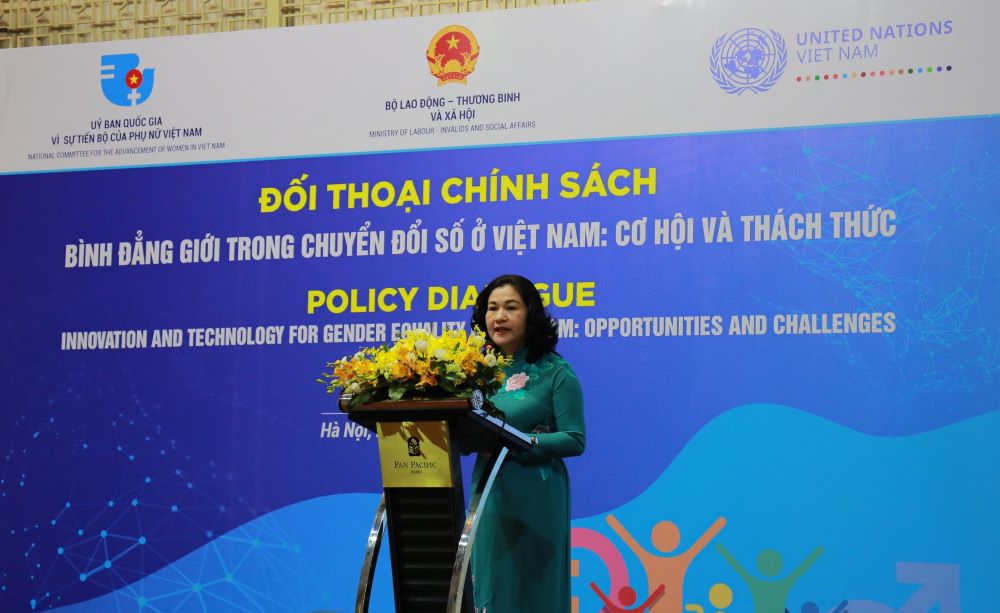
Speaking at the event, Nguyen Thi Ha, Vice Minister of Vietnam’s Ministry of Labor, Invalids and Social Affairs (MOLISA) said: the explicit awareness of gender issues emerging in the context of digital transformation will enable relevant authorities to improve the policy and legal framework, to facilitate more women and girls partaking in this field.
Therefore, raising awareness of educational opportunities and eliminating gender stereotypes in curricula and career orientation, especially in science, technology, engineering and mathematics (STEM) training has been seen as the key to fostering women's participation in digital transformation.
Changing expectations about gender stereotypes in professions, including enhancing female role models’ participation in information technology, digital transformation will also create a boost in women's confidence in the field of information technology, she noted.
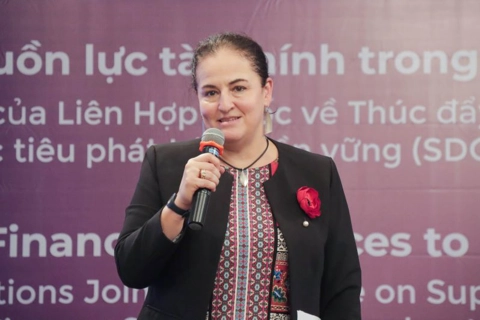
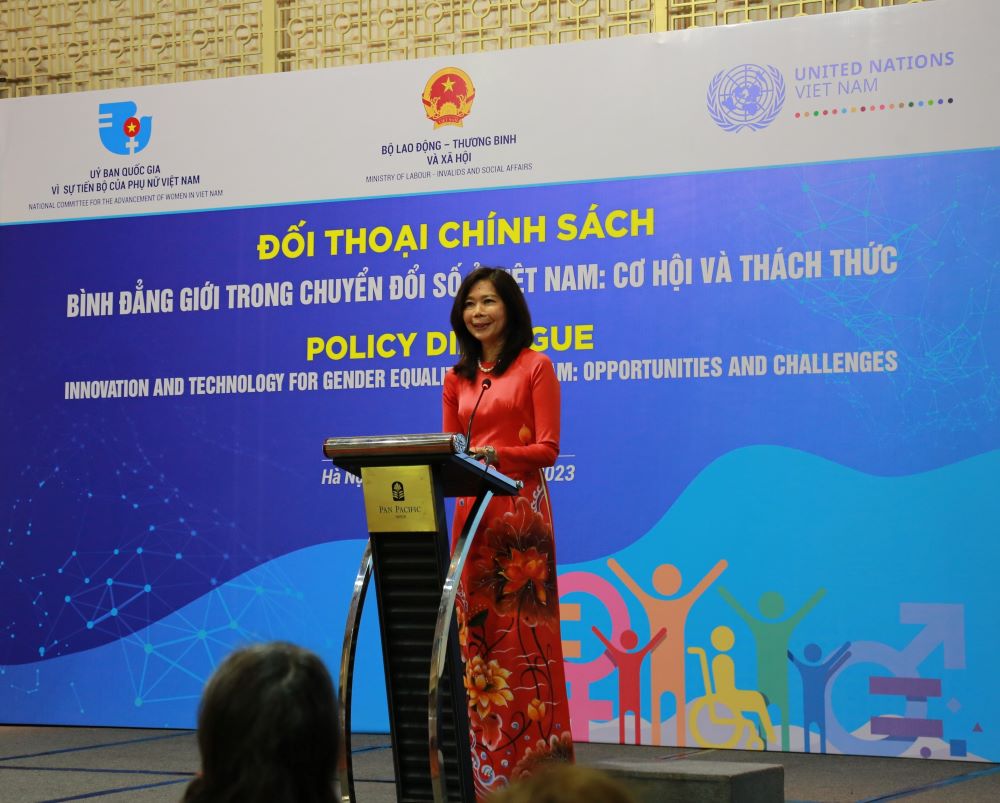
Pauline Tamaris, United Nations Resident Coordinator in Vietnam said that this year’s International Women's Day priority theme provides a unique opportunity to revisit the gendered impacts of innovation and technology and to identify recommendations that will allow for a more inclusive and equitable digital evolution in Vietnam.
Against this background, the UN in Vietnam would offer some thoughts for further discussions including ensuring gender perspectives in national digital policies and allocating resources for full implementation; improving quality education for women and girls; forecasting and anticipating future job and skill needs; and strengthening data collection and addressing gender-based violence online.
The information shared and recommendations made at the Policy Dialogue will be fed into Vietnam's report at the 67th session of the Committee on the Status of Women held by the United Nations in mid-March in New York, the US.
| Pauline Tamaris, United Nations Resident Coordinator in Vietnam, speaks at the event. |
Challenges
In Vietnam, digital transformation has spread deep and broad impacts, covering all sectors and socio-economic fields, contributing to elevating labor productivity, and transforming operational and business models towards innovation, thereby fostering the competitiveness of the country.
Apart from that, innovation and technology have been still often seen as male-dominated areas. In recent years, women have been gradually building up certain advantages in technology, with expanded job opportunities.
According to the International Labor Organization (ILO), in Vietnam, women account for about 37% of the workforce in the technological sector in Vietnam, higher than that of the world (25%).
Gender diversity is also a factor of concern for technology companies in Vietnam to enable them to generate good, safe and suitable products for the majority of users. However, the majority of women working in the technology sector still primarily assume such positions as testing, marketing, sales, administration and human resources, rather than technical roles such as software developer.
There are various reasons why the proportion of women working in this field is still limited, such as the lack of policies and programs to promote women's participation in the technological sector, and the persistent gender stereotypes about women and technology.
How to break down the barriers and empower women in an inclusive way has also been a challenge for numerous businesses operating in the technological domain in Vietnam nowadays.