Geneva Accords shape Vietnam’s modern diplomacy
For Vietnamese diplomacy, the Geneva Accords were the first multilateral international agreement that Vietnam had negotiated and implemented as a signatory.
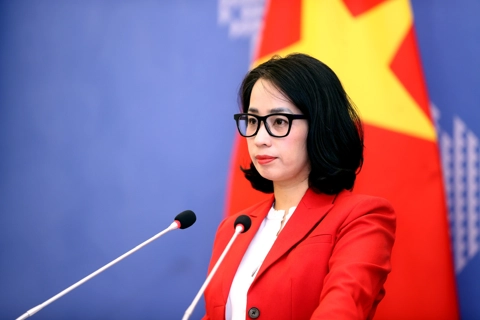
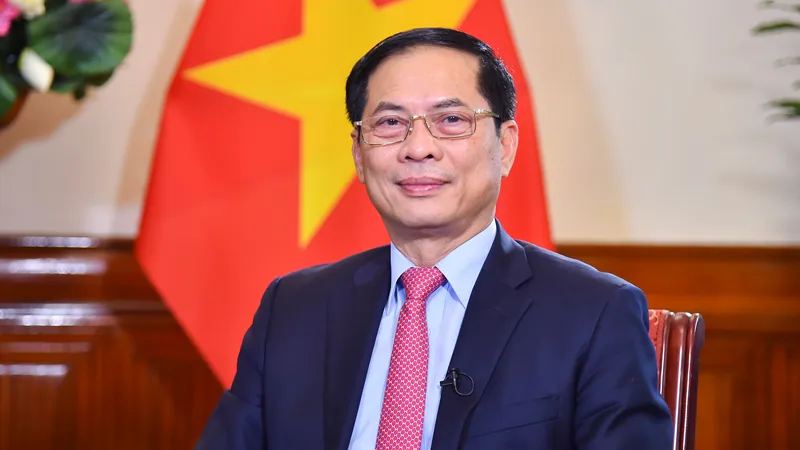
On the occasion of the 70th anniversary of the signing of the Geneva Accords, Minister of Foreign Affairs Bui Thanh Son gave an interview to the press in which he discussed the outcomes and significance of the Geneva Accords in shaping a comprehensive, modern Vietnamese diplomacy imbued with the distinctive essence of the bamboo tree.
| Minister of Foreign Affairs Bui Thanh Son. |
Could you evaluate the outcomes and significance of the 1954 Geneva Conference?
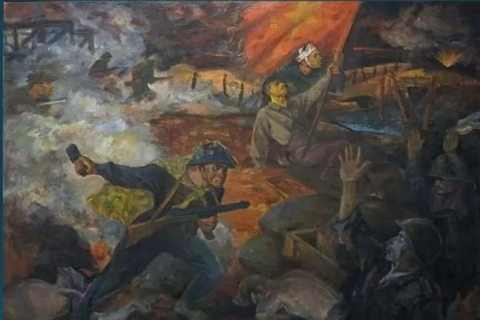
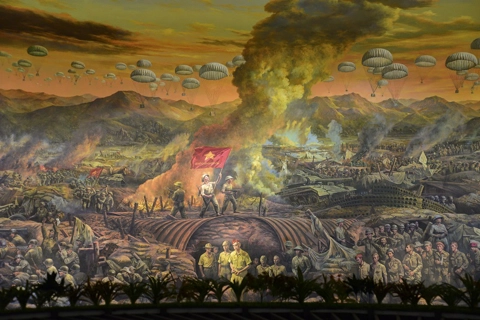
On July 21, 1954, the Geneva Accords were signed after 75 days of tense and complex negotiations. President Ho Chi Minh declared: ""The Geneva Conference has ended. Our diplomacy has won a great victory." For the first time in our nation's history, Vietnam's fundamental national rights—independence, sovereignty, unity, and territorial integrity—were reaffirmed in an international agreement recognized and respected by the countries negotiating at the Geneva Conference. This resulted from the unyielding struggle of our people under the leadership of the Party throughout the protracted resistance against colonialism, culminating in the glorious victory at Dien Bien Phu, which reverberated across the continents and shook the globe."
With the triumph at Dien Bien Phu, the Geneva Accords ended the nearly 100 years of colonial rule in our country, heralding a new chapter in the national liberation and reunification of our people. This was the moment when the construction of socialism in the North and the democratic national revolution in the South were launched to fully realize the goals of national independence and unity.
The signing of the Geneva Accords was not only a historic milestone for our nation but also significant for the era, as it was a joint victory of the three Indochinese countries and the peace-loving people of the world. Alongside the victory at Dien Bien Phu, it strongly encouraged the oppressed nations to rise and fight for national liberation and ushered in the collapse of colonialism worldwide.
For Vietnamese diplomacy, the Geneva Accords represented the first multilateral international agreement that Vietnam had negotiated and implemented as a signatory. It not only asserted Vietnam's independent and sovereign position on the global stage but also constituted an important milestone in the development of revolutionary diplomacy in Vietnam, leaving behind valuable lessons and training many outstanding diplomats in the era of Ho Chi Minh.
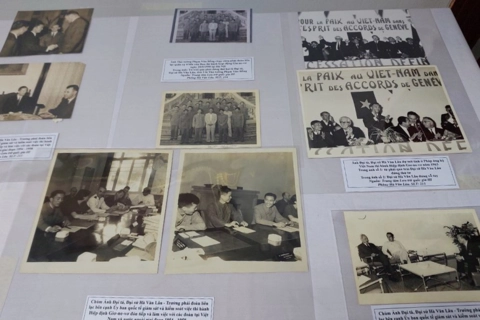
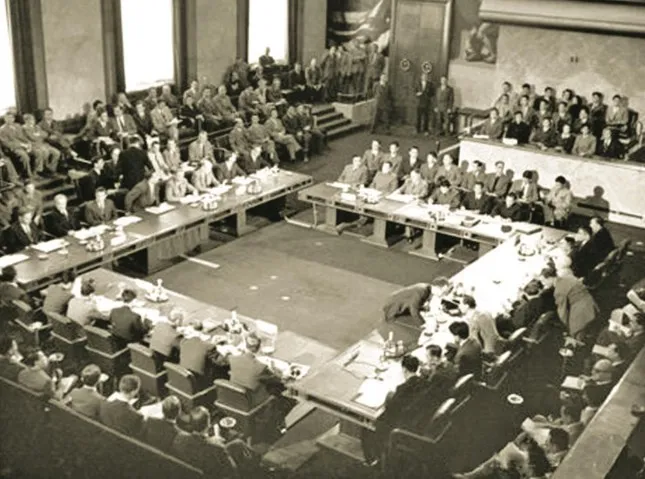
| Overview of the Geneva Conference in 1954. |
Could you elaborate on the lessons learned from signing the Geneva Accords for Vietnamese diplomacy, especially as the country strives to build a comprehensive, modern foreign policy imbued with the distinctive essence of the "Vietnamese bamboo tree"?
It can be said that the process of negotiating, signing, and implementing the Geneva Accords is a valuable handbook on Vietnamese foreign policy and diplomacy, which our Party has inherited, creatively applied and developed in the negotiation, signing, and implementation of the Paris Agreement in 1973 as well as in current foreign affairs.
Alongside lessons on principles such as ensuring the Party's unified leadership, absolute independence, and self-reliance based on national interests, the Geneva Accords left many valuable lessons on methods and the diplomatic art that are steeped in the distinctive essence of Vietnamese diplomacy in the era of Ho Chi Minh.
These lessons include the combination of national strength with the strength of the times, and national unity linked with international solidarity to create an "invincible force." Throughout the negotiations of the Geneva Accords, we continuously expanded international solidarity, drawing on the support of people worldwide for Vietnam's righteous struggle.
The Accords have taught us the lessons of steadfastness in goals and principles, coupled with flexibility and adaptation in strategy, under the motto "steadfastness of principles to deal with myriad changes." Throughout the process of negotiating, signing, and implementing the Geneva Accords, we consistently adhered to the principles of peace, national independence, and territorial integrity, while being dynamic, flexible, and strategic in achieving our strategic objectives.
Moreover, these lessons emphasize the importance of studying, evaluating, and anticipating the situations, of knowing oneself, others, the times, and circumstances, to "know when to advance, when to retreat, when to be firm, and when to be flexible." These lessons remain highly valuable in today's complex and unpredictable global context.
Additionally, they underscore the use of dialogue and peaceful negotiation to resolve differences and conflicts in international relations. These lessons are timely, given the number of complex conflicts in the world today.
What is your assessment of the support and assistance provided by progressive forces around the world to the Vietnamese people during the process of negotiating and signing the Geneva Accords?
The just struggle for peace, national independence, unity, and territorial integrity of our people was in keeping with the trend of the times and the common aspirations of progressive people all over the world. Therefore, in the cause of national liberation and reunification in general, and the negotiation, signing, and implementation of the Geneva Accords in particular, we have always received tremendous and invaluable support, both material and spiritual, from our international friends, foremost from Laos, Cambodia, the socialist countries, and the peace-loving people worldwide.
In the Doi Moi (Renewal) process, in implementing the Party's foreign policy, we continue to receive valuable support and cooperation from the international community based on equality and mutual benefits.
Our Party, State, and people have always cherished and deeply appreciated the support and assistance of our international friends. Moreover, we consistently support, actively contribute to, and responsibly participate in the collective efforts of the international community for peace, independence, democracy, and progress worldwide within our capacity.
Thank you for your time!
| The Geneva Accords, signed on July 20, 1954, aimed at halting the war and restoring peace in Indochina, ending French colonial rule, and acknowledging the independence of Vietnam, Laos, and Cambodia. |