Good enforcement of IP rights benefits both Vietnamese and Americans: USPTO
Cooperation and lessons from the US would enable Vietnam to boost online enforcement of IP rights, which finally benefits both Vietnamese people and American investors.
Combating intellectual property rights infringements, especially in the online environment, is a field that the US and Vietnam have been doing a lot over the years for the benefit of people of both.
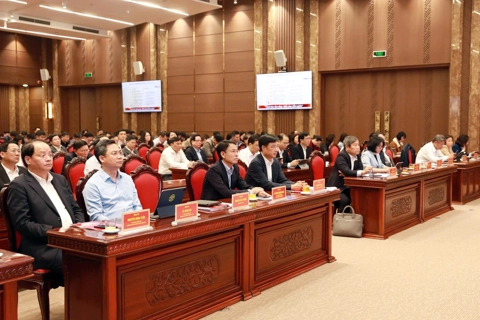
| Peter Fowler (1st left), Senior Counsel for Enforcement, the US Patent and Trademark Office (USPTO) at the Roundtable on Online Enforcement of Intellectual Property Rights (IPR) held in Hanoi on September 26. Photo: Mai Ha |
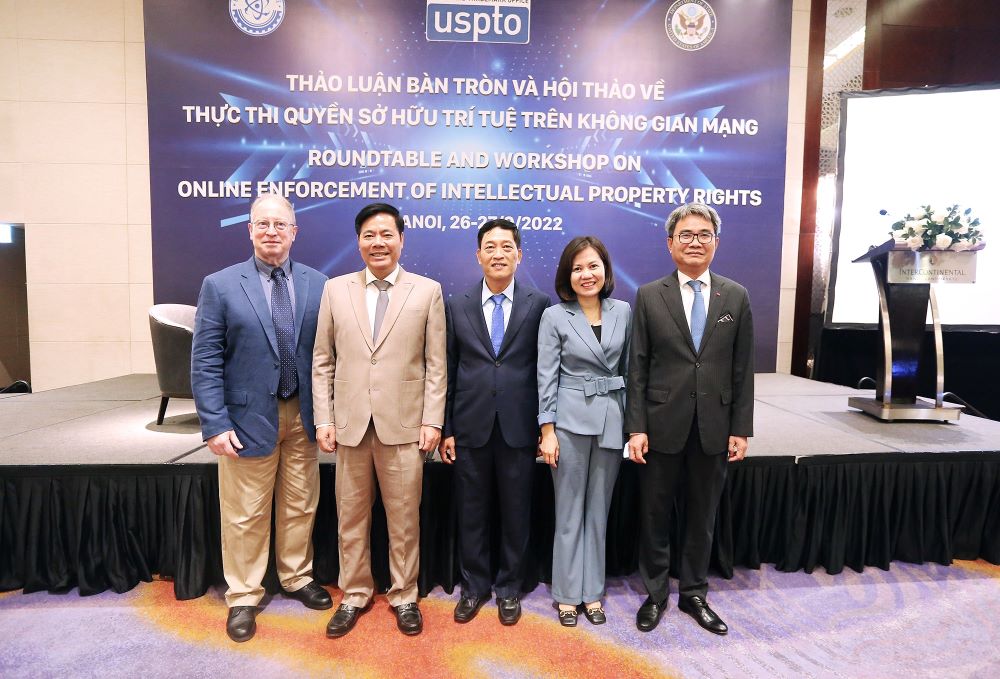
It’s the idea shared by Peter Fowler, Senior Counsel for Enforcement, the US Patent and Trademark Office (USPTO), at the Roundtable on Online Enforcement of Intellectual Property Rights (IPR) held in Hanoi on September 26-27 by Vietnam’s Ministry of Science and Technology (MOST) and the US Embassy in Hanoi.
At the panel discussion attended by US Ambassador to Vietnam Marc Knapper, Fowler stressed the importance of the online environment that needs to be focused on by the two countries. It's where consumers are going for products, looking for entertainment, and purchasing things while sellers are selling counterfeits and pirated copyright programs, he argued.
“The more we can do together, the better it benefits not only consumers and producers here, but businesses that are doing legitimate work and protecting their brands, that also protects our companies.” Fowler made the statement at the event and also marked the participation of representatives from MOST, Ministry of Culture, Sports and Tourism (MOCST), Ministry of Public Security (MPS), and Supreme People’s Procuracy (SPP).
Indeed, the US government has been involved in helping cooperative ventures like capacity building, training, and bringing together the US stakeholders from the private sector, government officials, like law enforcement and others, and the courts in Vietnam, he shared with The Hanoi Times.
The cooperation includes discussing issues, sharing best practices, and finding ways to partner in tackling intellectual property misappropriation.
He highlighted the enhanced cooperation in this field demonstrated by the visit paid to Vietnam in mid-September by Under Secretary of Commerce for Intellectual Property and Director of the USPTO Kathi Vidal. The visit is believed to strengthen the US commitment to talking with different agencies in Vietnam to do more than they have been doing.
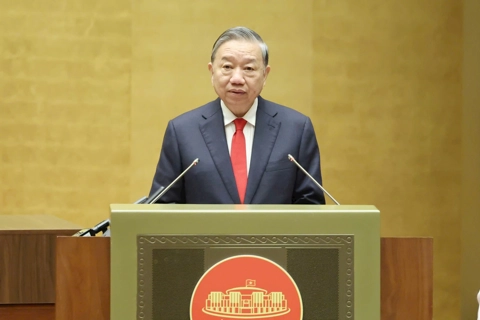
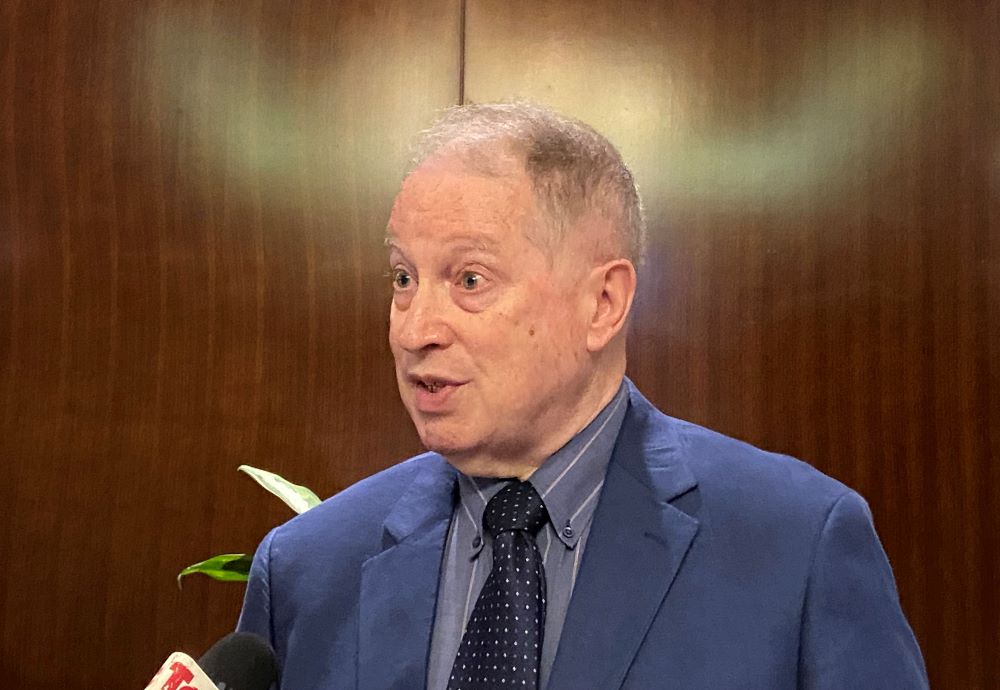
| Peter Fowler in an interview with local media on September 26. Photo: Minh Vu |
Lessons from the US
The cooperation dates back a few decades, and the two sides have been doing much. Fowler said there’s always room for more, attributing Vietnam’s regulations and law enforcement to the collaboration. “Certainly, it has improved over the years. I’ve been coming to Vietnam for 27 years now. And I’ve seen a huge change, huge progress, and a lot of improvement.”
However, the system is required to adapt to new technology, new techniques, and new approaches, he said, noting that law enforcement agencies and others responsible for protecting intellectual property and enforcing the laws must constantly evolve their practices.
An example of how agencies and governments in the US and Vietnam cooperate with each other, the expert said in the US, the National IPR Coordination Center, a government body managing 28 different US government agencies, has various authorities and responsibilities for law enforcement.
They get together and do programs, cooperating and sharing information with the private sector. For example, in the automotive and pharmaceutical industries concerned about counterfeit automotive parts or medicine and medical devices, the National IPR Coordination Center works with these various private sector groups and associations.
Specific solutions include sharing information on trends of new developments in terms of technology and new approaches. They ask the private sector to share what they know because they do a lot of investigations and develop a lot of information themselves. And then, the government shares the news with the private sector.
Fowler called the cooperative approach very effective.
In addition, the national centers have to leverage the public sector agencies responsible for the enforcement and work closely with the private sector and the rights holders themselves. It’s fruitful as the stakeholders have information and know their products, trends, and challenges to bring those together for the best solutions.
It’s the model that Fowler highly recommended to Vietnam. “One thing I would urge Vietnam to consider strongly is a stronger emphasis placed on national IPR coordination and cooperation with the private sector and rights holders,” the expert emphasized.