Greatest efforts to expand modern retail, domestic trade lie in Hanoi, official says
Hanoi has strengthened modern retail networks, trade promotion and digital transformation to boost domestic consumption, support local enterprises and ensure sustainable growth in Vietnam’s retail sector.
THE HANOI TIMES — As Vietnam’s political and economic center, Hanoi is pioneering efforts to boost domestic trade through regional connectivity, modern retail infrastructure and promotional programs that strengthen supply-demand linkages and drive sustainable market growth.

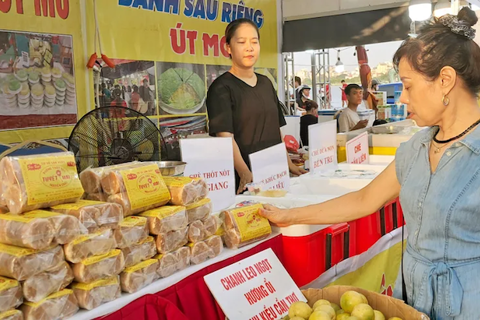
A booth showcasing OCOP products at the first Hanoi Autumn Festival 2025, held from October 25 to November 4 in the capital. Photo: Ngoc Tu/The Hanoi Times
According to Tran Thi Phuong Lan, Vice Chairwoman of the Vietnam Retailers' Association, Hanoi stands out for its well-developed commercial infrastructure, which enhances the quality of the domestic market.
Across the country, there are 1,270 supermarkets, 270 shopping centers and nearly 250,000 convenience stores. Hanoi has 480 markets, 130 shopping centers, about 140 supermarkets, 2,000 convenience stores and nearly 2,000 outlets selling fruits and One Commune, One Product (OCOP) products.
With this retail network, Hanoi can fully meet essential shopping and consumption needs without shortages, Lan said.
Hanoi accounts for more than 40% of total retail sales from the modern trade channel,” she said at the forum on domestic trade development policies held on October 28, as part of the Autumn Fair 2025 taking place until November 4 at the National Exhibition Center in Dong Anh Ward.
Lan said that expanding the distribution network for Vietnamese goods in Hanoi is a strategic move to help local products dominate the domestic market and strengthen the national brand.
She also pointed out challenges for local enterprises, including high logistics costs, limited digital transformation and weak competitiveness and called for more support policies for domestic retailers.
“Digital transformation must be comprehensive and thorough, along with upgrades in logistics infrastructure and supply sources. Local companies should adopt artificial intelligence (AI) and data analytics in supply chain management, develop both physical and digital outlets and make better use of online platforms.”
Lan said that new policies should encourage investment in trade infrastructure in remote and island areas and attract foreign direct investment (FDI) in modern retail systems and logistics services.
Bui The Hiep, Deputy Director of the Hanoi Department of Industry and Trade, said that Hanoi has been a frontrunner in consumer stimulation programs and trade promotion activities.
“Hanoi’s retail infrastructure continues to expand, ensuring stable supply under all circumstances,” he said.
Major trade events such as the Vietnamese Goods Fair, Regional Specialty Fair, Hanoi Promotion Day, and “Sleepless Hanoi Night” have become the city's signature programs, Hiep added.
These programs promote local products connect producers, distributors and consumers in a sustainable value chain.
“Hanoi will further promote e-commerce, logistics and domestic consumption while strengthening regional trade linkages and expanding Vietnamese goods’ presence on digital platforms,” said Hiep.
Building adaptive policies for the digital trade era
To further boost domestic trade in Hanoi and nationwide, the domestic market must evolve beyond being a consumption space and become a key driver of production, job creation and social welfare.
According to Deputy Director Bui Nguyen Anh Tuan of the Ministry of Industry and Trade's Domestic Market Department, domestic trade sector faces both opportunities and challenges amid global competition, digitalization and the shift toward green and sustainable growth.

A performance by local folk dancers at the Hanoi Autumn Fair 2025. Photo: Ngoc Tu/The Hanoi Times
He emphasized the urgency of policy innovation to enhance economic resilience.
New policies should promote green logistics, modern trade infrastructure, regional linkages and a transparent, connected and sustainable e-commerce ecosystem, Tuan said.
The ministry is finalizing the revised Law on E-commerce to improve regulations and support the growth of Vietnam’s digital economy.
“Plans are also underway to develop a national e-commerce platform that integrates payment, logistics and blockchain-based traceability to improve transparency and trust in Vietnamese goods,” said Tuan.
He added that developing a green and smart retail market is essential to enhance competitiveness, expand domestic demand, stimulate production and improve social welfare.
“Achieving these goals will require stronger support for small- and medium-sized enterprises, a comprehensive digital transformation plan and expanded trade infrastructure in underdeveloped regions to ensure balanced, inclusive growth,” he said.
Lan from the Vietnam Retailers Association said that new government support policies for consumption, enterprises and income growth have strengthened consumer confidence and helped the retail market recover.
“The retail sector is regaining momentum with new approaches. It benefits from positive factors such as a young population, a growing middle class, dynamic consumer behavior and reasonable operating costs, making it a strategic destination for global brands,” said Lan.
The Vietnamese retail market remains in a strong growth phase and is expected to reach higher levels between 2025 and 2030, becoming competitive with leading regional markets."
She added that several new trends are shaping the retail industry, forcing producers and distributors to adapt quickly.
According to the Vice Chairwoman of the Vietnam Retailers Association, agricultural products are changing significantly with the rise of green consumption trends, creating new opportunities for the domestic farming sector.
Consumers increasingly prefer clean and organic products produced under sustainable standards such as VietGAP and GlobalGAP, which is driving the growth of safe agricultural goods.
Vietnamese consumers are also showing stronger support for locally made products, believing they are safer and easier to trace.
As the national strategy focuses on sustainable development, consumers are paying more attention to environmentally friendly products.
“Businesses can take advantage of this trend by offering sustainable products, building trust and brand reputation and developing modern retail models,” said Lan.