Green marine economy set for Vietnam’s new development phase with pioneering vision
Unlike traditional conservation approaches, the green marine economy relies on technology, financial resources and international cooperation to balance environmental protection with sustainable economic growth.
THE HANOI TIMES — Vietnam plans to enter a new phase of marine economic development driven by critical thinking, with policy reform, modern governance and global cooperation at the core.
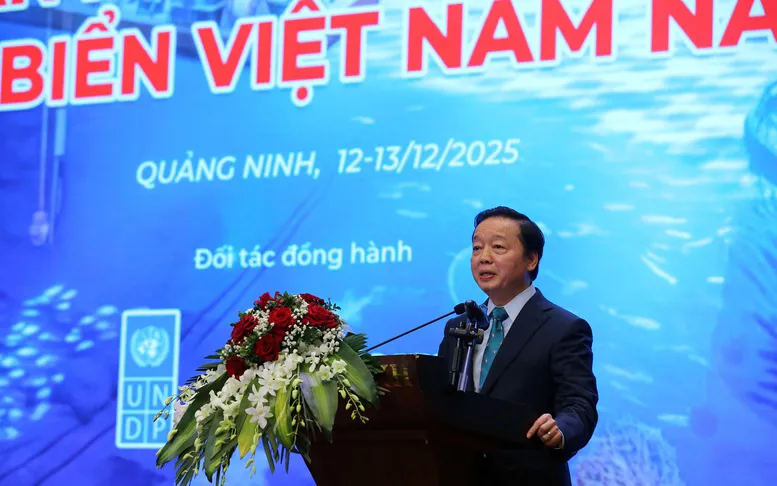
Vietnam's Deputy Prime Minister Tran Hong Ha speaks at the forum in Quang Ninh on December 12. Photo: Minh Khoi/VGP
Deputy Prime Minister Tran Hong Ha said the green marine economy is a consistent orientation to realize Vietnam’s Strategy for Sustainable Marine Economic Development to 2030 with a vision to 2045, stressing the need to refine related policies.
Speaking at an international conference held on December 12 in the northern coastal province of Quang Ninh, he underlined that digital transformation and green transition must serve as guiding threads in updating development thinking to match the new global context.
“No country can independently address shared ocean challenges such as pollution, ecosystem degradation, ocean acidification and climate change and Vietnam is determined to support collective global action for sustainable development,” he stated.
The Vietnam Sustainable Marine Economy Development Forum 2025 marks an important milestone in shaping the national marine development strategy for the next stage, with domestic and international recommendations playing a significant role in the long-term vision.
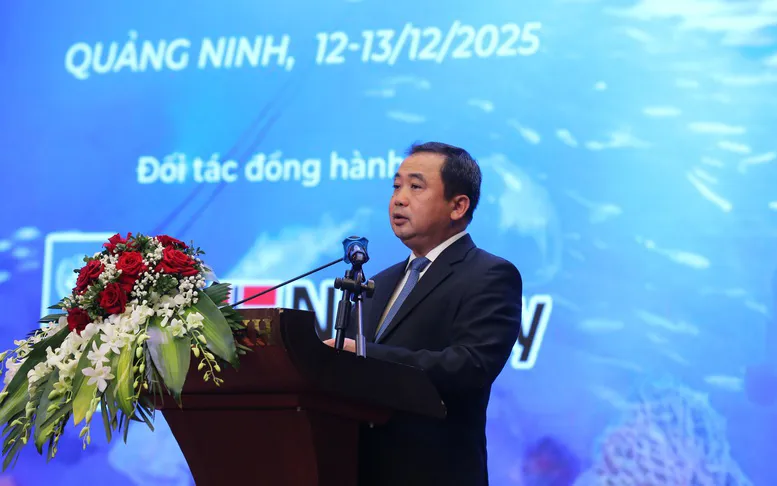
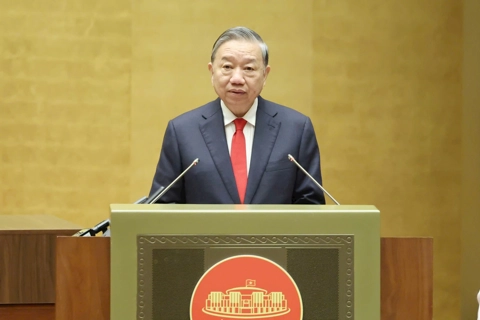
Minister of Agriculture and Environment Tran Duc Thang at the event. Photo: Minh Khoi/VGP
Opening the forum, Minister of Agriculture and Environment Tran Duc Thang said the marine economy is increasingly strategic, linking economic growth, security, environmental protection and national standing.
He said sustainable marine economic development has become a measure of Vietnam’s modern governance capacity in the 21st century, prompting the ministry to focus on improving marine governance institutions, promoting marine sectors in a green and modern direction, while improving coastal livelihoods.
It has also expanded international cooperation tied to environmental protection, climate change response and maritime sovereignty.
However, there remain persistent challenges, including institutional shortcomings, poor coastal infrastructure, overexploitation, marine pollution and limited intersectoral and interregional coordination.
New approaches required
At the forum, delegates discussed the need to identify a marine growth model suited to the new context, based on science, technology and green growth.
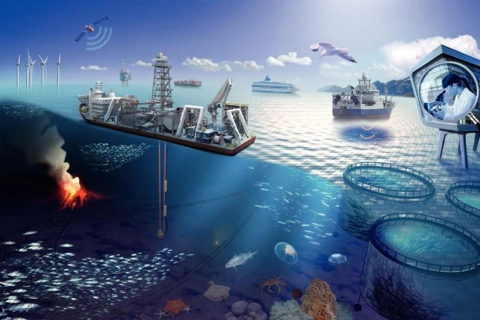
They stressed the importance of developing a synchronized marine economic ecosystem, covering energy infrastructure, logistics, coastal cities, human resources, and ocean research and forecasting centers.
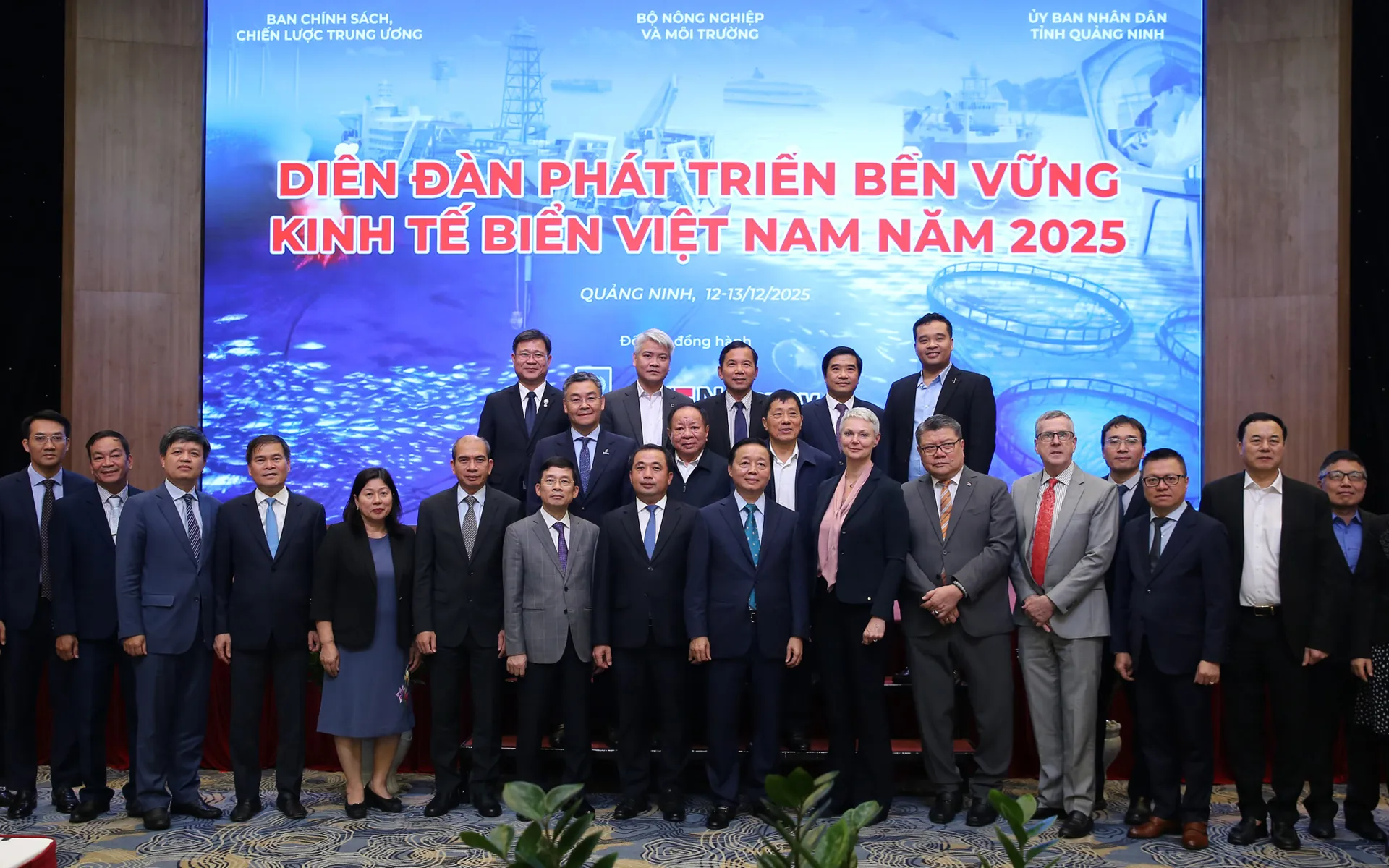
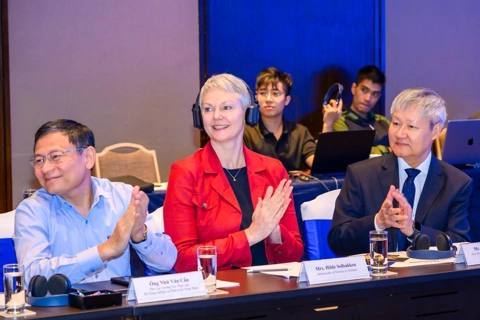
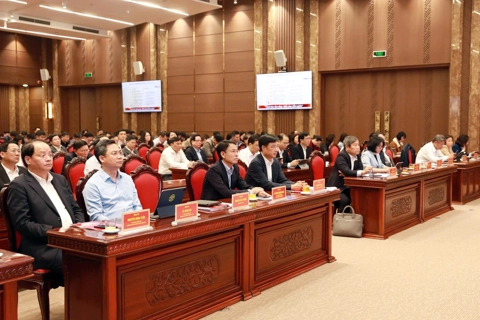
Participants at the event. Photo: Minh Khoi/VGP
Participants also emphasized strengthening modern marine governance through transparent and effective institutions, advanced observation and monitoring systems, pollution control and ecosystem restoration.
Professor Mai Trong Nhuan, former Director of Vietnam National University – Hanoi, said reorganizing marine development space alongside administrative restructuring is opening major opportunities for Vietnam.
After the mergers, 21 of 34 cities and provinces are coastal and 23 have seaports, creating favorable conditions for forming key marine economic zones, large land reserves for logistics and renewable energy, especially offshore wind power and connectivity among economic corridors.
He proposed improving institutions and interprovincial management through a marine spatial governance approach that links coastal and non-coastal provinces.
He called for building interprovincial chains of economic zones and port logistics systems to avoid overlapping investment and maximize regional advantages.
The expert stressed the need to accelerate science, technology and digital transformation by forming a marine technology ecosystem with real-time monitoring using IoT, satellites and AI.
He highlighted the importance of accelerating infrastructure development, particularly international gateway ports and multimodal logistics, along with stricter management of land reclamation projects.
Another priority should be building high-quality marine human resources through specialized training in offshore wind power, marine forecasting and high-tech marine aquaculture, while enhancing marine spatial management capacity for local officials.
Associate Professor Nguyen Huu Dung, Chairman of the Vietnam Marine Aquaculture Association, proposed developing marine aquaculture industrial clusters as a breakthrough to move beyond small-scale and manual production.
He said using just 0.1% of the sea area could create about 1,000 square kilometers for aquaculture, with output reaching up to 10 million tons of marine fish annually, excluding other seafood.
He believed that this approach creates a leap forward by forming large-scale marine aquaculture, encouraging fishers to venture offshore, building stable value chains and integrating aquaculture with tourism, offshore wind power and other marine sectors, while supporting maritime sovereignty.
Meanwhile, Mark Hutchinson, Chairman of the Southeast Asia Working Group of the Global Wind Energy Council (GWEC), said Vietnam has enormous offshore wind potential.
Under the adjusted Power Development Plan VIII (PDP8), Vietnam targets 6 GW–17 GW of offshore wind capacity in 2030–2035 and 113 GW–139 GW by 2050, forming a large new industry, creating jobs, strengthening energy security and driving economic growth.
To tap the potential, GWEC said it is ready to support Vietnam in attracting billions of US dollars for offshore wind development.
From an international perspective, Nico Barito, Special Envoy of Seychelles for ASEAN, shared experience in building an ocean bank capable of absorbing at least 18 million tons of CO2 annually and issuing sovereign green bonds for sustainable marine projects.
He said the green marine economy differs from traditional conservation as it uses technology and financial resources to achieve sustainable development goals.
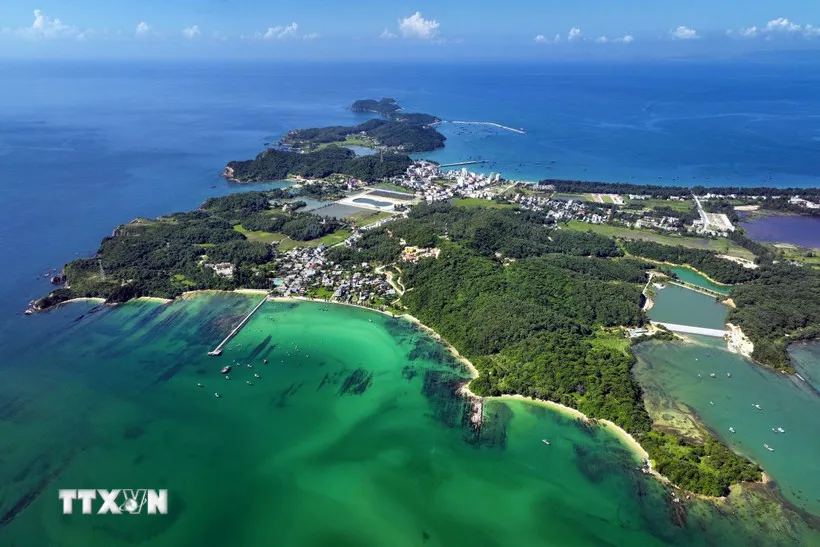
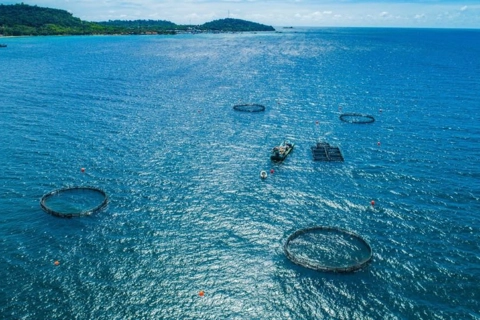
Part of Co To Island in the northern province of Quang Ninh. Photo: VNA
At the conference, a representative from UNDP Vietnam said the organization has shared indicators and analytical tools to assess the maturity of marine spatial planning policies and visualize conflicts among fisheries, energy and tourism to support data-driven decisions.
Addressing the event, Deputy PM Ha said Resolution 36-NQ/TW on sustainable marine economic development remains valid but must be implemented with updated thinking suited to new realities.
He said recent administrative and institutional restructuring has opened new development space, ensuring even remote areas have gateways to the sea and stronger connectivity between mountainous and coastal regions.
He called on international organizations to work closely with Vietnam on pilot offshore wind projects, covering surveys, planning and technology investment, with clear responsibilities for the state, businesses and financial institutions.
On the sidelines of the forum, Tran Hong Ha met Norwegian Ambassador to Vietnam Hilde Solbakken, who said Norway is ready to support Vietnam in sustainable marine development, technology transfer, food security and coastal livelihoods.
She noted that Vietnam is entering a new development phase toward high-income status by 2045 and net-zero emissions by 2050, with recent reforms advancing its marine-based economy. Therefore, Norway–Vietnam cooperation centers on sustainable marine development, including marine spatial planning, aquaculture and renewable energy innovation, technology transfer and waste management.
Tran Hong Ha expressed hope that the forum would soon deliver practical recommendations to help Vietnam move toward high-quality growth, a strong maritime nation and high-income status by 2045.
|
Resolution No. 36-NQ/TW, adopted in October 2018, sets Vietnam’s strategy for sustainable marine economic development to 2030, with a vision to 2045. It defines the marine economy as a strategic growth pillar and aims to make Vietnam a strong maritime nation by 2030, with the marine economy contributing about 10% of GDP. The resolution emphasizes a green and sustainable marine economy, prioritizing key sectors, modern marine governance, ecosystem protection, climate adaptation and the safeguarding of maritime sovereignty. |