Green, smart transportation - a right direction for Hanoi
Green transport requires a change in the transport culture and attitudes of the community.
Hanoi needs to focus on developing green and smart transportation to deal with traffic congestion and overloading, the common problems in urban areas around the world, even in places with modern infrastructure.
Hanoi is seeking solutions for urban transport amid overloaded infrastructure. Green, smart transportation is a right direction for Hanoi.
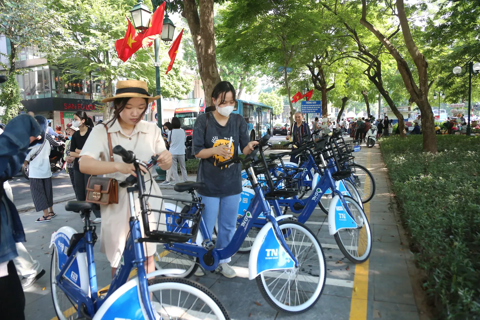
Green transportation is a form of transportation that meets people's travel demand but limits CO2 emissions and other types of gases that pose a risk of environmental pollution. Green transportation includes bicycles, electric motorcycles, electric cars, compressed natural gas (CNG)-fueled vehicles, or vehicles that use solar energy, wind energy, and others.
Many countries around the world, such as the Netherlands, China, the UK, and France, have developed green transportation by encouraging people to use bicycles instead of motorized vehicles. Some major Chinese cities have banned motorcycles.
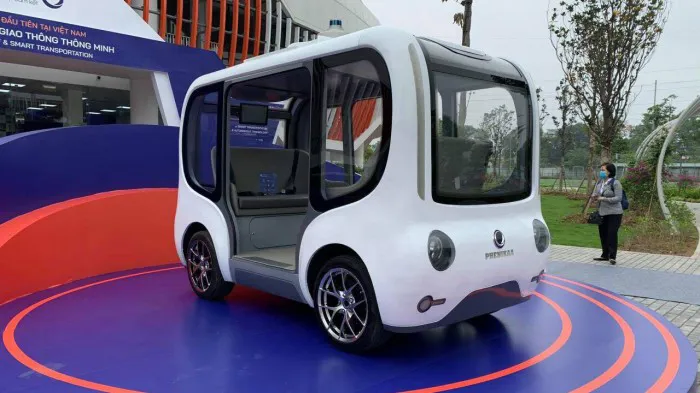
A smart self-driving electric vehicle is researched, developed and applied by a team of Vietnamese scientists from Phenikaa Group. Photo: Baogiaothong.vn |
Many developed countries have invested heavily in expanding mass transit networks. They are also applying strict regulations to minimize the number of private cars. For example, the European Parliament (EP) has passed a law banning the sale of new gasoline and diesel cars in the European Union (EU) from 2035.
Based on international experience and the current situation of urban areas in Vietnam, including Hanoi, it is necessary to determine a suitable roadmap and direction for green transport development, focusing first and foremost on prioritizing clean transport by promoting the use of electric cars, buses powered by renewable energy, and bicycles. This will help reduce toxic emissions and air pollution in the city, and improve the environment.
Meanwhile, it needs to encourage people to use public transportation, such as buses and subways to reduce traffic congestion and private motor vehicles. This will help save fuel and reduce air and noise pollution.
Then, smart technology will be applied in the management and operation of the transportation system. This is an effective shortcut in traffic management and development, helping to optimize the technical infrastructure system.
The roadmap also envisages that the application of technology will help raise awareness among drivers, encouraging people to use more public transportation. It also aims to build green infrastructure, which is the foundation for the development of green transportation, such as creating separate lanes for bicycles, park systems, trees, and environmentally friendly buildings.
Green transportation requires a change in the community's transportation culture and attitudes. People need to be aware of how to use sustainable transportation and how to yield.
Governments and nonprofit organizations can promote green transportation by offering incentives such as reduced bus fares, subsidies for the purchase of electric cars, and car-free zones to encourage bicycling and walking.
Supporting technology
Currently, there are many modern technologies suitable for the goal of developing green and smart transportation that Hanoi can research and apply. We can mention the Advanced Traffic Management System (ATMS).
This is a system that includes cameras and sensors at major intersections on roads, and an artificial intelligence (AI) system that helps to automatically monitor and count the number of vehicles in traffic.
The ATMS can report on traffic conditions along the route or at intersections. The system helps operate and manage traffic on major roads to maximize road traffic efficiency.
This high-tech traffic management system adjusts the traffic light operation schedule, it can automatically adjust the traffic light cycle time based on the total number of vehicles in the queue.
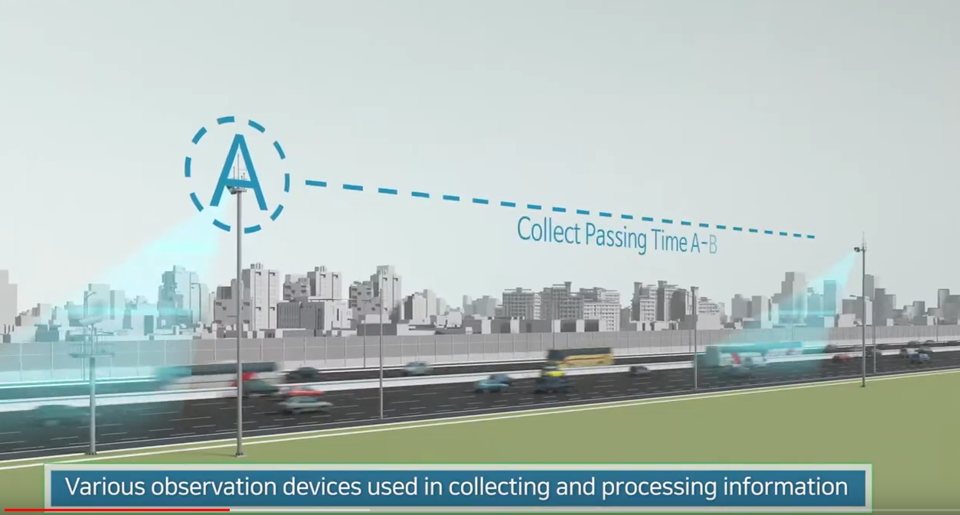
Another technology is the Freeway Traffic Management System (FTMS), which is an automatic traffic management system used on freeways or highways to monitor, control, and optimize traffic flow on these routes.
Illustration of FTMS surveillance system on highways. |
Automated Fare Collection System (AFCS) is another smart transportation application that automatically collects public transportation fares. The main goal of AFCS is to simplify and improve the fare collection process for public transportation services such as buses, subways, trams, trains, and other vehicles.
Automatic Traffic Enforcement System (ATES) automatically monitors and handles traffic violations on roads and intersections. The system aims to increase compliance with traffic laws, improve traffic safety, and reduce the risk of accidents.
Real-time traffic signal system automatically controls traffic signals on roads to optimize traffic flow based on real-time information about vehicle flow and traffic conditions. Next Generation ITS is a set of technologies and solutions used to improve the performance and safety of transportation systems.