Guardians of heritage: Inside Vietnam’s treasury of national masterpieces
Nine officially recognized National Treasures reveal an unbroken narrative of the country’s artistic evolution from sacred wooden sculptures to modern lacquer epics.
THE HANOI TIMES — The Vietnam Fine Arts Museum stands as a guardian of Vietnam’s artistic heritage, as its galleries preserve some of the nation’s most exceptional masterpieces designated as National Treasures.
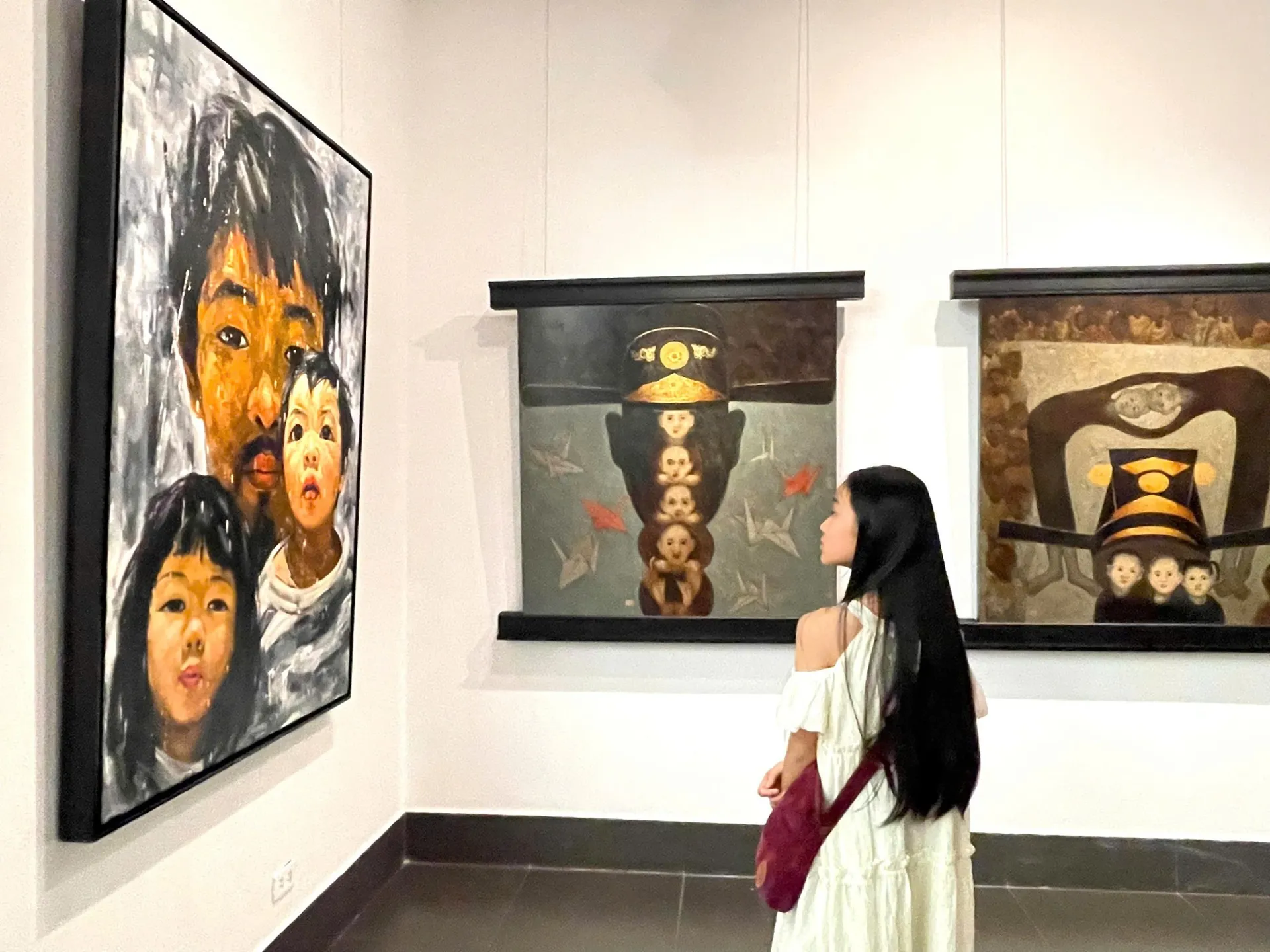
Its galleries house sculptures, carvings and paintings that map out defining stages of Vietnam’s visual culture.
Early woodcarvings highlight the high craftsmanship that shaped the foundations of Vietnamese art. Together, these works form a living archive that preserves history and strengthens cultural identity.
Guanyin Statue, Hoi Ha Pagoda (16th century)
Recognized as a National Treasure in 2013, the Guanyin statue from Hoi Ha Pagoda in Phu Tho Province is one of the largest surviving wooden depictions of the bodhisattva from the Mac Dynasty period (1527 to 1592). Carved with 42 radiating arms and a calm, Vietnamese-inspired face, it reflects a distinct local interpretation of Buddhist art.
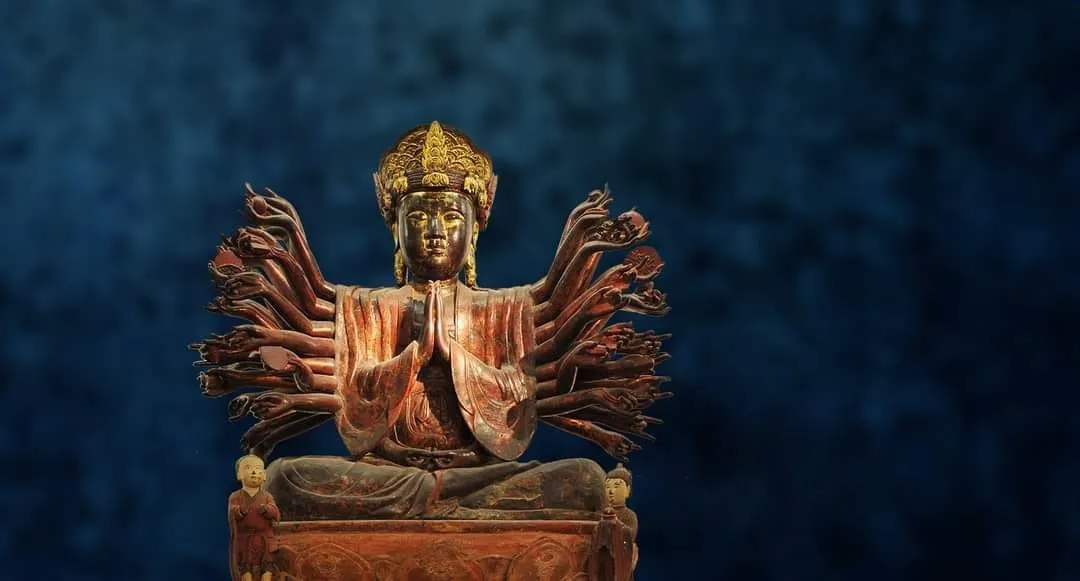
Guanyin statue from Hoi Ha Pagoda in the northern province of Phu Tho, painted wood, 314 x 215 x 157 cm, National Treasure since 2013.
Queen Trinh Thi Ngoc Truc, Mat Son Pagoda (early 17th century)
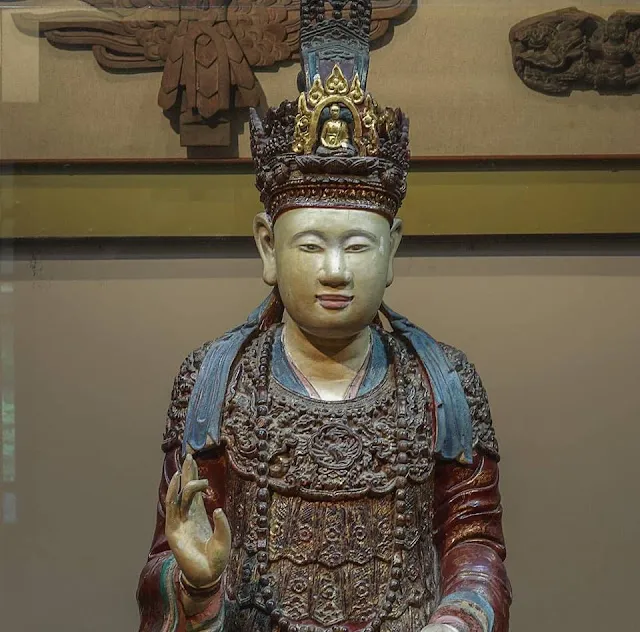
Queen Trinh Thi Ngoc Truc statue from Mat Son Pagoda in the central province of Thanh Hoa, early 17th century, painted wood, 111 x 67 x 4.5 cm, National Treasure since 2013.
The wooden sculpture from Mat Son Pagoda in Thanh Hoa Province portrays Queen Trinh Thi Ngoc Truc (1595–1660) of the Revival Le Dynasty and is considered the rarest surviving work of its kind. Its lifelike detail, especially the queen’s composed expression and long earlobes, marks it as one of Vietnam’s finest 17th-century portraits.
Dragon-carved doors, Keo Pagoda (17th century)
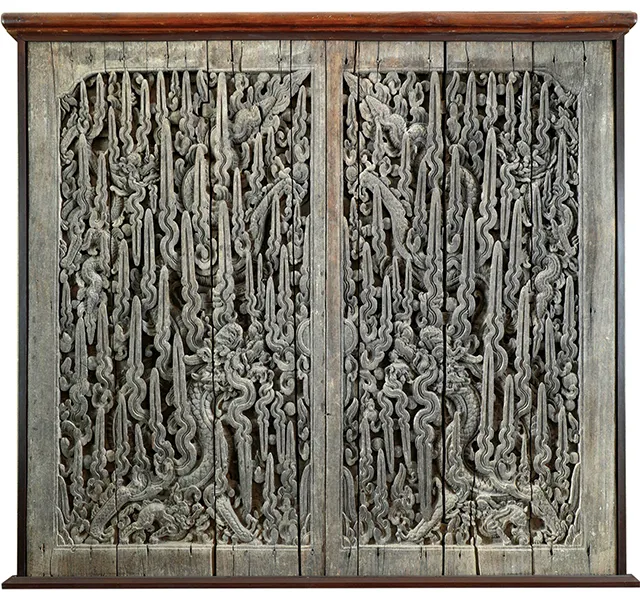
Dragon-carved doors from Keo Pagoda in the northern province of Hung Yen, 17th century, wood, 226 x 244 x 7 cm, National Treasure since 2017.
A pair of carved doors from Keo Pagoda in Hung Yen Province represents the peak of wooden architectural decoration in the ancient Son Nam region. Dragons holding pearls in their mouths appear in deep relief, created through a sophisticated pierced-carving technique that gives the panels striking depth and motion.
Together, these works demonstrate Vietnam’s early command of sculptural expression and lay the groundwork for the artistic transformations of the 20th century.
“Little Thuy” by Tran Van Can (1943)
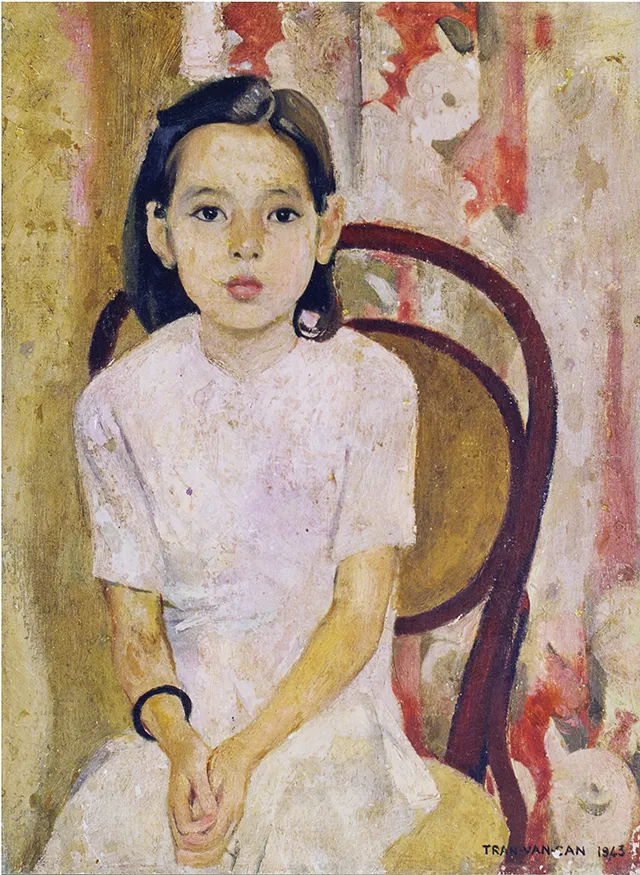
“Little Thuy” by Tran Van Can, 1943, oil painting, 60.5 x 45.5 cm, a National Treasure since 2013.
The next group of National Treasures reflects a shift from religious and royal subjects to the themes of a modern society.
“Little Thuy,” one of Vietnam’s most iconic portraits, depicts an eight-year-old girl whose direct gaze breaks from earlier conventions. Through soft light and stillness, artist Tran Van Can conveys a fragile innocence during a turbulent era.
“Two Maidens and a Little Boy” by To Ngoc Van (1944)
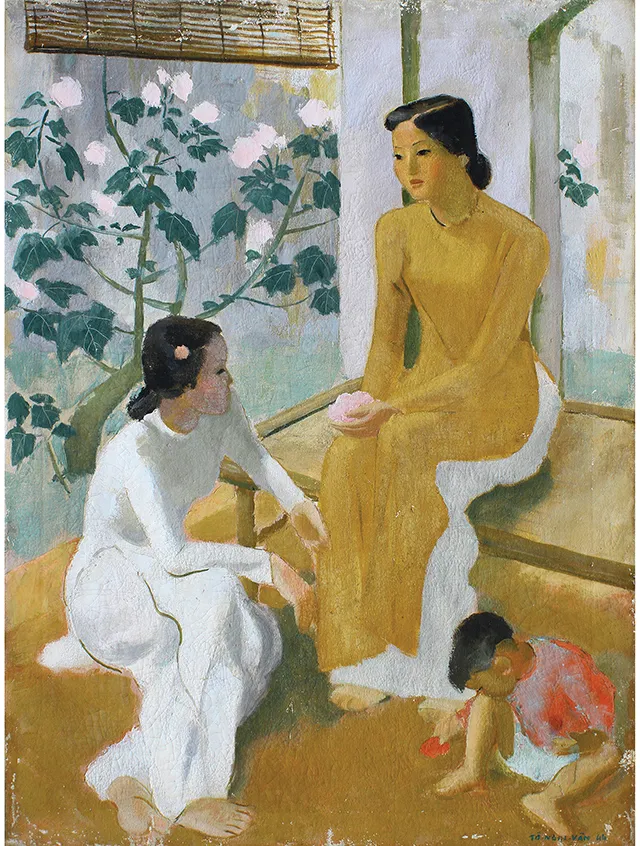
“Two Maidens and a Little Boy” by To Ngoc Van, 1944, oil painting, 100.2 x 75cm, National Treasure since 2013.
To Ngoc Van’s painting captures Hanoi’s urban life in the 1930s to 1940s. Influenced by European composition yet rooted in local sensibility, its warm tones and attentive character studies create intimacy tinged with melancholy.
“Party Admission in Dien Bien Phu” by Nguyen Sang (1963)
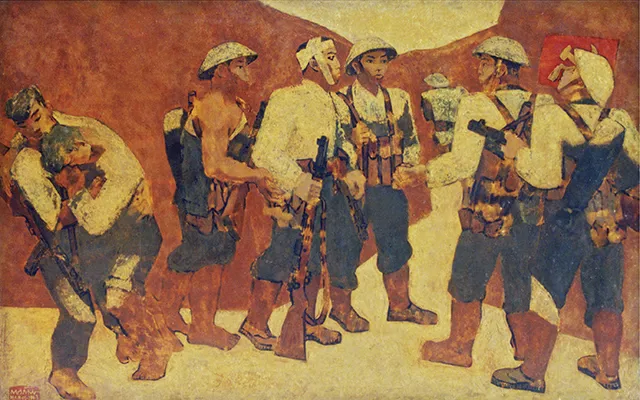
“Party Admission in Dien Bien Phu” by Nguyen Sang, 1963, lacquer painting, 122.3cm x 180cm, National Treasure since 2013.
Vietnam’s modern lacquer art reaches a milestone in the following National Treasures.
One lacquer painting recreates a Communist Party admission ceremony in the trenches during the anti-French resistance. Small gestures, a lookout scanning the sky, a soldier rushing past, convey urgency and make the scene a defining image of revolutionary art.
“Uncle Ho at the Viet Bac Resistance Base” by Duong Bich Lien (1980)
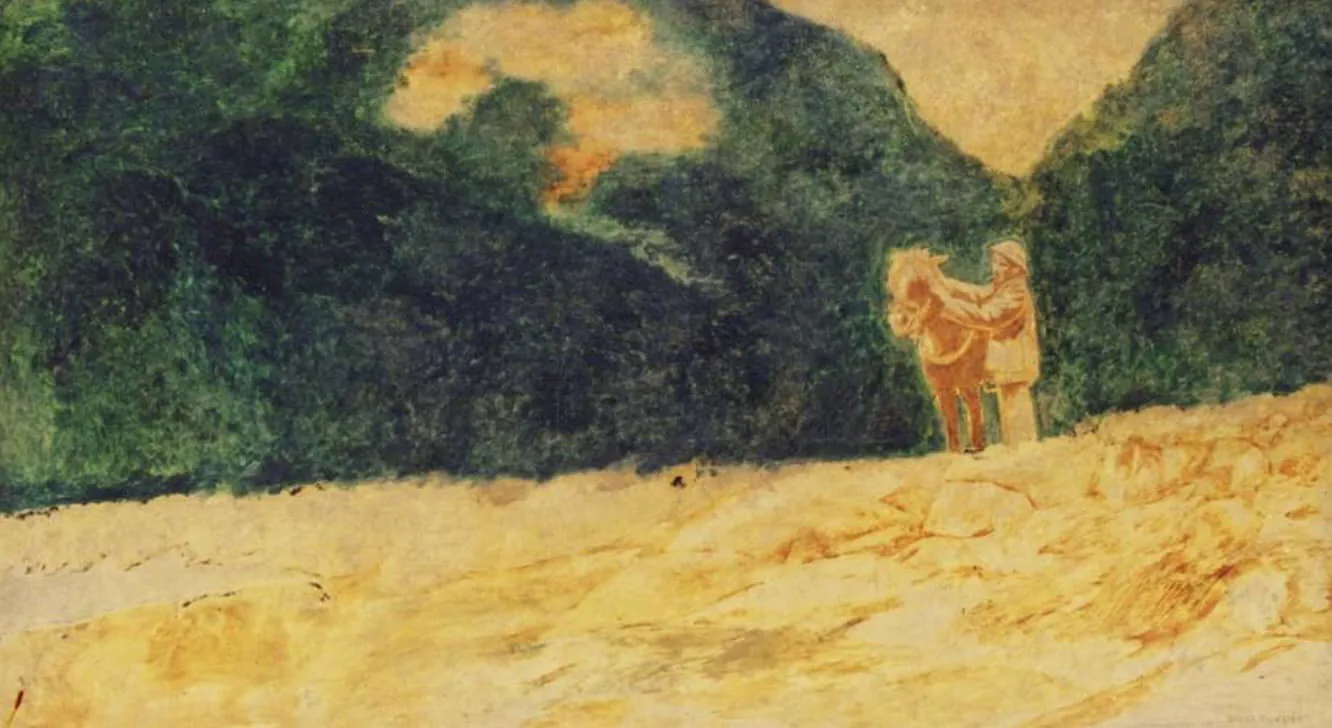
“Uncle Ho at the Viet Bac Resistance Base” by Duong Bich Lien, 1980, lacquer painting, 100 x 180 cm, National Treasure since 2017.
Duong Bich Lien’s work blends realism with poetic depth. Set against the greens and yellows of the Viet Bac mountains, the image of Ho Chi Minh gently stroking a horse offers a reflective, human perspective on wartime leadership.
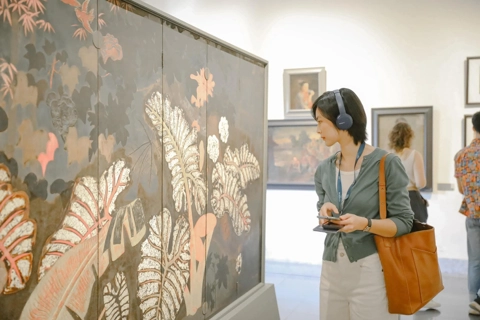
“Screen” by Nguyen Gia Tri (1939)
Considered the breakthrough of the artist known as the father of Vietnamese lacquer painting, an eight-panel screen traces a woman’s life across successive stages. Its layered texture and meticulous technique helped establish lacquer as a fine-art medium rather than a decorative craft.
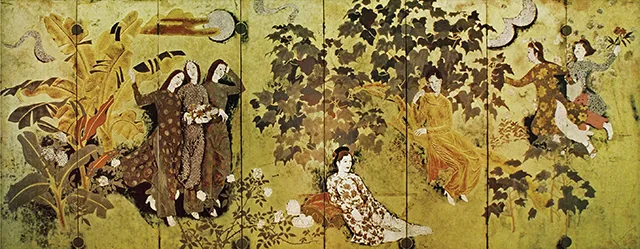
“Screen” by Nguyen Gia Tri, 1939, lacquer painting, 155.5 x 400 cm (eight panels combined), National Treasure since 2017.
“Giong” by Nguyen Tu Nghiem (1990)
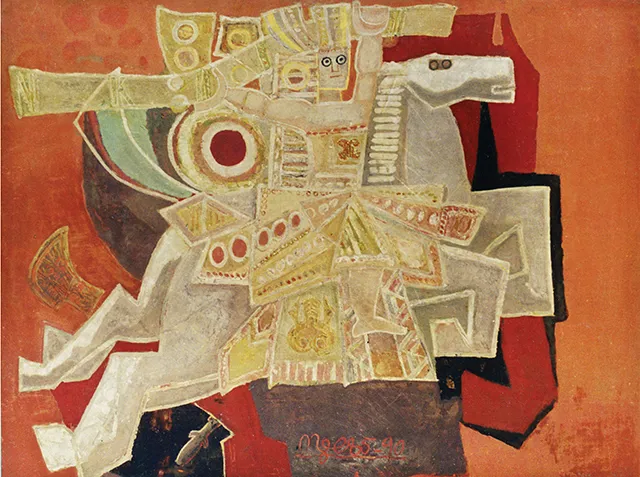
“Giong” by Nguyen Tu Nghiem, 1990, lacquer painting, 90 x 120.3 cm, National Treasure since 2017.
Nguyen Tu Nghiem’s modern interpretation of Saint Giong concludes the group. Drawing on cubism, futurism and ancient Dong Son motifs, the painting merges myth with modernism to create a powerful expression of national resilience.