Hanoi adopts digital solutions to preserve old villas
There are more than 1,200 old mansions in the capital dating back to the French colonial period.
More than 1,200 antique residences in Hanoi will need to be better preserved, and digital solutions will be essential.
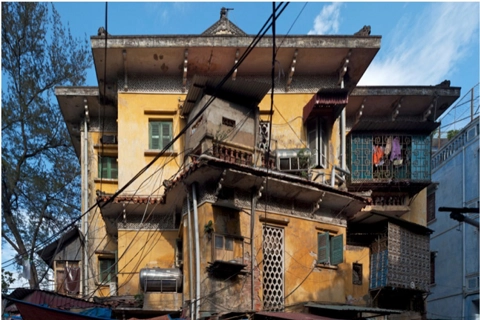
| An old mansion in the Old Quarter, Hanoi. Photo: Doan Thanh/The Hanoi Times |
The move is part of City Plan No. 115, which examines and assesses the current condition of the city's old villas. The aim is to assess the degree of deterioration and potential risks in order to develop plans and strategies for renovating and improving old houses and other architectural structures in Hanoi's downtown and historic districts.
By September 30, 24 state-owned residential buildings and 8 architectural structures will undergo a thorough inspection and quality assessment by the city. The move is in line with Scheme No. 03 of the Hanoi Municipal People's Committee for the preservation and restoration of old villas and architectural works built before 1954.
These villas will be classified into groups No.1 and 2, which are not for sale and currently under government management; of historical, cultural and architectural significance; used as embassies or office headquarters; deteriorated and not repaired or renovated.
A comprehensive survey of the villas and architectural works will be conducted using specialized tools and equipment. The assessment will include testing, calculations, and safety evaluations of the structure. This will facilitate the development of appropriate action plans, such as continued use, repair, reinforcement, or other interventions.
The city will develop a portal to transform the data and information of each of the 1,216 old houses into unified digitized profiles.
Ownership documents from various periods, the pre-1954 profile of the mansion, and construction, evaluation, and classification records will all be included in the mansion's electronic profile.
In addition, the city will create 3D projection mapping of the Tier-1 historic mansions.
According to the regulation on the management and use of old villas built before 1954, a Tier 1 old villa is one that either becomes a historical and cultural relic or has significance for Vietnam's revolution and resistance as well as the domestic architectural industry.
Tier 2 villas, which have only architectural value, account for about 350 buildings. The rest of the old villas belong to Tier 3.
The city's decision issued on June 2, 2022 lists information on old villas in the city built before 1954 and regulates the categorization of old houses.
City authorities expect to launch a tender and select the platform developer in 2023. The digitization of the database of old mansions in Hanoi must be completed by June 30, 2025.
The activity falls under Program No.3 of the Hanoi Party Committee on Urban Scene Development.
The digitization of the mansion database will help the government to better manage and preserve Hanoi's historical sites.
The city hopes to raise public awareness about the use and management of the said old villas through this move.
The old mansions in Hanoi were built during the French colonial period. They were taken over by the Vietnamese government when the capital was liberated on October 10, 1954.
Most of the historic mansions are now either the locations for Vietnamese film production or offices for the Party, State and Government of Vietnam organizations.
The priority list for inspection includes 24 old villas and 8 other architectural works. The 24 old villas are located at various addresses such as 10 Dien Bien Phu, 26 Dien Bien Phu, 17 Dien Bien Phu, 71 Quan Thanh, 34 Phan Dinh Phung, 42 Quang Trung, 46 Tran Hung Dao, 51 Ly Thai To, 62 Phan Dinh Phung, 12 Nguyen Che Nghia, 63 Ba Trieu, 5 Le Phung Hieu - 20 Ton Dan, 67 Ba Trieu, 135 Phung Hung, 80 Nguyen Du, 54 Nguyen Du, 172 Ba Trieu, 36-38 Tang Bat Ho, 28D Dien Bien Phu, 83 Quan Thanh, 97 Quan Thanh, 12-14 Phan Dinh Phung, 36 Ngo Quyen, and 55D Hang Bai.
The eight other architectural works that are also given priority for inspection are Hanoimoi Newspaper office at No.44 Le Thai To, Hang Dau Water Tower Hanoi Police headquarters at 87-89 Tran Hung Dao, Hanoi Flag Tower at No.28B Dien Bien Phu, Phan Dinh Phung High School at 30 Phan Dinh Phung, Chu Van An High School at No.10 Thuy Khue, Tran Phu High School at No. 8 Hai Ba Trung, and Viet Duc High School at No.47 Ly Thuong Kiet.