Management agencies and experts told the Hanoi Moi Newspaper of their optimism that after the approval of major plans for the capital, especially during the upcoming implementation of the Capital Law, Hanoi will introduce a range of appropriate mechanisms and policies. These are expected to address challenges and prioritize projects related to transport infrastructure.
Director of Hanoi Department of Transport Nguyen Phi Thuong:
Standardization of policies to attract investment
|
| Director of Hanoi Department of Transport Nguyen Phi Thuong. Photos: Thanh Hai/The Hanoi Times |
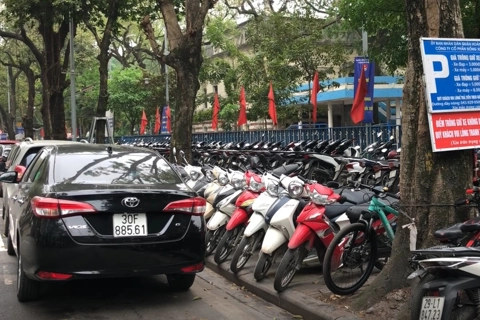
According to the static transport infrastructure plan, Hanoi is designated to have 1,620 car parks. Currently, 72 of them have been built in and are operational, while 61 are in the planning stages but face several challenges. Upon review, the construction of these parking lots has encountered difficulties related to planning, as some planned sites are residential or public land, making it challenging to clear the space.
In response, the Department of Transport has sought guidance and reported to the city’s People's Committee. Once the Capital Master Plan and the Adjusted General Plan for Hanoi are approved, the Department will review and adjust the sub-regional plans, with a focus on components such as underground traffic planning and static transport infrastructure planning. This will help standardize mechanisms and policies to attract investors.
Currently, the city has tasked the Department of Planning and Investment with reviewing all parking-related investment projects to clearly identify which projects will proceed and which will not. Additionally, the city has delegated management of parking lots to district and local authorities, who will also review unimplemented projects in their areas and report back to the city.
Dr. Architect Dao Ngoc Nghiem, Vice Chairman of the Vietnam Association for Urban Planning and Development:
Focusing on utilizing underground infrastructure
|
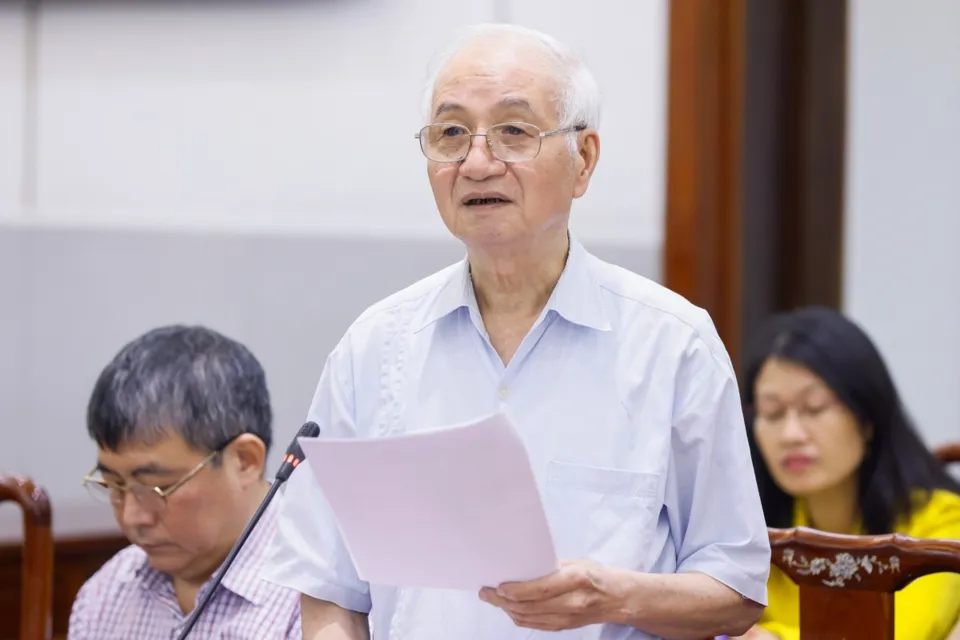
| Vice Chairman of the Vietnam Association for Urban Planning and Development Dao Ngoc Nghiem. |
The development of car parking facilities is a key concern for the city, which is reflected in its efforts to refine related planning, including specific details on location, scale, and extraordinary policies. Since 1998, the city has emphasized the need for comprehensive parking planning, including options for elevated, surface, and underground parking facilities. The City Council has introduced preferential policies for businesses investing in parking infrastructure, particularly in areas facing significant challenges, such as the historic inner-city districts. Priority is given to projects that incorporate new technologies and optimize the use of space.
Several major projects, such as the parking lot at Thong Nhat Park, the underground car park at the Opera House, and the one at the State Bank of Vietnam, have faced challenges that have prevented their completion. Specifically, underground parking projects have struggled with issues related to underground space utilization and establishing connections to create a comprehensive network for public use.
|
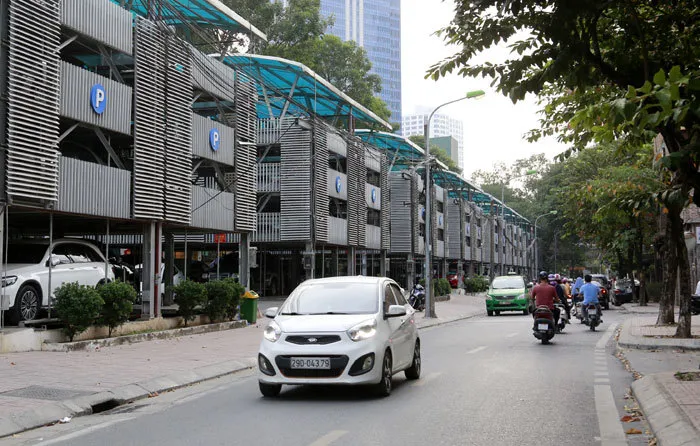
| A multi-story parking garage on Nguyen Cong Hoan Street, Hanoi. |
However, the challenges facing Hanoi now present opportunities for solutions. The 2024 Land Law and the amended Capital Law both include provisions for underground space. Hanoi is also the first locality in the country to have a plan for underground space development, which has been recognized with legal rights for land use, lease, and transfer. Combined with policies related to the Transit-Oriented Development (TOD) model, these changes are expected to lead to breakthroughs in utilizing underground space for parking.
In the near future, the city needs to quickly formalize these initiatives during the implementation of the Capital Law, as this is a complex issue requiring suitable mechanisms and policies to attract investment. Additionally, it is essential to urgently review the guidelines for static transport within the entire planning system, compare them with existing practices, and align them with the proposals in the Capital Master Plan and the Adjusted General Plan for Hanoi to develop a specific proposal for the development of traffic infrastructure and static transport.
National Assembly Deputy Nguyen Van Canh from Binh Dinh Province:
Priority needed for constructing parking facilities
|
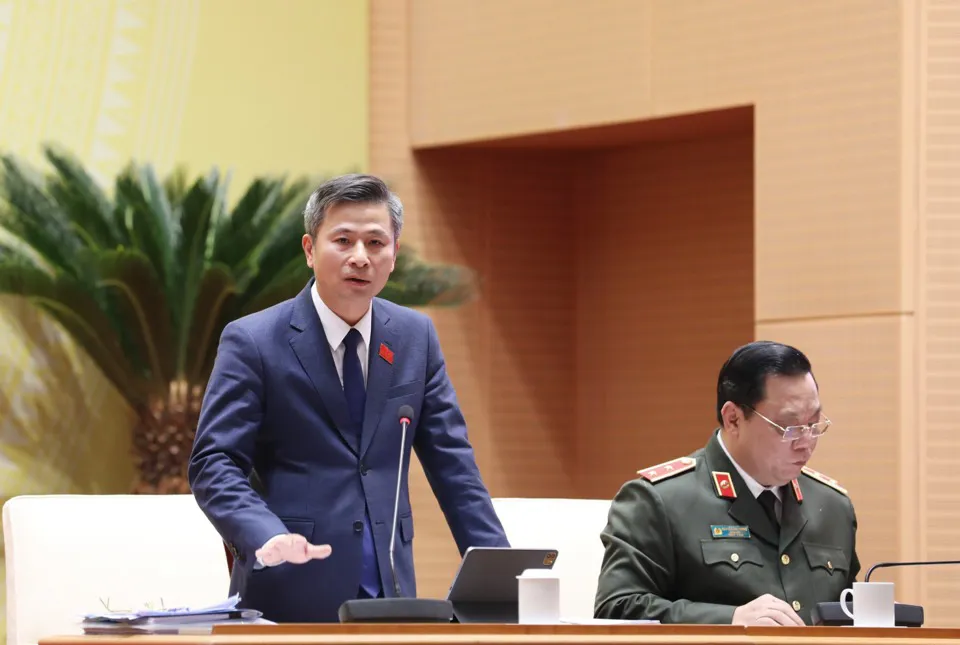
| National Assembly Deputy Nguyen Van Canh from Binh Dinh Province. |
In my opinion, the construction of car parks should be given the same attention as the development of social housing. Businesses that build car parks for commercial purposes should view this as an emerging industry. To encourage the development of parking facilities, preferential policies need to be put in place not just for land use but also for the growth of parking infrastructure. For example, if we think of car parks as commercial centers or residential buildings, we could treat them as future assets. This approach would be similar to the development of social housing, requiring special policy incentives.
I believe the challenges in developing static transport infrastructure in Hanoi stem from inadequate mechanisms and policies, leading to inefficient investment by businesses. Therefore, as Hanoi implements the Capital Law in the coming period, there should be preferential land policies and the ability for businesses to develop car parks as commercial assets. With clear policies in place, customers will be inclined to reserve spaces in advance, providing businesses with a certain amount of initial capital for long-term investment.
Architecturally, many car parks will be designed as architectural works or green buildings, enhancing the urban landscape. In fact, they could be even more aesthetically pleasing than the boxy, glass-covered shopping malls we see today.