Hanoi applies technology to prevent counterfeit goods
Counterfeit goods are becoming sophisticated, making it difficult for users to distinguish real and fake ones.
THE HANOI TIMES — Hanoi has been applying technology to trace product origin in order to prevent counterfeit goods amid rampant counterfeit goods in the food, cosmetics, and pharmaceutical industries.
Experts say that technology is an effective tool to control the origin of products, especially blockchain technology and anti-counterfeit packaging.
In this regard, Hanoi is deploying QR codes for controlling the origins of products and establishing a central database for consumers to check product information using their smartphones. Encoded labeling systems are used to help detect fraudulent activities on e-commerce platforms.
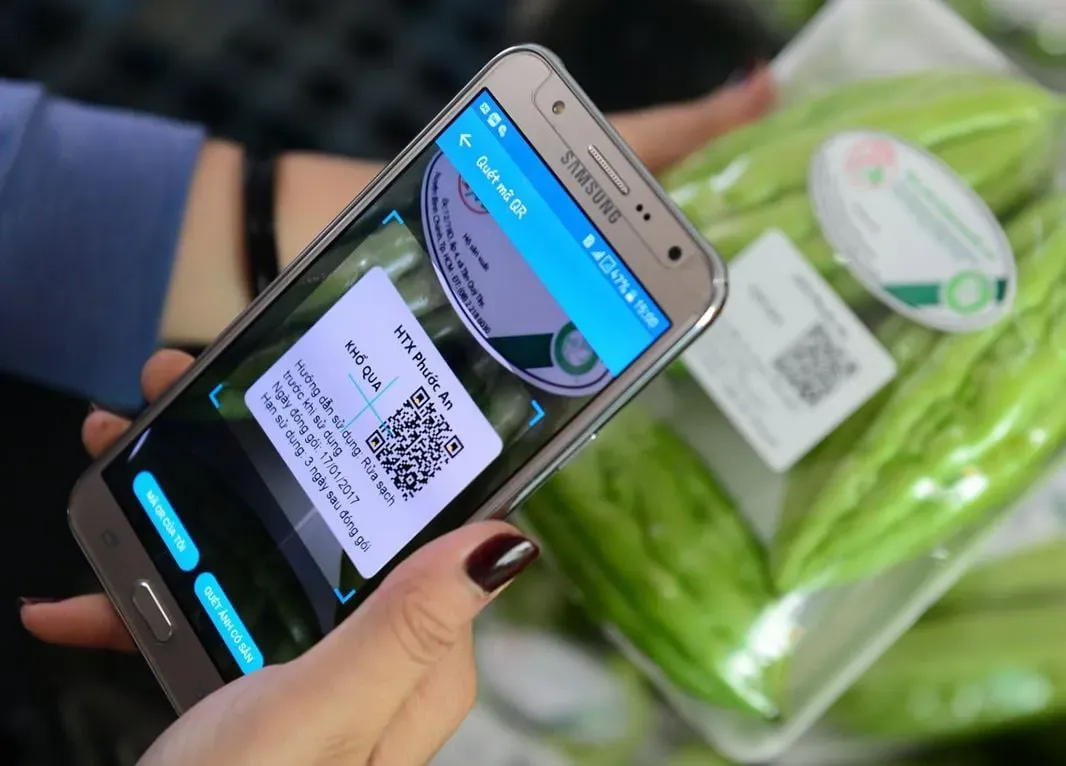
A customer scan the QR code on the product code to trace the origin of fake and genuine goods. Photo: Kinh te & Do thi Newspaper
Consumers can scan the QR code on the packaging to check information about the origin, manufacturing unit, and shipping history, consumers by providing them with reliable methods to verify product information and identify fake goods.
According to Nguyen Canh Lam, lecturer in Supply Chain Management and Logistics at RMIT University Vietnam, blockchain helps store product information in a transparent, uneditable manner.
“Blockchain with QR codes helps consumers trace products from production to consumption, limiting counterfeit goods in the supply chain,” said Lam.
Alongside blockchain, anti-counterfeit packaging such as sealing tapes, shrink-wraps, touch-sensitive labels, security stamps, dynamic barcodes, and special stickers are applied. High-value items often integrate RFID or NFC chips for smartphone authentication. Digital watermarking, long used for copyright protection, is now being researched for application to individual pills or consumer goods.
However, experts stress technology cannot replace consumers’ proactive role. “People must scan traceability codes, buy from reputable sources, and refuse unclear-origin products,” Lam emphasized.
Experts warn that buying cheap counterfeit fashion or electronics legitimizes the counterfeit market, expanding illegal supply chains and threatening legitimate businesses.
“We cannot rely solely on management or technology. Consumers must be alert, check, compare, and report suspicions. Smart consumer habits are the first barrier to counterfeit goods,” said Tran Thi Thu Huong, Vice President and General Secretary of the Vietnam Association for the Protection of Consumer Rights.
Vu Van Trung, the association’s Vice President, added: “Consumers must speak up on counterfeit goods so the association and authorities can act. Reluctance to report fuels counterfeit growth.”
At the end of June 2025, Hanoi authorities dismantled a large-scale fake powdered milk production under the brand “Hiup.” The product was packaged sophisticatedly, distributed through official retail channels, and promoted by celebrities and nutritionists, making it easy to mistake for the real thing.
Many essential goods, such as Ajinomoto MSG, have also been counterfeited with near-identical packaging infiltrating traditional markets and small retail stores, making them hard to distinguish.
In the first half of 2025, Hanoi authorities handled nearly 9,600 violations and prosecuted over 115 criminal cases.