Hanoi works to tighten control over food safety
Many solutions have been taken to push back "dirty" food to "clean up" Hanoi's food market.
THE HANOI TIMES — Hanoi has seen improvements in the quality of food services, but there are still many shortcomings in the food safety management.
According to a report by the municipal People's Committee, Hanoi currently has nearly 73,000 enterprises engaged in food production, processing, trade and catering. The city produces about 60% of the food consumed, while the remainder is imported from other provinces and abroad.
During the first eight months of this year, 85% of nearly 20,000 inspected establishments were considered food-safe, while 96% of the 1,050 food samples tested met the required standards.
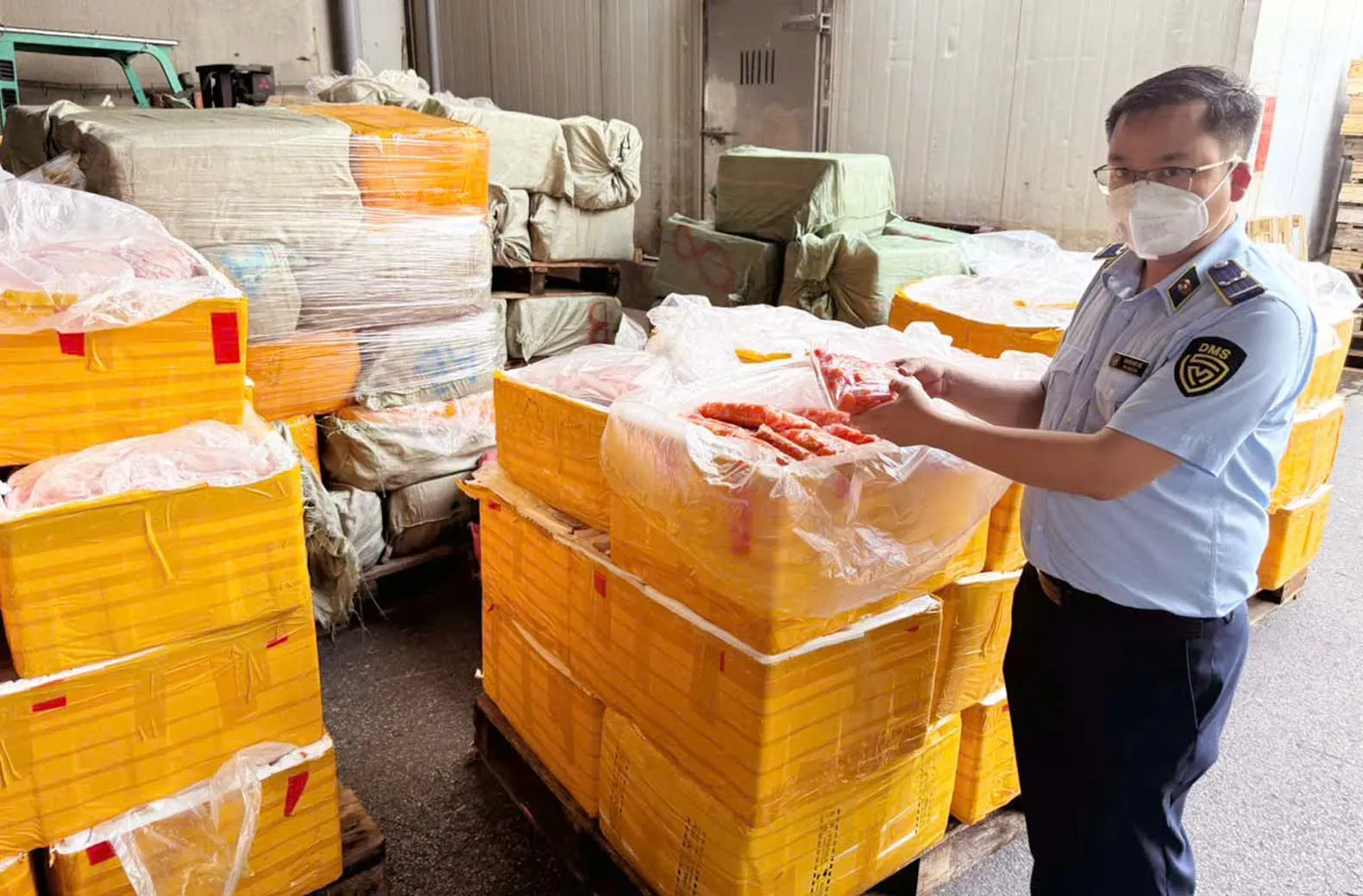
Market management seizes "dirty" animal organs in Chuong My Ward in Hanoi. Photo: Hoai Nam/The Hanoi Times
According to the Hanoi Department of Health, the positive results were attributed to close interagency coordination to raise food safety awareness among food business owners and food service workers.
It said that ensuring food safety must be done on a regular and continuous basis and authorities need to take drastic measures and impose severe punishments on counterfeit and substandard goods.
In addition, dissemination campaigns and information should be strengthened to raise awareness of food safety and hygiene among vendors, consumers, and food management officials.
The department also called for close coordination between local authorities and relevant agencies in the inspection and handling of food safety violations.
Dang Thanh Phong, Head of Hanoi's Food Safety and Hygiene Department, said that in recent years, food safety issues have always received special attention from the city's leaders, who have focused on directing synchronized and effective implementation.
"The Hanoi People's Committee has guided all sectors in ensuring the safety of food supply. As a result, food producers, processors, traders, and consumers now have better knowledge and practices for food production, business, and consumption," said Phong.
However, he acknowledged that challenges remain because the problem involves many areas of government. There are still issues with the transport, trade, and smuggling of unsafe food from other provinces to Hanoi, poor awareness among some food processing facility owners, and weak legal enforcement with only warnings rather than legal penalties.
Meanwhile, food of uncertain origin continues to be transported into the city from other provinces, while a large number of consumers are reluctant to report establishments selling unsafe food to an authorized agency.
Nguyen Kieu Oanh, Deputy Director of the Hanoi Department of Industry and Trade, said that the sector has determined that food safety inspections must be carried out regularly and unexpectedly to prevent recurrence of food safety violations.
"These violations are perpetrated on websites and social networks with servers located abroad, where the subjects advertising and selling violating products cannot be identified, leaving no basis for handling violations," she said.
Advances in artificial intelligence (AI) and digital technology have made it easy to produce films and videos with images of doctors, scientists, and medical facilities to promote and sell food with fictitious or exaggerated purposes, according to Oanh.
It's still challenging to regulate cross-border advertising and commerce, while many online trading platforms lack ad-control tools and business registration remains too easy.