Hanoi boosts agricultural and rural tourism
The city highlights the need to invest in infrastructure and promote community tourism that links traditional craft villages and tourist attractions in Hanoi's outskirt districts.
Hanoi has been urging localities to develop community-based tourism, eco-tourism, and traditional handicraft villages related to agriculture, making it a driving force for the national tourism recovery roadmap after a long hiatus due to the Covid-19 pandemic.
According to Deputy Director of the Hanoi Department of Tourism Tran Trung Hieu, agricultural and rural tourism is one of the key products in Hanoi's tourism development strategy, contributing to building a new style of rural areas and improving people's quality of life.
Hieu said the city would continue encouraging organizations and individuals to create unique products based on local strengths, in which One Commune One Product (OCOP) plays a key for "community tourism services and tourist attractions.
"In addition, we will research and develop information technology software to collect and process databases to study and assess the current status of agricultural and rural tourism in Hanoi City to make a proper action plan," Hieu told The Hanoi Times.
"Along with this, it is necessary to improve the quality of tourism human resources in communal tourism sites, implement policies to support investment in agricultural and rural tourism, and build new-style rural areas in the city," the official said.
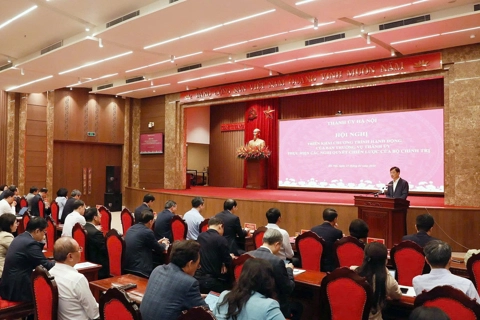
The Hanoi Tourism Department coordinated with the Thuong Tin District People's Committee to organize a training conference on building and developing agricultural and rural tourism products.
Deputy Director of the Hanoi Department of Tourism Tran Trung Hieu speaks at the training conference. Photo: Hoai Nam/ The Hanoi Times |

Located about 25 kilometers south of Hanoi, Thuong Tin District is one of the places with the highest number of relics in the capital, with 462 religious works, many of which are of national significance.
The district is also home to 126 handicraft villages, 48 of which have been recognized by the Hanoi People's Committee, such as Ninh So bamboo and rattan, Binh Vong painting, Ha Thai lacquer, Quat Dong embroidery, and others.
"To utilize the strengths and potentials of developing ecological and spiritual tourism related to traditional handicraft villages, Thuong Tin District is focusing on building and utilizing unique spots, routes and tours," Hieu said at the event.
Bui Cong Than, Vice Chairman of the Thuong Tin District People's Committee, said although the district has made many efforts to develop agritourism, it has encountered some difficulties that must be overcome.
"Human resources involved in tourism services have not been properly trained. In addition, there has not been much investment in tourism infrastructure, especially in handicraft villages," Than said.
There is a need for more policies to support people to participate in agricultural and rural tourism development in conjunction with the OCOP (One Community - One Product) program and the New-style Rural Construction Program. The promotion, introduction, trade promotion and linkage of tours still face many difficulties.
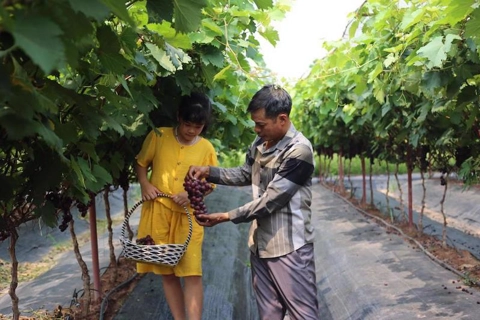
Tourists visit Hong Van Commune’s ecotourism site in Thuong Tin District. Photo: Hoai Nam/ The Hanoi Times |
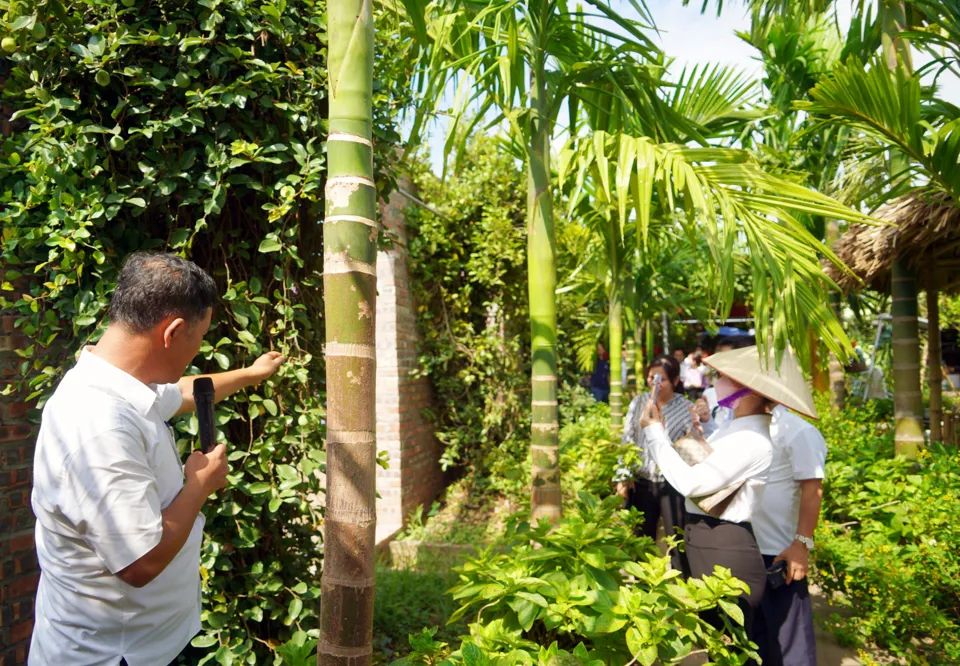
"However, the locality has renovated homestays, trained guides and locals in tourism skills, and encouraged residents to improve their products so that tourists stay longer," Than stressed.
Hanoi is considered a city with many potentials and advantages to develop agritourism in connection with the process of building a new style of countryside.
Hanoi has 11 ecological farms in the city that operate under the educational and experiential tourism model. Four agricultural cooperatives operate under the model of country farms, including Long Viet Agricultural Park (in Soc Son District), Country Farm (Ba Vi District), Van An School Farm (Thanh Tri District), Phuc Tho Homestead (Thanh Tri District), Phuc Tho Hoa Bay Ecological Garden (Phuc Tho District).
Deputy Director Tran Trung Hieu told The Hanoi Times that there is a need to invest in infrastructure and promote community tourism that links traditional craft villages - tourist attractions - and resorts to tap the tourism potential of Hanoi's outskirts.
In addition, in many places in Hanoi, tourism has contributed to creating jobs, transforming the industrial structure, improving people's lives, and promoting the value of historical and cultural heritage sites and village handicraft products. These include Bat Trang Pottery in Gia Lam District, Duong Lam Ancient Village in Son Tay Town, Huong Son Relic Area (Perfume Pagoda) in My Duc District, Hong Van Landscape Creature Village in Thuong Tin District, and Ha Mo Tourist Site in Dan Phuong District, Dong Do Lake and Ham Lon Mountain in Soc Son District, among others.