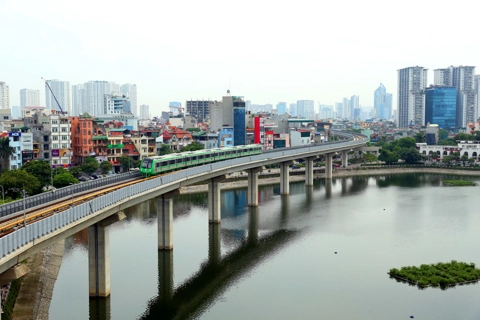
Hanoi boosts smart applications for traffic congestion relief
Hanoi applies advanced technological solutions to combat traffic congestion and pollution.
Hanoi is embracing advanced technologies to address its long-standing traffic congestion and environmental issues, aiming to improve the quality of life for its 8 million vehicles, including over 1.1 million cars and 6.9 million motorbikes.
The smart transport is the way to address the pressing issues, Do Viet Hai, Deputy Director of the Hanoi Department of Transport, said at a smart transportation workshop during the Vietnam-Asia Smart City Conference held earlier this month.
The city is piloting the Intelligent Traffic Operation Center in Ba Dinh and Cau Giay districts. This facility, often referred to as the brain of the city's transportation system, utilizes Internet of Things (IoT) technology and artificial intelligence (AI) to monitor and manage traffic in real time.
Through its network of cameras and sensors, the center gathers data on traffic flow, detects violations, and dynamically adjusts traffic signals to reduce congestion.
“These measures are expected to reduce travel times by 25 percent and significantly decrease traffic-related accidents. This initiative is a clear step forward in aligning Hanoi's transport system with global trends,” Hai said.
| Nga Tu So intersection during rush hour. Photo: The Hanoi Times |
.jpg)
The capital is also exploring more sustainable modes of transport to reduce its carbon footprint. Electric buses have emerged as a promising alternative to traditional diesel-powered vehicles.
“These buses not only reduce greenhouse gas emissions by up to 80% but also operate more quietly and efficiently,” said Le Quang Vinh, Project Manager for Smart Buses at Advantech Vietnam.
The city is expanding its network of charging stations to support the long-term adoption of electric buses, making them a cornerstone of Hanoi's vision for a cleaner urban environment.
Hanoi is also exploring self-driving cars as part of its transport innovation strategy. These vehicles, currently tested in controlled environments like Ecopark and Vinhome, are equipped with Level 4 autonomous technology developed by Vietnamese companies like Phenikaa.
“These vehicles hold potential for various applications, from public transport to urban sanitation, and are expected to become more prevalent as the technology matures,” said Le Quang Hiep, Commercial Director of Phenikaa-X.
| Hanoi is developing environmentally friendly buses. Photo: Dang Khoa/Kinhtedothi |
.jpg)
To encourage the use of public transport, Hanoi has introduced an interoperable electronic ticketing system that integrates buses, subways and elevated trains, and allows passengers to pay seamlessly using methods such as QR codes or biometric authentication.
Do Viet Hai said the city aims to increase public transport use to 60%, in line with practices in cities such as Singapore. This goal reflects a broader vision to reduce reliance on private vehicles and improve the efficiency of Hanoi's public transport system.
The integration of IoT and AI goes beyond traffic management. Smart sensors now measure traffic density, air quality, and weather conditions, feeding data into systems that can predict accidents and optimize routes. This technological synergy can reduce rush hour travel times by 30% while improving overall road safety. These advances demonstrate Hanoi's commitment to creating a smarter and more efficient transportation network.
Le Quang Hiep expressed hope for the city's full support in developing infrastructure. He said expanding subway lines, building elevated train networks, and developing dedicated bus lanes are key steps in modernizing Hanoi's transportation system. Meanwhile, it's necessary to invest in infrastructure, such as subway lines, elevated train networks, and dedicated bus lanes.
In addition, it requires support for businesses in transport technology. Financial incentives and clear regulatory frameworks can encourage innovation and the widespread adoption of new technologies. Hanoi's use of public-private partnerships and Official Development Assistance (ODA) funding has already proven effective in mobilizing resources for large-scale projects.
Hanoi’s transition to smarter and greener transport solutions reflects a broader vision of sustainable urban development. The city is working towards a modern and livable future by leveraging advanced technologies, fostering public and private sector collaboration, and prioritizing environmental sustainability.
“These efforts address current challenges and lay the foundation for Hanoi to become a model of smart urban transportation in Vietnam and the region,” said Le Quang Vinh.
Traffic challenges in Hanoi
Speaking at a workshop on smart transportation development at the Vietnam-Asia Smart City Conference, Nguyen Duc Que, Intel Business Director, said: "Many locations in Hanoi have experienced prolonged traffic congestion during rush hours, especially on major routes such as Nguyen Trai, Cau Giay and Ring Road 3. It is estimated that Hanoi residents spend an average of 30-45 minutes per day traveling through these congested areas."
One of the main causes of traffic congestion is the extensive use of private vehicles in Hanoi, with more than 80% of people traveling by motorbike. Meanwhile, the share of public transport is only 12-19%, much lower than in major cities in the region.
To make Hanoi's transportation smooth, the city is taking advantage of ODA capital and attracting investment from private enterprises. Hanoi can operate smart transportation by combining reasonable capital, advanced technology, and consensus among stakeholders.
| Speakers in a discussion on the development of smart transportation at the Vietnam-Asia Smart City Summit 2024. Photo: The Hanoi Times |
.jpg)
The city needs to increase investment in transportation infrastructure, expanding subway lines, elevated trains, and dedicated bus lanes, according to conference delegates. At the same time, Hanoi needs to raise traffic awareness through education in schools and communication campaigns, and support businesses in developing transportation technology by strengthening financial and legal support policies, they suggested.
Smart transportation is the way forward for Hanoi to solve current problems and move toward sustainable development. With coordination between the government, businesses, and people, the capital can build a modern, environmentally friendly transportation system, the experts said.